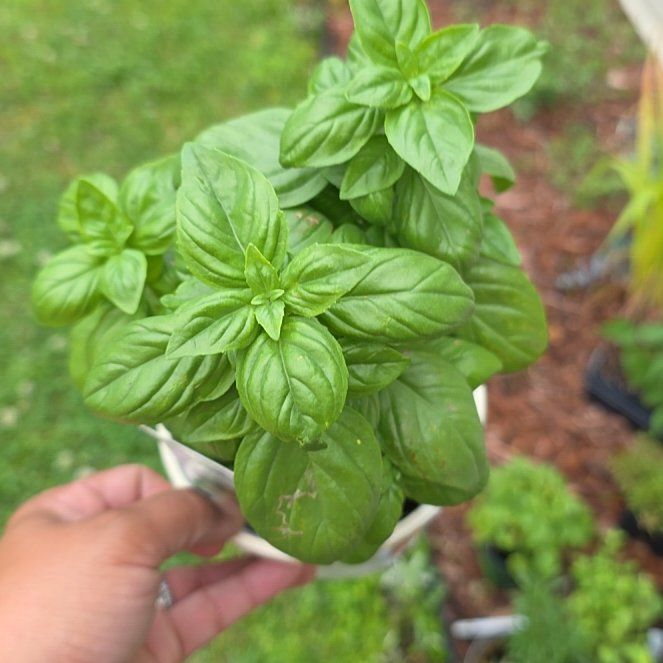
Should I Repot My Sweet Basil?
Ocimum basilicum
By the Greg Editorial Team
Dec 16, 2023•8 min read
This article was created with the help of AI so we can cover more plants for you. May contain errors. See one? Report it here.
Boost your basil's vigor and your culinary game by mastering the timely art of repotting π±π΄.
- Yellow leaves, stunted growth? Time to repot your sweet basil.
- π± Repot in spring or when distress signs appear for best results.
- Avoid common mistakes: Use the right pot size and high-quality soil.
Signs that Your Sweet Basil Needs Repotting
Sweet Basil, the herb that's as essential in the kitchen as a chef's knife, might be signaling it's time for a change of residence. Yellowing leaves are the plant's way of waving a white flag, often a distress call for more space or nutrients. When roots start to resemble a crowded elevator, pushing through the drainage holes, it's a clear sign they're root bound and craving expansion.
π± Stunted growth
can be a silent scream for help, indicating that despite your diligent care, the pot's confines are too limiting. If water zips through the soil like it's racing to the bottom, leaving the soil dry too quickly, it's a hint that the roots need a new home with better moisture retention. Conversely, if the soil remains soggy, it could be a sign of compaction, which also warrants a pot upgrade.
Before you start playing house, remember: repotting is like a first date after a breakupβit's delicate, and the plant needs time to adjust. So, if your basil is looking more down than a flat soufflΓ©, it's time to consider a repotting rendezvous.
Benefits of Repotting Sweet Basil
Repotting sweet basil isn't just a horticultural ritual; it's a revitalization strategy. When roots start doing the tango in a cramped pot, they're screaming for space. Repotting gives these roots room to breathe, stretch, and absorb nutrients more efficiently, leading to a basil plant that's more Top Chef than chopped.
πͺ Improved Nutrient Uptake
Basil's hunger for nutrients is like a teen's appetite β never satisfied. A fresh pot means fresh soil, and fresh soil is a buffet of nutrients. This isn't just about growth; it's about flavor. More nutrients mean more of those aromatic oils that make your pesto pop.
π Prevention of Root-Bound Stress
Root-bound is the plant version of being stuck in a middle airplane seat. Nobody thrives there. By repotting, you're giving your basil an upgrade to first class, where it can stretch out and avoid the stress that stunts growth and health. Plus, a stress-free basil is a tasty basil.
Importance of Proper Drainage in the New Pot
Ensuring adequate drainage is non-negotiable when repotting Sweet Basil. Waterlogged soil is a death sentence for those fragrant roots, leading to the dreaded root rot.
π± Selecting the Right Pot
Choose a pot with drainage holes; it's like giving your basil a life jacket in a sea of potential overwatering. Glazed or terracotta, the material is less important than those precious escape routes for excess water.
πΏ Crafting the Perfect Soil Mix
The soil mix should be the basil's best friend, not a clingy nightmare. Mix in coco coir, perlite, or sand to ensure water flows through like a gentle stream, not a stagnant pond. A dash of compost for nutrients, and you've got a gourmet bed for your herb.
π§ Real Talk on Water and Roots
If you see water sprinting out the bottom like it's late for a meeting, or roots peeking out like nosy neighbors, it's time to rethink your setup. A well-draining mix and a pot with holes will keep those roots breathing easy, not drowning in soggy despair.
Choosing the Right Time to Repot
Spring is the season of renewal, and not just for your wardrobe. It's also the ideal time to give your Sweet Basil a new home. The plant's growth is in full swing, making it the perfect opportunity to repot without causing undue stress.
π± Why Spring?
During spring, Sweet Basil enters a growth spurt. This is when the plant can recover quickly from any disturbance caused by repotting, thanks to the active growing season. It's like moving houses when you're young and resilient, rather than during your retirement years.
π¨ Immediate Repotting Triggers
However, if your Sweet Basil shows signs of being root-bound, or if it's wilting or yellowing despite your best efforts, it's sending an SOS. Don't wait for spring; repot immediately to prevent further decline. It's like giving a dehydrated person water β don't wait for the rain, act now.
π© Stress and Decline
Keep an eye out for stunted growth or roots making a break for it out of the drainage holes. These are clear indicators that your basil is cramped and needs more space, stat. It's like trying to do a cartwheel in a closet β not going to happen without some room to grow.
Repotting Process
πΊ Selecting the Right Pot
Size matters when it comes to pots. Choose one that's a snug 2-3 inches larger in diameter than the current home of your basil. Make sure it's got drainage holes to avoid waterlogged roots playing the blues.
π± Prepping the Soil
Grab a well-draining soil mix and jazz it up with some compost for a nutrient-rich pad for your plant. Think of it as upgrading your basil's apartment to one with better amenities.
π° Ensuring Drainage
Don't drown your plant in enthusiasm or water. Ensure the new pot allows excess water to escape with ease, keeping those roots breathing easy and free from rot.
π± The Gentle Transition
Ease your basil out of its old pot like you're coaxing a cat out from under the bed. Inspect the roots for a tangleβgently untangle if it's looking like a bad hair day.
π‘ Home Sweet Home
Nestle your basil into its new abode, fill the gaps with soil, and water it like you're toasting to its new beginning. Not too muchβjust enough to settle it in.
π¦ Watering Post-Repotting
Give your newly potted basil a thorough drink. Think of it as a housewarming gift. But remember, it's not a frat party; don't flood the place.
Aftercare and Maintenance
π Sunlight and Location
Sunlight is non-negotiable for your newly repotted sweet basil. Ensure it basks in at least six hours of sunlight daily. A well-lit windowsill or a sunny spot on the patio can be prime real estate for your herb.
π§ Soil Moisture
Keep the soil consistently moist but not waterlogged. Overwatering is the fast track to root rot, so let's not drown our green friends, shall we? Check the soil's moisture by sticking your finger about an inch deepβif it feels like a wrung-out sponge, you're golden.
π Fertilization
Hold off on fertilizing for a few weeks; let your basil settle in first. When it's time, opt for an organic fertilizer. Remember, what goes into the soil, goes into your bellyβchoose wisely.
π Monitoring Growth
Post-repotting, your basil should strut its stuff with new growth. If it's more sluggish than a Monday morning, it's time for a check-upβsoil, water, and sunlight are the usual suspects.
π¦ Watering Wisdom
Watering is an artβtoo little, and your basil throws a fit; too much, and it's goodbye roots. Aim for a weekly watering rendezvous, but stay flexible. Hotter climates or thirsty-looking plants may need more frequent drinks.
Aftercare Summary
In essence, treat your basil like a good friendβgive it attention, the right environment, and don't overdo the drinks. Keep these tips in your back pocket, and you'll be the proud plant parent of a flourishing basil.
Common Mistakes to Avoid
π± Choosing the Right Pot Size
Size matters when it comes to pots. A common blunder is planting your sweet basil in a gargantuan pot, thinking it will grow into it. Wrong move. This can lead to waterlogging because the soil stays wet too long. Stick to a pot that's just an inch or two larger than the current one. It's like Goldilocks' porridge β it has to be just right.
πΏ Handling the Roots with Care
When you're repotting, think of the roots as if they're sleeping babies. Gentle is the keyword. Avoid giving them a rough wake-up call by disturbing them excessively. If they look healthy, let them be. If they're a tangled mess, untangle with care or trim if necessary. But remember, less is more.
π± Soil Quality is Key
Using the wrong soil is like wearing flip-flops in a snowstorm β it just doesn't work. Don't cut corners with cheap, compacted soil or, heaven forbid, dirt from your yard. Your sweet basil deserves better. Opt for a premium potting mix that's light and fluffy, like a good cheesecake. It should drain well but still hold moisture, like a sponge, not a swamp.
Troubleshooting Repotting Issues
π Addressing Transplant Shock
Transplant shock hits your Sweet Basil like a bad hangover after a wild nightβit's droopy, discolored, and all-around miserable. Immediate care is crucial. Keep the soil consistently moist and shield your basil from harsh sunlight. Think of it as a plant ICUβstable conditions are key.
π₯ Wilting or Drooping After Repotting
If your basil looks more wilted than a forgotten salad, don't panic. It's likely just throwing a tantrum post-move. Consistent watering and avoiding drastic temperature changes will help it bounce back. Remember, patience is a virtue, especially with plants.
π Overcoming Challenges in the Repotting Process
Sometimes, despite your best efforts, your basil might still act up. If the leaves are dropping like flies, check for root rotβa common post-repotting ailment. Trim any blackened roots and ensure your pot has proper drainage. If the issue is persistent, consider the soil type; it might be time for a switch-up.
Remember, repotting is more art than science, and your Sweet Basil is the canvas. Keep it simple, keep it steady, and soon enough, you'll have a thriving herb worthy of the finest pesto.
β οΈ Safety First
This content is for general information and may contain errors, omissions, or outdated details. It is not medical, veterinary advice, or an endorsement of therapeutic claims.
Always consult a qualified healthcare professional before using any plant as food, medicine, or supplement.
Never eat any plant (or feed one to pets) without confirming its identity with at least two trusted sources.
If you suspect poisoning, call Poison Control (800) 222-1222, the Pet Poison Helpline (800) 213-6680, or your local emergency service immediately.
Spotted an error? Please report it here.