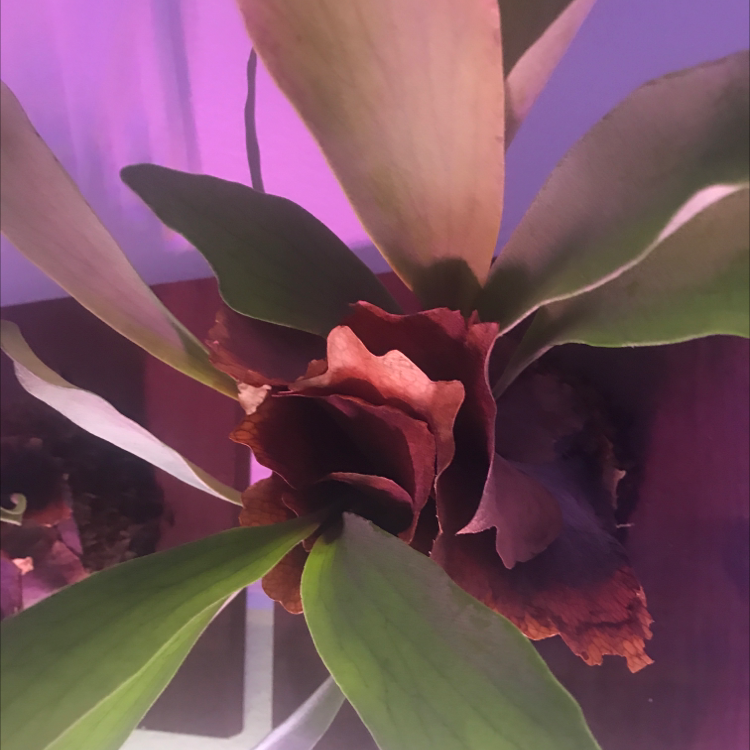
How to Repot an Elkhorn Fern
Repot an Elkhorn Fern every 2 to 3 years into a pot that's 1 to 2 inches wider than the current pot, or remount it onto a fresh wood board. Use a chunky mix of equal parts orchid bark, sphagnum moss, and perlite. Late spring through summer is the best time, when the plant is in active growth.

How to Know It's Time to Repot
Elkhorn Ferns are tree-dwelling plants that cling to wood or fill a pot with their root mass, so the signs of needing a refresh look a bit different than for a standard houseplant. Watch for any of these four signals.
-
1Roots and the bronze shield fronds have grown over the edge of the pot or mount.
-
2The plant has roughly doubled in size since you last potted or mounted it.
-
3The growing medium breaks down into a soggy mess that stays wet for days.
-
4New antler fronds come in noticeably smaller than the older ones.
One sign on its own isn't enough to act on, but two or more together means it's time. Most Elkhorn Ferns need a fresh pot or mount every 2 to 3 years, since the chunky medium breaks down on roughly that schedule.
The Best Time of Year to Repot
Elkhorn Ferns recover fastest when they're in active growth, which kicks in once daytime light gets long and warmth builds. Late spring through summer is the sweet spot.
Avoid repotting in winter, when growth slows and freshly disturbed roots are slow to heal. Use the map below to pin down your window.

How to Choose a Pot and Soil Mix
Pot Size
Move up to a pot that's 1 to 2 inches wider than the current pot. If you're remounting onto a wood board instead of using a pot, go to a board roughly 2 inches wider and taller than the current one to give the bronze shield fronds room to spread.
Pot Material
Terracotta or a slatted wooden basket works well for a potted Elkhorn Fern. Both let the chunky mix breathe and prevent soggy soil at the bottom.
For mounted Elkhorns, untreated cedar, cork, or pine boards are traditional. Whichever option you pick, make sure water can drain freely. Elkhorns rot quickly when their roots sit in wet medium.
Soil Mix
Mix equal parts orchid bark, long-fiber sphagnum moss, and coarse perlite for the chunky, airy blend an Elkhorn Fern wants. This mimics the loose forest debris that builds up where these ferns grow naturally, on tree trunks and branches.
Skip moisture-control formulas, peat-heavy mixes, and standard potting soil on its own. All three hold too much water and pack down around the roots.
How to Repot an Elkhorn Fern, Step by Step
-
1Water lightly the day before. Give the plant a light drink the day before repotting. Slightly moist medium holds together when you lift the root mass without making it heavy and sloppy.
-
2Pick the new pot or board. Choose a pot that's 1 to 2 inches wider than the current pot, with drainage holes, or a wood board roughly 2 inches wider than the current mount. Layer an inch of fresh chunky mix in the bottom of the pot.
-
3Lift the plant out. Handle the plant by the bronze shield fronds at the base, never by the antler fronds, which break off easily. Tip a pot onto its side to slide the root ball out, or gently pry a mounted plant away from the old board with a butter knife.
-
4Inspect and refresh the root mass. Brush away the loose, broken-down old mix from around the roots. Trim away any sections that are black or mushy with clean scissors. Healthy roots are firm and pale brown.
-
5Set it in the new pot or mount. For a pot, center the plant at the same depth it was growing before and fill in around the roots with fresh chunky mix, pressing gently. For a mount, wrap the root ball in a thick layer of damp sphagnum moss, set it against the new board, and tie firmly in place with fishing line or jute twine.
-
6Water and place in bright light. Soak the new mix or moss until water runs through. Set the plant somewhere bright with indirect light and high humidity. Hold off on fertilizer for 4 to 6 weeks so the roots can heal.
What to Expect After Repotting
Weeks 1 to 2
A slight wilt to the antler fronds or a slowdown in new growth is normal as the roots settle into their new mix or mount.
Keep the medium consistently damp but not soggy, give the plant bright indirect light and high humidity, and skip fertilizer for now. A daily misting helps if your home is dry.
Weeks 3 to 6
Fresh antler fronds emerging from the center of the bronze shield are the clearest signal that the plant has settled in.
Ease back into your regular watering rhythm, which typically means soaking the root mass once a week or whenever it dries out. Start half-strength liquid fertilizer once you see new growth, and build up over the next two or three feedings.
Got More Questions?
About This Article
