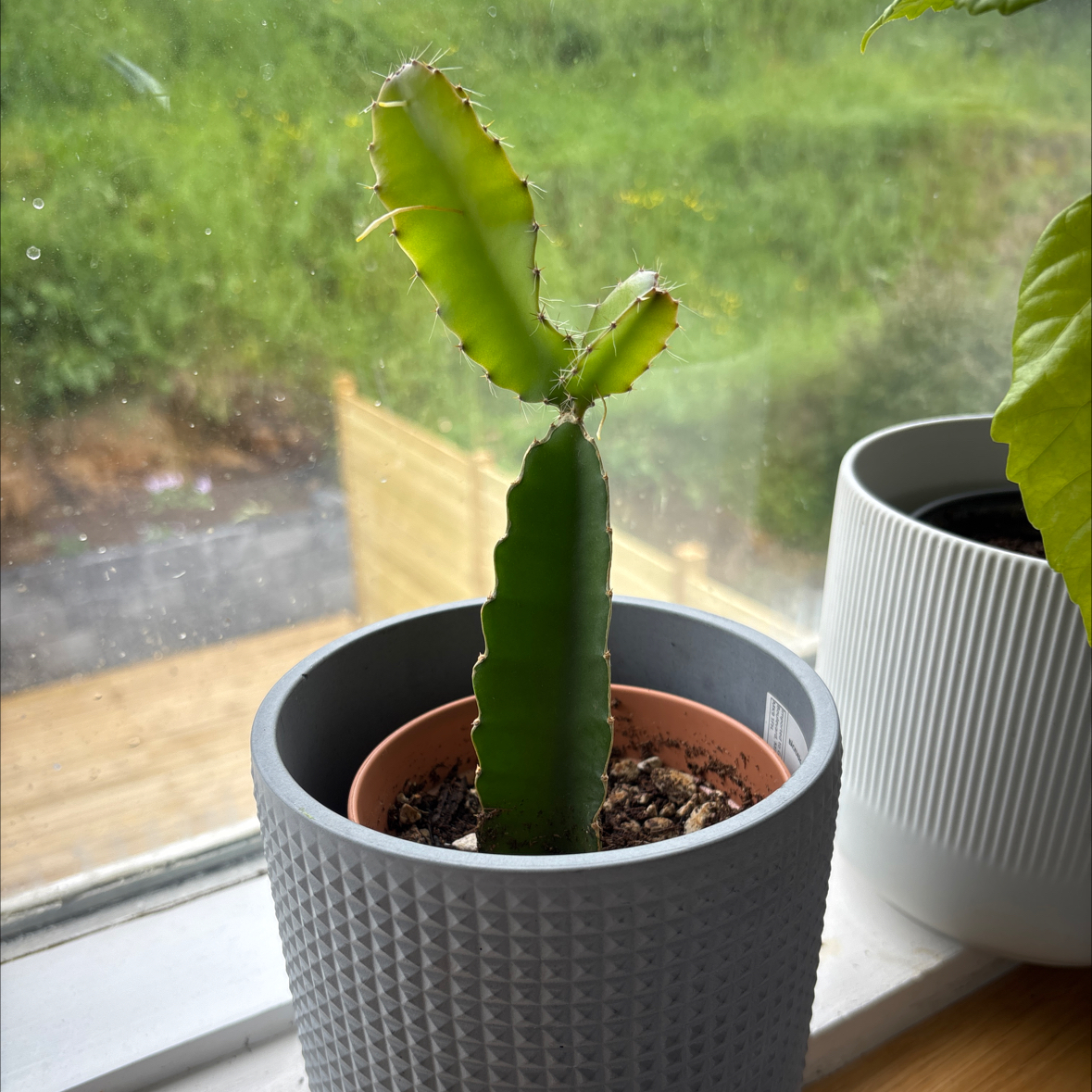
How to Repot a Dragonfruit
Repot Dragonfruit every 2 to 3 years into a deep pot that's 2 to 3 inches wider for stability. Set a strong climbing post in the pot before adding soil. Use a gritty, fast-draining cactus mix, and wait about a week after repotting before the first watering.

How to Know It's Time to Repot
Dragonfruit is a climbing cactus that grows fast and gets heavy once mature, so the signs of a too-tight pot are dramatic. Watch for these four signals.
-
1Roots circle the bottom of the pot or push out through the drainage holes.
-
2The plant has roughly doubled in size since you last potted it up.
-
3The plant is tipping because the long climbing stems are top-heavy for the current pot.
-
4New stem segments come in noticeably thinner than the older ones.
One sign on its own isn't reason enough to act, but two or more together means it's time. Dragonfruit grown for fruit needs a fresh pot every 2 to 3 years to keep up with the plant's vigorous growth and heavy harvest.
The Best Time of Year to Repot
Dragonfruit recovers fastest from repotting in warm weather, when the roots regrow quickly. Late spring through early summer is the window, before peak summer heat and well before the late-summer flowering and fruiting season.
Repotting once flowers or fruit have set usually causes them to drop, and a too-late repot pushes recovery into the hot stressful months. Use the map below to find your window.

How to Choose a Pot and Soil Mix
Pot Size
Move up to a pot that's 2 to 3 inches wider than the current pot. Dragonfruit gets top-heavy fast once it starts climbing, so the extra width adds stability and keeps the plant from tipping. Pick a deep pot too, because a sturdy climbing post needs to be anchored well below the surface.
Pot Material
Heavy ceramic or thick terracotta is the best choice for Dragonfruit because both anchor a top-heavy climbing plant well and resist tipping.
Plastic works for younger plants but becomes unstable as the stems get long and woody. Whichever material you pick, make sure the pot has drainage holes. Dragonfruit roots rot fast in standing water.
Soil Mix
Mix one part standard potting soil with one part coarse perlite or pumice and a handful of orchid bark for the gritty, fast-draining blend Dragonfruit wants. A bagged cactus or succulent mix amended with extra perlite works just as well.
Skip moisture-control formulas and dense peat-heavy mixes. Both hold too much water for these roots and lead to rot.
How to Repot a Dragonfruit, Step by Step
-
1Let the soil dry out. Stop watering a week or two before you plan to repot. Dry soil falls away from the roots cleanly, makes any rotted roots easier to spot, and gives the freshly cut roots a chance to callus before they meet new soil.
-
2Pick the new pot and a climbing post. Choose a deep, heavy pot that's 2 to 3 inches wider than the current pot, with drainage holes. Have a wooden or PVC climbing post ready before you start, since it needs to be set in the bottom of the pot before the soil goes in.
-
3Wear gloves and support the stems. Dragonfruit stems have small spines and are heavy when mature. Wear sturdy gloves and gather the trailing stems gently, with a helper if your plant is tall, before lifting the plant.
-
4Slide the plant out. Lay the pot on its side and gently work the root ball loose. Handle the plant by the root ball rather than the stems. If it's stuck, run a butter knife around the inside edge of the pot to release it.
-
5Set the climbing post first. Stand the climbing post in the center of the new pot and hold it upright. Layer some fresh gritty mix around the base to anchor it before placing the plant.
-
6Set the plant in the pot. Center the plant at the same depth it was growing before, with the stems just brushing the climbing post. Fill in around the sides with gritty mix, pressing firmly as you go to anchor both the post and the heavy plant.
-
7Wait a week, then water. Do not water immediately. Let the freshly cut roots callus over in dry soil for about a week, then give the plant a thorough drink. Watering wet wounds is the fastest way to rot a Dragonfruit after repotting.
What to Expect After Repotting
Weeks 1 to 2
The stems may look slightly limper than usual while the roots reestablish, and any unsupported stems may need help to lean against the new climbing post.
Keep the soil dry for the first week, then water normally. Give the plant full sun outdoors or your brightest window indoors, and skip fertilizer for now.
Weeks 3 to 8
Fresh new stem segments emerging from the existing stems, and aerial roots gripping the climbing post, are the clearest signals that the plant has rooted in and is ready for normal care.
Resume your normal watering rhythm and start half-strength liquid fertilizer once you see clear new growth. Build up to full strength over the next two or three feedings. A bloom-boosting fertilizer in mid-summer encourages flowering and fruit set.
Got More Questions?
About This Article
