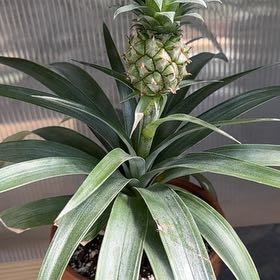
How To Know When To Repot A Pineapple π?
Ananas comosus
By the Greg Editorial Team
Jun 08, 2024•11 min read
This article was created with the help of AI so we can cover more plants for you. May contain errors. See one? Report it here.
- Overcrowded roots and stunted growth signal your pineapple plant needs repotting.
- Repot during growth stages, ideally in late winter, spring, or early summer.
- Post-repotting care involves sunlight, temperature control, and balanced fertilization.
Signs That Your Pineapple Needs Repotting
π± Roots playing peekaboo from the drainage holes? That's your pineapple plant's way of saying, "Hey, I need more room!" Overcrowded roots are a clear sign that your plant is yearning for a new, larger pot.
π Stunted growth is another telltale sign. If your pineapple plant seems to have hit a growth plateau, it's likely because it's run out of space to expand.
π Drooping leaves and general signs of distress can also indicate a need for repotting. These symptoms might be your plant's SOS signal, especially if they persist despite proper watering and lighting conditions.
ποΈ Disintegrated soil is another red flag. Over time, soil loses its nutrients and structure. If the soil in your pineapple plant's pot looks more like dust than dirt, it's time to repot.
Lastly, if your pineapple plant has π‘ yellow spots on its leaves, it might be due to nutrient deficiency. This could be a sign that your plant has exhausted the nutrients in its current pot and needs fresh soil.
Remember, your pineapple plant isn't just a decoration. It's a living, breathing organism that communicates its needs in subtle ways. Pay attention to these signs, and your plant will thank you with lush, vibrant growth.
Choosing the Right Time for Repotting
Timing is everything when it comes to repotting pineapple plants. You don't want to be that person who repots their plant at the wrong time and ends up with a sad, wilted pineapple.
π± Growth Stages and Repotting
Pineapple plants have their own unique growth patterns, and understanding these is key to successful repotting.
Pineapple plants bloom only once. After blooming, they produce offshoot pups and then, well, they kick the bucket. The mother plant's demise, however, is the perfect time to repot the pups. These little guys will have developed their own small root systems and begun to form their own central cup, indicating they're ready to strike out on their own.
πΌ Seasonal Considerations
As for the best season to repot, late winter, spring, and early summer are generally your best bets. This gives the plant ample growing time to recover post-repotting.
However, if you miss this optimal time, don't panic. Your plant may take longer to rebound and start growing again, but it will eventually adjust.
π« When Not to Repot
Avoid repotting during the plant's dormant phase. Also, if your pineapple plant is growing quite well and hasn't outgrown its pot, you might not need to repot it at all. These slow-growing plants won't require repotting often. Many owners keep them in the same pots for several years without any hassle.
To sum up, knowing your pineapple plant's growth stages and being mindful of the seasons will help you choose the right time for repotting.
Repotting Process for Pineapple Plants
Alright, let's get down to business. Repotting a pineapple plant isn't rocket science, but it does require a bit of finesse.
π± Step 1: Prepping the Plant
First things first, prune any dead or diseased growth. This isn't a haircut, so don't go snipping willy-nilly. Be strategic and only remove what's necessary.
π΅οΈ Step 2: Root Inspection
Next, you'll want to inspect the root ball. If you spot any roots that are blocking the flow of water and nutrients, give them the boot.
πΏ Step 3: Freeing the Roots
Now, gently release the roots from the existing pot. You can use a clean knife or garden trowel to loosen the soil around the edges. Remember, pineapple plants have a tiny root system, so be gentle.
πΊ Step 4: Choosing the Right Pot
When it comes to choosing a new pot, size does matter. Pick a pot that's 2" wider than the current one. This gives your plant room to grow without drowning in excess soil.
π‘οΈ Step 5: Securing the Soil
To secure the soil and allow for proper drainage, place a piece of screening at the bottom of the pot. This is like the safety net for your plant's new home.
π± Step 6: Repotting
Now, it's time to repot your pineapple plant into its new digs. Be careful of its sharp leaves and make sure the roots are well spread out.
π§ Step 7: Watering
Once your plant is snug in its new pot, water it thoroughly. The soil should be damp but not soggy. Think of it as a sponge - you want it moist, not dripping.
π± Step 8: Acclimatization
Finally, give your plant some time to adjust. It's normal for it to experience some leaf changes and transplant shock. Trim off any declining leaves as the plant regains its energy and gets rooted into the soil over time.
And there you have it, folks. The art of repotting a pineapple plant. It's not as daunting as it sounds, is it? Just remember, patience is key. Your plant didn't grow overnight, and it won't adjust to its new home overnight either.
Soil and Pot Selection for Pineapple Plants
Choosing the right soil for your pineapple plant is like picking out the perfect pair of shoes. It needs to be comfortable, supportive, and allow for a little bit of growth.
Pineapple plants love well-draining soil. They're like that friend who hates being stuck in a crowd, they need space to breathe. A soil mix that drains quickly prevents the roots from becoming waterlogged and developing root rot.
So, what's the perfect soil recipe for a pineapple plant? Picture a tropical beach. The soil there is sandy, right? A mix of 50% sandy soil provides excellent drainage.
But wait, there's more. Pineapple plants also need nutrients. Adding 25% compost or well-rotted manure to the mix provides the essential nutrients your plant craves.
Finally, to ensure even better drainage, add 25% perlite or vermiculite to the mix. This will keep your pineapple plant's roots happy and healthy.
Now, let's talk about pots. Pineapple plants aren't exactly petite. Their root systems grow as wide as their foliage. So, choose a pot that's large enough to accommodate this growth.
Remember, your pineapple plant's pot should have drainage holes. This allows excess water to escape, preventing waterlogging.
So there you have it. The perfect soil mix and pot for your pineapple plant. Now, go forth and repot!
Aftercare and Maintenance for Repotted Pineapple Plants
Alright, you've successfully repotted your pineapple plant. Congrats! But hold your horses, the journey isn't over yet. Now, it's time to focus on aftercare and maintenance.
π Light and Temperature
Pineapple plants love basking in the sun. They're like the beach bums of the plant world. So, ensure they get at least six hours of direct sunlight each day. If you're growing them indoors, a sunny windowsill is perfect.
As for temperature, these tropical beauties thrive in 65Β°F to 75Β°F (18Β°C to 24Β°C). They're not fans of the cold, so keep them in a warm spot. If your plant starts shivering, you've got a problem.
π¦ Humidity and Watering
Pineapple plants aren't picky about humidity. They're comfortable in average humidity levels of 25% to 50%. But if you live in a desert or a particularly dry environment, consider getting a humidifier. Or, you know, mist your plant occasionally.
When it comes to watering, these plants are like camels. They can tolerate dry soil pretty well. So, wait until the soil has completely dried out before watering. And remember, they're more likely to suffer from overwatering than underwatering.
π± Fertilizing
Fresh soil is like a gourmet meal for pineapple plants. If you've repotted your plant recently, you may not need to fertilize it. But if you decide to, choose a balanced fertilizer with an N-P-K ratio of 9-3-6. Just remember to follow the instructions on the package and avoid fertilizing during the plant's dormant phase.
π΅οΈ Monitoring and Adjusting
After repotting, keep a close eye on your pineapple plant. Monitor the soil moisture level before watering to prevent overwatering. Adjust watering frequency as the soil retains water more effectively after repotting. And remember, patience is key. It can take a while for your plant to settle into its new home.
So, there you have it. The aftercare and maintenance for repotted pineapple plants. It's not rocket science, but it does require a bit of attention and care. But hey, that's part of the fun of growing your own pineapple plant, right?
Frequency of Repotting Pineapple Plants
Pineapple plants are the embodiment of the phrase "slow and steady wins the race." With a growth rate that's more of a leisurely stroll than a sprint, these tropical beauties don't require frequent repotting.
Their roots, much like a hermit in a cave, are content to stay put in their cozy pot homes for quite a while. This is largely due to their small root system, which doesn't expand as aggressively as some other houseplants.
Let's not forget that pineapple plants are a bit of a one-hit wonder. They bloom once, produce pups, and then call it a day. This unique life cycle influences the repotting frequency.
π± Repotting is typically done when the pups develop their own root systems. This is the pineapple plant's way of saying, "Alright, time to move out and get your own place."
But don't rush to evict these pups. Wait until they've begun to form their own central cup. This is their version of packing a suitcase and finding a job. It shows they're ready to grow independently.
So, how often does this happen? Well, it's like waiting for your favorite band to drop a new album. It could be a couple of years. Remember, pineapple tops take at least 24 months to flower, and then another six months for the fruit to mature.
In conclusion, don't fret about frequent repotting with pineapple plants. They're more of a "set it and forget it" type of plant when it comes to their potting needs. Just keep an eye on those pups, and you'll know when it's time for a change.
Troubleshooting Common Repotting Issues for Pineapple Plants
π Root Rot: The Silent Killer
Root rot, the bane of many a gardener, is a common issue with pineapple plants. Overwatering is the usual suspect here. It's like feeding your plant too much cake - sure, it's delicious, but too much of a good thing can be harmful.
If your plant seems loose in its pot, it's time for a root rot check. Carefully remove the plant, trim off any rotting parts, and give it a fresh start in new soil. Remember, after repotting, cut back on watering to avoid creating a soggy mess.
πΏ Iron Deficiency: Not Just for Humans
Iron deficiency can turn your pineapple plant's leaves bright green or yellow. It's like your plant's way of saying, "Hey, I need a multivitamin!" A foliar spray of iron should do the trick.
π Transplant Shock: The Unsettling Settling In
Transplant shock is another common issue. It's like moving to a new city - exciting, but also stressful. If your pineapple plant starts to wilt after repotting, it's probably experiencing transplant shock. The best remedy is patience and care. Avoid unnecessary transplanting to minimize this risk.
π± Overcrowded Roots: The Need for Space
Pineapple plants, like people, need space to grow. If the roots fill the entire pot, it's time for a bigger home. Neglecting to repot can lead to root-bound conditions, where roots become tightly packed and restricted. It's like trying to run a marathon in a phone booth - not ideal.
π Pests: Unwanted Guests
Pests like pineapple mealybugs can cause your plant to die. Treat these unwanted guests with ladybugs or ant control. It's like hiring a bouncer for your plant's exclusive club.
π± Pruning and Repotting Pups: The Next Generation
Once the mother plant has bloomed and sent out offshoot pups, wait for the pups to develop small root systems of their own. Then, carefully sever the pups and repot them individually. It's like sending your kids off to college - they need to be ready to grow independently.
Remember, pruning off dead or damaged leaves can help keep the plant healthy and promote new growth. It's like a haircut for your plant - sometimes, a little trim can make all the difference.
β οΈ Safety First
This content is for general information and may contain errors, omissions, or outdated details. It is not medical, veterinary advice, or an endorsement of therapeutic claims.
Always consult a qualified healthcare professional before using any plant as food, medicine, or supplement.
Never eat any plant (or feed one to pets) without confirming its identity with at least two trusted sources.
If you suspect poisoning, call Poison Control (800) 222-1222, the Pet Poison Helpline (800) 213-6680, or your local emergency service immediately.
Spotted an error? Please report it here.