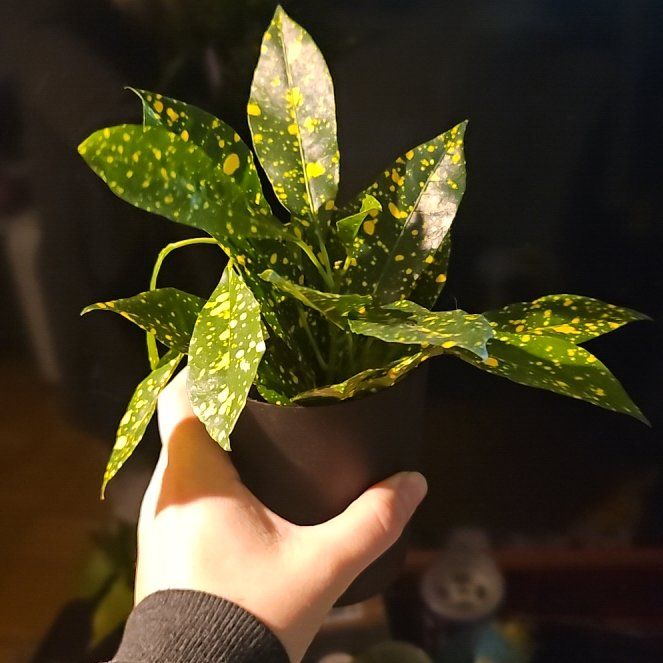
Gold Dust Croton

When to Repot a Gold Dust Croton

Codiaeum variegatum
Reviewed by Kiersten Rankel, M.S.
Quick Answer

Most Gold Dust Crotons want a fresh pot every two to three years. Move into a container one to two inches wider than the current one in spring, and use a well-draining houseplant mix with extra perlite plus a handful of compost.

Stay on top of plant care
Get seasonal reminders for watering and fertilizing โ€” personalized for your plants.
Try Greg Free

How to Know It's Time to Repot

Every Gold Dust Croton is a little different, so the two-to-three-year cadence is a starting point rather than a strict rule. This colorful tropical hates being disturbed, so it's worth waiting for two or three of these signals to show up together before you commit to a repot.

  1. 1
    Roots circle the bottom of the pot or push out through the drainage holes.
  2. 2
    The plant has roughly doubled in size since you last potted it up.
  3. 3
    Soil dries out within a day of watering, even in cooler indoor conditions.
  4. 4
    Lower leaves drop more often than usual, leaving bare lower stems.
  5. 5
    The bright yellow speckling fades on new leaves even though the light hasn't changed.

A single sign on its own is worth keeping an eye on, but Gold Dust Croton is dramatic enough about any change that you really want to be sure before disturbing the roots. When two or more signals show up at once, the plant has clearly outgrown its pot and the brief repot stress is worth the long-term health gain.

The Best Time of Year to Repot

Spring through early summer is the sweet spot for repotting Gold Dust Croton. Longer days mean stronger indoor light, which fuels the colorful new growth that helps the plant bounce back from the inevitable post-repot leaf drop. Avoid the winter months, when low light slows everything down and the recovery period drags on for weeks longer than it needs to. The exact window shifts a bit depending on your latitude, so use the map below to find yours.

Repotting window by US latitude
North
Apr โ€“ Aug
Mid
Mar โ€“ Sep
South
Feb โ€“ Sep

How to Choose a Pot and Soil Mix

Pot Size

Move up by one to two inches in diameter, no more than that. Croton has a moderate root system and any extra wet soil around small roots leads quickly to root rot, which the plant is already prone to. A 6-inch pot suits a young plant nicely, while a 10-inch pot will fit a mature Gold Dust Croton comfortably for several seasons before the next move.

Pot Material

Plastic and glazed ceramic are the best matches for Gold Dust Croton because they hold moisture longer, which suits this tropical's preference for soil that stays evenly damp between waterings. Terracotta can work too, but its porous walls dry the soil out faster and you'll need to water more often to keep up. Whichever you pick, the pot needs at least one drainage hole and shouldn't be a self-watering style, since constantly wet feet are one of the few things this plant can't tolerate.

Soil Mix

A simple blend of two parts standard houseplant mix, one part perlite, and a handful of compost works beautifully. Gold Dust Croton wants soil that stays evenly moist without ever turning soggy, and the perlite is what keeps the mix airy enough for roots to breathe between waterings. Skip dense garden soil and moisture-control formulas, since both compact within a few months and trap water around the roots.

How to Repot a Gold Dust Croton, Step by Step

  1. 1
    Water the day before. Give the plant a thorough drink the day before you plan to repot. Moist soil releases the root ball cleanly as a single piece, instead of crumbling away and stressing the roots of a plant that already hates being disturbed.
  2. 2
    Wear gloves for the sap. Slip on a pair of nitrile gloves before you start. Gold Dust Croton stems leak a milky white sap when cut or snapped, and that sap irritates skin and is toxic if it gets into the mouth or eyes. Lay down newspaper to catch any drips while you work.
  3. 3
    Squeeze, tip, slide. Squeeze the sides of the pot to loosen the root ball, tip it sideways, and ease the plant out by holding the base of the main stem. Never yank by the foliage, since the branches snap fairly cleanly and leak more sap each time.
  4. 4
    Inspect the roots. Tease apart any tightly circling roots with your fingers, going gently so the fine feeder roots stay intact. Healthy Croton roots are pale and firm, so trim away anything dark, soft, or mushy with clean scissors. Try not to do more disturbance than necessary, since every bit of root handling adds to the leaf drop you're about to see.
  5. 5
    Set, fill, water deeply. Add an inch or two of fresh mix to the bottom of the new pot, then settle the plant in so the soil line sits at the same level as before. Fill more mix around the roots, press gently to remove air pockets, and water until it drains through the holes. Return the plant to exactly the same spot it was growing in before the repot.

What to Expect After Repotting

Week 1

Expect dramatic leaf drop, even from a perfectly executed repot. Gold Dust Croton sheds leaves at any sudden change in light, temperature, watering, or pot size, and a repot ticks several of those boxes at once. Keep the plant in bright, indirect light in the same spot it lived before, water consistently when the top inch of soil dries, and skip fertilizer for now.

Weeks 2 to 6

New leaves push out at the branch tips, often coming in even more colorful than the older ones if the light is right. Resume normal watering once the top inch of soil dries between sessions. A balanced liquid fertilizer at half strength every two weeks supports the next flush of growth and helps the yellow speckling deepen back to its full intensity.

Got More Questions?

How often should I repot a Gold Dust Croton?
Every two to three years for most plants. Use that as a rough guide rather than a strict rule, since a Croton in bright light with regular feeding fills its pot faster than one in dimmer conditions. The signs above are more reliable than the calendar, especially because Croton hates disturbance and you don't want to repot more often than necessary.
Do Gold Dust Crotons like to be root-bound?
No, not really. Croton produces its best color and fullest growth when its roots have room to spread out and the soil mix is fresh. A pot-bound plant slows down, drops more leaves, and loses some of its variegation, which are all signs it's ready for a new home rather than that it prefers the cramped one.
Can I repot a Gold Dust Croton I just bought?
Give it three to four weeks first. Croton is famously dramatic about any change in environment, and moving from a nursery to your home is already a big adjustment. Wait until the leaf drop from the move has stopped and new growth has started before adding a repot on top of that stress.
What if my pot doesn't have drainage holes?
Drill a hole in the bottom if you can. A Gold Dust Croton in a sealed pot rots at the roots within weeks, since the bottom soil stays soggy and the plant has no way to dry out between waterings. If drilling isn't an option, treat the decorative pot as a cachepot and slip a plain nursery pot inside instead.
Can I use cactus mix or regular garden soil for a Croton?
Skip both as a primary mix. Garden soil compacts inside a pot and traps water around the roots, while pure cactus mix drains too fast for a plant that prefers steady moisture. A reliable blend is two parts standard houseplant mix to one part perlite with a handful of compost, which gives Croton the moisture-meets-drainage balance it actually wants.
Can I propagate Gold Dust Croton from cuttings during repotting?
Yes, though it takes some patience. Cut a stem section four to six inches long with two or three leaves, dip the cut end in rooting hormone, and plant in moist houseplant mix under a clear plastic bag or dome to hold humidity. Roots form in three to four weeks at warm temperatures, and the high humidity is what makes the difference between success and failure.
Is the white sap from a Croton dangerous?
Yes, it deserves respect. The milky sap that leaks from cut or broken stems irritates skin and is toxic if swallowed, so wear nitrile gloves whenever you handle the plant for repotting or pruning. Keep the plant out of reach of pets that chew leaves, and rinse any sap off skin promptly with soap and water.
Why is my Croton dropping all its leaves after repotting?
This is the trademark Gold Dust Croton response and not a sign you did anything wrong. The plant sheds leaves at any sudden change, and a repot combines disturbed roots, fresh soil, and often a slightly different position all at once. Keep conditions as stable as possible for the next few weeks, hold off on extra fertilizer, and new leaves typically start emerging at the branch tips within three to six weeks.
Why are the new leaves coming in greener and less colorful?
Almost always a light issue rather than anything to do with the repot itself. Gold Dust Croton produces its bright yellow speckling in response to plenty of bright indirect light, and a dimmer spot causes new leaves to come in mostly green. Move the plant a little closer to a bright window, give it a few weeks, and the next flush of leaves should show the full variegation again.
Stay on top of plant care
Get seasonal reminders for watering and fertilizing โ€” personalized for your plants.
Try Greg Free

About This Article

Kiersten Rankel, M.S.
Botanical Data Lead at Greg ยท Plant Scientist
About the Author
Kiersten Rankel holds an M.S. in Ecology & Evolutionary Biology from Tulane University. A certified Louisiana Master Naturalist, she has over a decade of experience in science communication, with research spanning corals, cypress trees, marsh grasses, and more. At Greg, she curates species data and verifies care recommendations against botanical research.
See Kiersten Rankel's full background on LinkedIn.
Editorial Process
Repotting guidance verified against Codiaeum variegatum growth data from Greg's botanical database, cross-referenced with USDA hardiness zone data and published horticultural research.
23,963+ Greg users growing this plant
USDA hardiness zones 10aโ€“12b