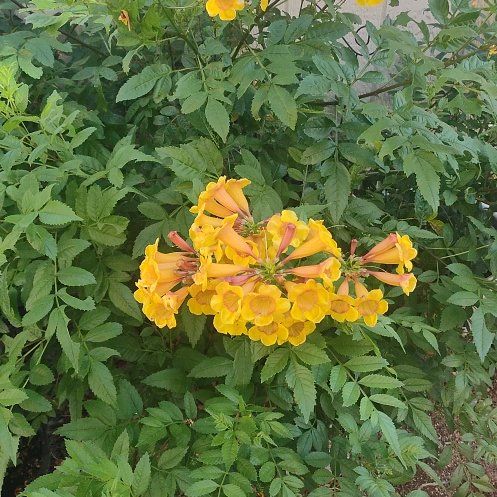
Yellow Bells

How to Prune Yellow Bells

Tecoma stans
Reviewed by Kiersten Rankel M.S.
Quick Answer
Prune Yellow Bells in late winter to early spring, just before new growth begins. Focus on removing dead, crossing, or inward-pointing branches and cut back long stems by about a third to shape the plant. Avoid cutting into old woody growth with no leaves, as Yellow Bells may not recover from severe pruning.

When is the best time to prune?

Pruning timing shifts a few weeks depending on your region, since Yellow Bells breaks dormancy earlier where winters are mild.

US pruning regions map
Pacific
Jan–Feb
Mountain
Mar–Apr
Midwest
Mar–Apr
Northeast
Mar–Apr
Southeast
Feb–Mar
Stay on top of plant care
Get seasonal reminders for watering and fertilizing — personalized for your plants.
Try Greg Free

Why Should I Prune My Yellow Bells?

Yellow Bells (Tecoma stans) is a fast-growing, upright shrub that can become leggy and top-heavy if left unpruned. Cutting it back in late winter, before the new season's growth begins, keeps it compact and encourages more flowering stems.

This plant blooms on new wood, so pruning before growth starts actually increases the number of bright yellow flowers you get. If you skip a season, you may end up with a tall, open plant that flowers only at the tips.

Remove any stems that died back over winter, as well as branches that are crossing or rubbing against each other. You can cut the overall plant back by about a third without stressing it.

Avoid cutting deep into bare, woody stems that have no leaves or buds. Yellow Bells won't reliably push new growth from those old sections, and you could end up with dead stubs.

Know Before You Cut

Difficulty Easy
Max removal 1/3 of total growth
Growth pattern Upright shrub
Tools Pruners or loppers

What Should I Remove?

Remove winter-killed or frost-damaged stems
Cut back long, leggy stems by up to a third
Open up the center by removing crossing branches
Deadhead spent flower clusters to encourage reblooming
Don't cut deep into old bare wood with no buds
Don't prune after midsummer or you may remove flower buds
Don't skip annual pruning or the plant becomes top-heavy

How Do I Prune Step by Step?

1
Inspect the plant before cutting
Look over the whole plant for stems that are dead, broken, or crossing. Dead stems will be dry and brittle and won't have any green when you scratch the bark.
2
Remove dead and damaged stems first
Cut dead stems back to healthy wood, which will look green just under the bark. Make your cut just above an outward-facing bud or where the stem meets a larger branch.
3
Shorten the longest stems
Cut the longest stems back by up to a third, just above a leaf node or side branch. This encourages branching and more flowers later in the season.
4
Open up the center
Remove any branches that are crossing, rubbing, or growing inward toward the center of the plant. This improves airflow and reduces disease pressure.
5
Clean up and dispose
Collect all cuttings and remove them from the area. If any stems showed signs of disease, bag and dispose of them rather than composting.

Frequently Asked Questions

Can I prune Yellow Bells in the fall?
It's better to wait until late winter or early spring. Fall pruning can stimulate tender new growth that frost will kill, and you may cut off buds that were set for the following season.
What if I cut back too much?
Yellow Bells generally recovers well if you haven't cut deeply into old bare wood. If it was over-pruned but still has some leafy stems, it will usually bounce back within a growing season.
Why is my Yellow Bells leggy with flowers only at the top?
This is the classic sign that it hasn't been pruned regularly. Cut it back by a third in late winter and it will produce branching new growth with flowers distributed more evenly.
Do I need to deadhead Yellow Bells?
Deadheading spent flower clusters encourages the plant to produce more blooms rather than putting energy into seeds. It's not strictly required, but it does extend the flowering season.
Stay on top of plant care
Get seasonal reminders for watering and fertilizing — personalized for your plants.
Try Greg Free

About This Article

Kiersten Rankel M.S.
Botanical Data Lead at Greg · Plant Scientist
About the Author
Kiersten Rankel holds an M.S. in Ecology & Evolutionary Biology from Tulane University. A certified Louisiana Master Naturalist, she has over a decade of experience in science communication, with research spanning corals, cypress trees, marsh grasses, and more. At Greg, she curates species data and verifies care recommendations against botanical research.
See Kiersten Rankel's full background on LinkedIn.
Editorial Process
Pruning guidance verified against Tecoma stans growth data from Greg's botanical database, cross-referenced with USDA hardiness zone data and published horticultural research.
534+ Greg users growing this plant
USDA hardiness zones 7b–11b
Grow plants with confidence