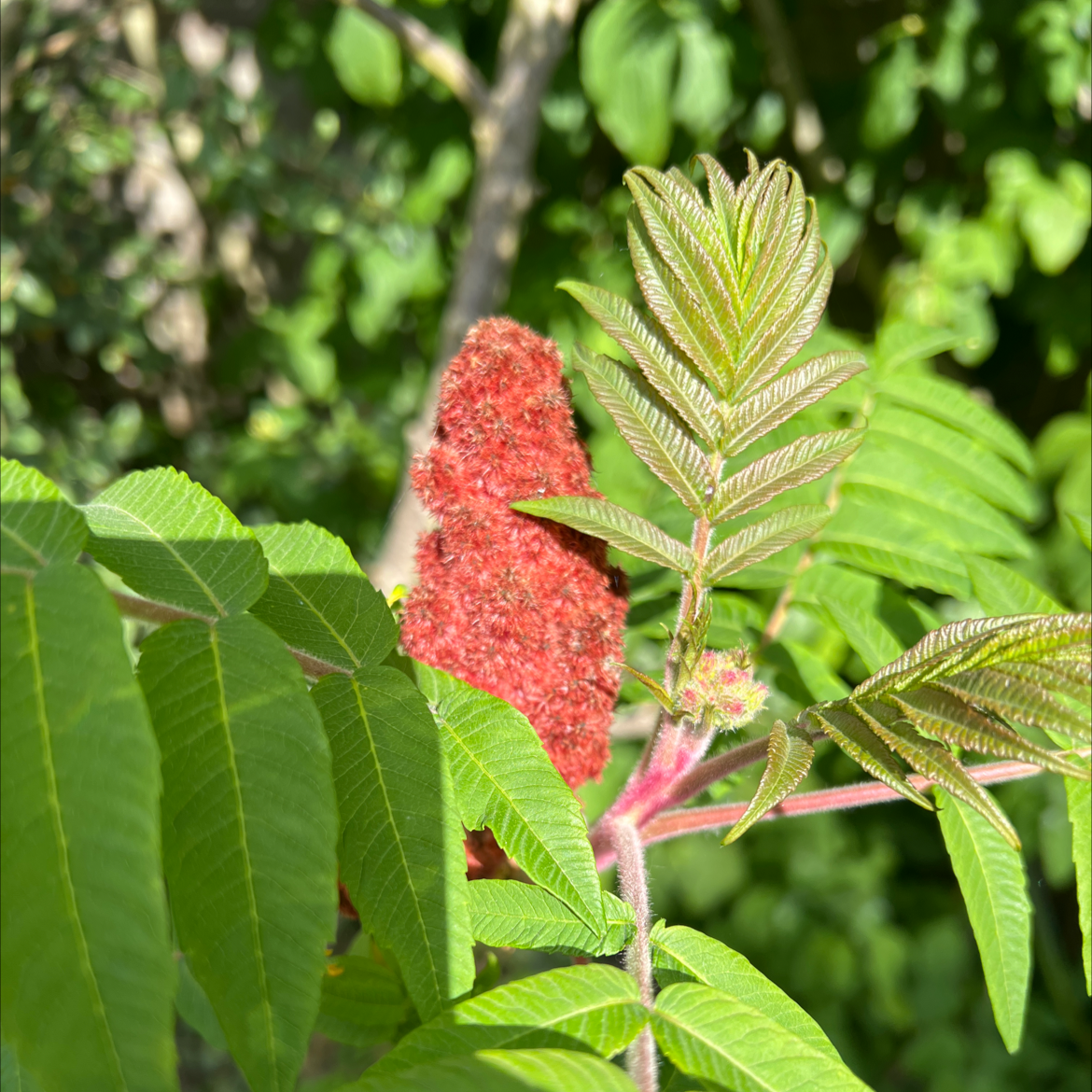
Staghorn Sumac

How to Prune Staghorn Sumac

Rhus typhina
Reviewed by Kiersten Rankel M.S.
Quick Answer
Prune Staghorn Sumac in late winter (February–March) before the buds break open. Focus on removing dead, crossing, or crowding stems and cutting back any suckers spreading beyond where you want the plant. Avoid removing more than a quarter of the canopy in a single season, as heavy pruning can actually trigger a surge of new root suckers.

When is the best time to prune?

Staghorn Sumac is fully deciduous, so late-winter dormancy pruning works across all regions, though timing shifts with local frost patterns.

US pruning regions map
Pacific
Feb–Mar
Mountain
Mar–Apr
Midwest
Feb–Mar
Northeast
Feb–Mar
Southeast
Jan–Feb
Stay on top of plant care
Get seasonal reminders for watering and fertilizing — personalized for your plants.
Try Greg Free

Why Should I Prune My Staghorn Sumac?

Staghorn Sumac is a vigorous, suckering shrub or small tree native to eastern North America. Its bold branch structure and brilliant fall color make it a standout, but without some guidance it spreads aggressively via root suckers and can quickly take over an area.

Pruning during late-winter dormancy gives you the clearest view of the branch structure, before leaves hide what you’re working with. It’s also the safest time to cut without stressing the plant.

Remove suckers as close to the ground as possible. Cutting them at soil level discourages immediate resprouting. Leaving stubs actually encourages them to multiply.

Be aware that heavy pruning or removal of large portions of the plant often triggers a flush of new suckers from the roots. Light, selective pruning each year is easier to manage than letting it go and then cutting hard.

Know Before You Cut

Difficulty Moderate
Max removal 1/4 of the canopy per season
Growth pattern Spreading suckering shrub
Tools Hand pruners, loppers, pruning saw

What Should I Remove?

Remove suckers at ground level, not as stubs
Cut out dead, crossing, or crowding branches
Prune while fully dormant for clearest view of structure
Wear gloves, as sap can irritate skin
Don’t remove more than a quarter of the canopy at once
Don’t leave sucker stubs, they’ll resprout vigorously
Don’t top the main stems, it ruins the natural layered form

How Do I Prune Step by Step?

1
Work during full dormancy
Wait until the plant has dropped all its leaves and is fully dormant, typically late January through March depending on your region.
2
Remove suckers at ground level
Cut any root suckers as close to the soil surface as possible. Using a sharp spade to sever them below ground is even better if you can reach them.
3
Clear out dead and damaged branches
Follow any dead or brittle stems back to where they meet a live branch and cut just above that junction.
4
Thin crowding stems
Where branches are crossing or rubbing, remove the weaker of the two back to the main trunk or a healthy side branch. Keep the most upright, well-spaced stems.
5
Step back and assess
Staghorn Sumac’s best feature is its bold, open silhouette. Step back after each cut and aim to preserve that character rather than creating a tight, clipped shape.

Got More Questions?

Can I cut Staghorn Sumac back hard to control the size?
You can, but hard pruning often backfires because it stimulates a surge of new root suckers. Light selective pruning each year is more effective at keeping it contained over time.
What if I prune it in summer?
Summer pruning is possible but the sap is more active and the plant is under greater stress. Late winter is better, but removing dead wood or a few suckers in summer won’t harm the plant.
Will it bleed sap if I prune in winter?
Staghorn Sumac does produce a milky sap when cut, but it’s less active during dormancy. Wear gloves regardless, as the sap can cause skin irritation in some people.
The suckers are everywhere. How do I stop them?
Consistent removal close to the soil surface is the best strategy. Root barriers installed underground can help prevent spread into adjacent areas. No amount of pruning will eliminate suckers entirely — it’s just a management task.
Stay on top of plant care
Get seasonal reminders for watering and fertilizing — personalized for your plants.
Try Greg Free

About This Article

Kiersten Rankel M.S.
Botanical Data Lead at Greg · Plant Scientist
About the Author
Kiersten Rankel holds an M.S. in Ecology & Evolutionary Biology from Tulane University. A certified Louisiana Master Naturalist, she has over a decade of experience in science communication, with research spanning corals, cypress trees, marsh grasses, and more. At Greg, she curates species data and verifies care recommendations against botanical research.
See Kiersten Rankel's full background on LinkedIn.
Editorial Process
Pruning guidance verified against Rhus typhina growth data from Greg's botanical database, cross-referenced with USDA hardiness zone data and published horticultural research.
138+ Greg users growing this plant
USDA hardiness zones 3a–8b
Grow plants with confidence