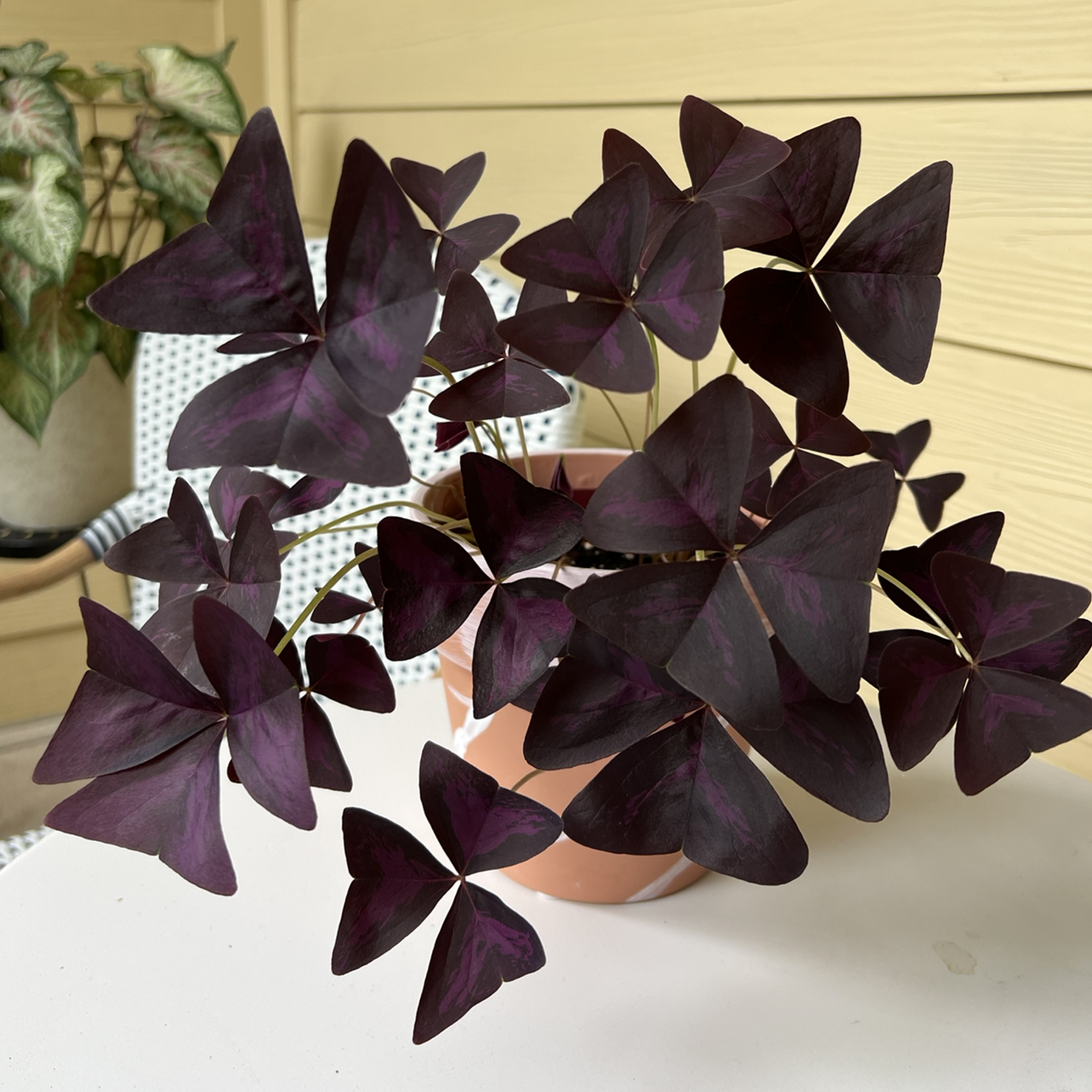
Purple Shamrocks

How to Prune Purple Shamrocks

Oxalis triangularis
Reviewed by Kiersten Rankel M.S.
Quick Answer
When your Purple Shamrocks goes dormant -- leaves yellowing and collapsing -- cut all foliage back to soil level and let the bulbs rest for four to eight weeks. New growth will emerge on its own when the plant is ready. This is the most important pruning you'll do all year.

When is the best time to prune?

Purple Shamrocks go through periodic dormancy regardless of season, so timing varies by plant cycle rather than calendar month, though dormancy most often occurs in late summer or fall.

US pruning regions map
Pacific
Aug–Oct (dormancy period)
Mountain
Aug–Oct (dormancy period)
Midwest
Aug–Oct (dormancy period)
Northeast
Aug–Oct (dormancy period)
Southeast
Aug–Oct (dormancy period)
Stay on top of plant care
Get seasonal reminders for watering and fertilizing — personalized for your plants.
Try Greg Free

Why Should I Prune My Purple Shamrocks?

Purple Shamrocks grow from small bulb-like rhizomes and naturally go dormant one or more times a year. When dormancy hits, the leaves yellow, fold up, and eventually die back. This is completely normal and not a sign of a sick plant.

Cutting the plant back to soil level when dormancy starts is the main pruning event. Remove all the yellow and collapsed foliage. Then move the pot to a cool, dim spot and stop watering for four to eight weeks. The rhizomes are resting underground and will push up fresh growth when the rest period is over.

Outside of dormancy, you can remove individual leaves that turn yellow or look tired at any time. Just pull or cut them at the base. Purple Shamrocks make lots of foliage, so this kind of tidying is ongoing.

Be cautious: Oxalis triangularis is toxic to pets. Keep clippings and the plant out of reach of cats and dogs.

Know Before You Cut

Difficulty Easy
Max removal All foliage during dormancy; otherwise individual leaves only
Growth pattern Clumping bulb
Tools Scissors or sharp pruners

What Should I Remove?

Cut all foliage to soil level when the plant goes dormant
Remove individual yellow or dead leaves during active growth
Allow 4–8 weeks of dry rest after cutting back dormant foliage
Don't keep watering after cutting back -- let the bulbs rest
Don't dig up or disturb the bulbs during the rest period
Don't panic when leaves collapse -- it's normal dormancy

How Do I Prune Step by Step?

1
Recognize dormancy before you cut
Wait until leaves are mostly yellow and collapsing, not just slightly droopy. Cutting back too early while leaves are still green shortens the active growing period unnecessarily.
2
Cut all foliage to soil level
Use scissors or pruners to cut all stems at or just above the soil line. Remove all the yellowed foliage from around the pot.
3
Move to a cool, dim spot and stop watering
Place the pot somewhere cooler and out of direct light. Stop watering entirely for four to eight weeks while the rhizomes rest underground.
4
Resume watering when new growth appears
When you see tiny new shoots emerging from the soil, move the pot back to bright light and begin watering normally. Growth will accelerate quickly from here.
5
Remove individual tired leaves during active seasons
Between dormancy cycles, pull or cut off any leaves that turn yellow or look damaged at the base of the leaf stem. This keeps the plant looking tidy without triggering dormancy.

Got More Questions?

My Purple Shamrocks is going dormant in spring. Did I do something wrong?
No -- Purple Shamrocks can go dormant at various times of year, not just fall. It's often triggered by stress like drought, temperature swings, or repotting. Just cut back and let it rest.
What if new growth never comes back after dormancy?
Give it up to eight to ten weeks. If nothing emerges, carefully dig down to check that the rhizomes are still firm and not rotted. Healthy rhizomes are tan or white and firm -- not mushy. If they're firm, wait a little longer and try watering lightly.
Can I skip cutting it back and let the dead leaves fall off naturally?
You can, but removing the dead foliage keeps the pot cleaner and reduces the chance of mold growing on decaying leaves near the soil line. Cutting back is the tidier approach.
Is Purple Shamrocks safe to prune around pets?
No -- Oxalis triangularis is toxic to cats and dogs. Keep clippings out of reach and wash your hands after handling the plant.
Stay on top of plant care
Get seasonal reminders for watering and fertilizing — personalized for your plants.
Try Greg Free

About This Article

Kiersten Rankel M.S.
Botanical Data Lead at Greg · Plant Scientist
About the Author
Kiersten Rankel holds an M.S. in Ecology & Evolutionary Biology from Tulane University. A certified Louisiana Master Naturalist, she has over a decade of experience in science communication, with research spanning corals, cypress trees, marsh grasses, and more. At Greg, she curates species data and verifies care recommendations against botanical research.
See Kiersten Rankel's full background on LinkedIn.
Editorial Process
Pruning guidance verified against Oxalis triangularis growth data from Greg's botanical database, cross-referenced with USDA hardiness zone data and published horticultural research.
8,793+ Greg users growing this plant
USDA hardiness zones 8a–11b
Grow plants with confidence