How to Prune Pineapple
When is the best time to prune?
Pineapple grows year-round in tropical and subtropical climates, but the main pruning tasks are most active during and after fruiting, which varies by region and planting time.


Why Should I Prune My Pineapple?
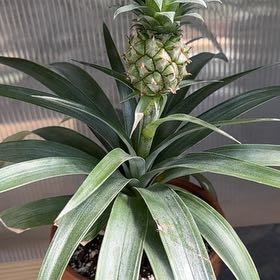
Pineapple (Ananas comosus) is a rosette-forming bromeliad. Unlike most plants, it does not branch or produce multiple shoots from its main stem. Pruning is mostly about managing the base leaves and the ratoon shoots that emerge after the main plant fruits.
The most common pruning task is removing dead, brown, or badly damaged lower leaves. These leaves accumulate at the base over time. Snap or cut them off close to the central stem. This keeps the plant tidy, reduces places where pests and rot can hide, and improves airflow around the base.
After the main plant produces a fruit, it begins to decline. The most important decision at that point is what to do with the ratoon shoots. These are new plants that sprout from the base or sides of the parent plant. You can remove all but one to grow as your next fruiting plant, or remove them all and compost the parent plant. If you leave multiple ratoons, they will crowd each other and none will fruit well.
The leafy crown of the harvested pineapple fruit itself can be dried and planted to start a new plant. This is not pruning per se, but it is part of the pineapple's natural life cycle.
Know Before You Cut
What Should I Remove?
How Do I Prune Step by Step?
Got More Questions?
About This Article
