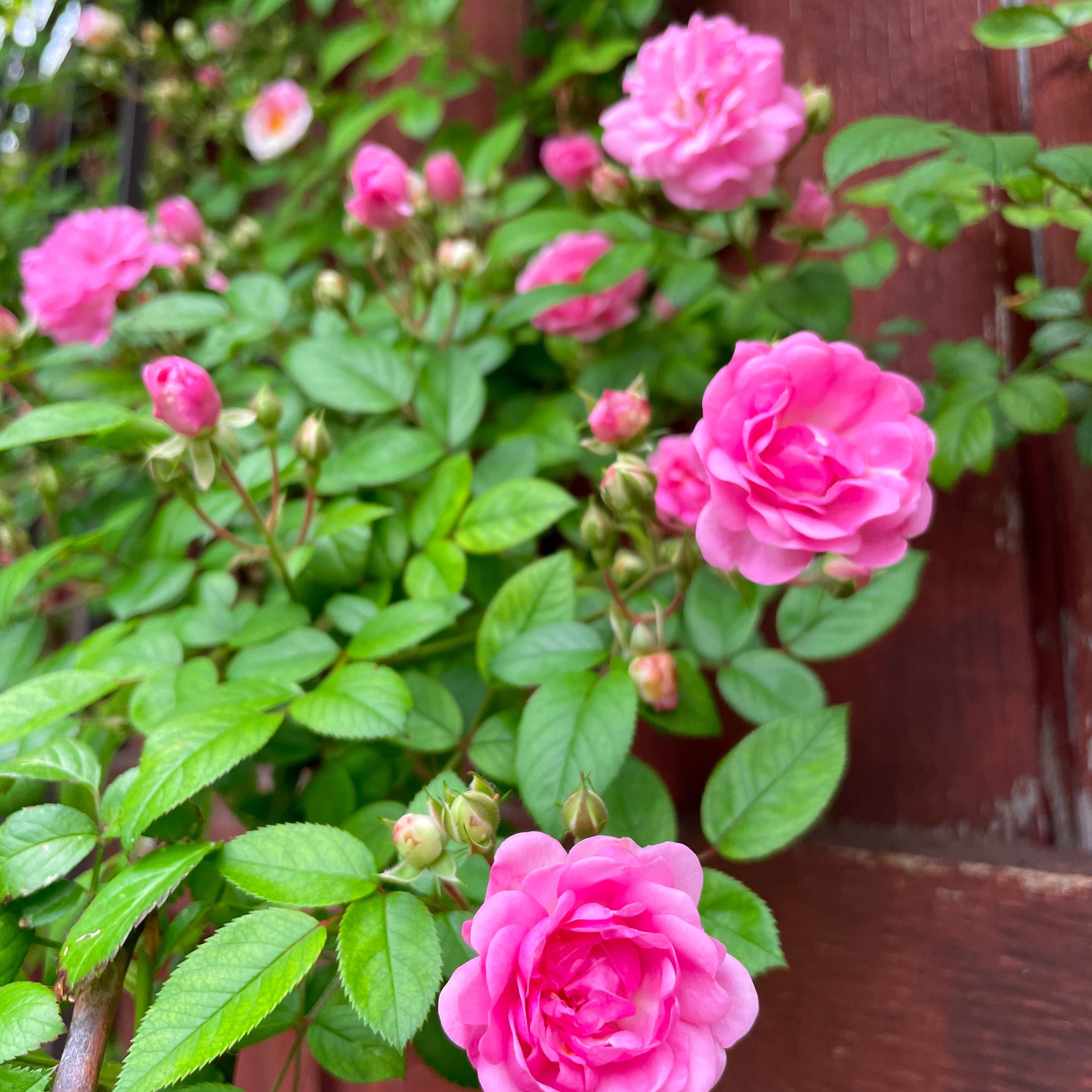
Peggy Martin Rose

How to Prune Peggy Martin Rose

Rosa 'Peggy Martin'
Reviewed by Kiersten Rankel M.S.
Quick Answer
Prune Peggy Martin Rose in late winter or early spring, just as buds begin to swell (February through March in most climates). Focus on removing dead, damaged, or crossing canes down to healthy wood. Never remove more than one-third of the plant at one time, and always cut above an outward-facing bud.

When is the best time to prune?

Timing depends on your last frost date, so gardeners in warmer regions can start earlier than those in colder areas.

US pruning regions map
Pacific
Feb–Mar
Mountain
Apr–May
Midwest
Mar–Apr
Northeast
Apr–May
Southeast
Feb–Mar
Stay on top of plant care
Get seasonal reminders for watering and fertilizing — personalized for your plants.
Try Greg Free

Why Should I Prune My Peggy Martin Rose?

Peggy Martin is a vigorous climbing rose known for surviving extreme conditions, including Hurricane Katrina. Left unpruned, it can become a tangled thicket that produces fewer flowers. Annual pruning keeps the plant productive and manageable.

The goal is to open up the plant so air circulates freely and light reaches the interior canes. Crowded canes lead to disease problems, especially black spot and powdery mildew. Removing old, thick canes encourages younger, more floriferous growth from the base.

This rose blooms on new growth from old wood, so prune before the plant leafs out in spring. Light deadheading and tip pruning through the season extends bloom time. A harder cut back after the first flush encourages a strong rebloom cycle.

Avoid cutting canes smaller than a pencil in diameter unless they are dead or diseased. Stubby cuts and torn wood invite disease. Always cut at a 45-degree angle just above an outward-facing bud.

Know Before You Cut

Difficulty Moderate
Max removal 1/3 of total canes per year
Growth pattern Vigorous climbing rose
Tools Pruners, loppers, gloves

What Should I Remove?

Remove dead or blackened canes down to healthy white pith
Cut crossing or rubbing canes back to the base
Prune oldest thick canes to encourage fresh basal growth
Deadhead spent blooms just above the first 5-leaflet leaf
Make all cuts at a 45-degree angle above an outward-facing bud
Don't prune after late spring or you'll lose next year's buds
Don't leave stubs longer than 1/4 inch above a bud
Don't remove more than 1/3 of the plant in one session

How Do I Prune Step by Step?

1
Gather tools and put on heavy gloves
Peggy Martin canes carry sharp thorns. Use thick leather or puncture-resistant gloves and bypass pruners. Wipe blades with rubbing alcohol before starting to avoid spreading disease.
2
Remove all dead and diseased canes
Cut dead canes down to the bud union or to live wood. The inside should be white or cream; discard anything with brown or black pith. Make each cut clean and close to the healthy parent cane.
3
Remove crossing and congested canes
Identify canes rubbing against each other and remove the weaker one at its base. Aim for an open structure where air and light can reach the center. Keep five to seven of the healthiest, youngest canes.
4
Shorten remaining canes by one-third
Cut each remaining cane back by about one-third, cutting 1/4 inch above an outward-facing bud at a 45-degree angle. This directs new growth outward rather than into the center.
5
Clean up and train new growth
Remove all clippings from under the plant to reduce disease pressure. As new canes grow in spring, tie them to their support structure to keep the climber tidy.

Got More Questions?

Can I prune Peggy Martin Rose in the fall?
Avoid heavy pruning in fall. It can stimulate new tender growth that gets damaged by frost. Light cleanup of spent blooms is fine, but save major pruning for late winter.
What if I accidentally cut too much off?
Peggy Martin is an exceptionally resilient rose. If you cut back too hard, it will likely push new growth from the base. Water well and give it time. It may produce fewer blooms that year but should recover fully.
How do I know which canes to keep?
Keep canes that are young (thinner, greenish bark), healthy, and pointing outward or upward. Remove the oldest, thickest, grayish canes each year to encourage younger replacement growth from the base.
Should I remove the hips in fall?
You can leave hips for winter interest and wildlife, but removing them once they start to shrivel prevents disease and redirects energy to next season's roots and buds.
Stay on top of plant care
Get seasonal reminders for watering and fertilizing — personalized for your plants.
Try Greg Free

About This Article

Kiersten Rankel M.S.
Botanical Data Lead at Greg · Plant Scientist
About the Author
Kiersten Rankel holds an M.S. in Ecology & Evolutionary Biology from Tulane University. A certified Louisiana Master Naturalist, she has over a decade of experience in science communication, with research spanning corals, cypress trees, marsh grasses, and more. At Greg, she curates species data and verifies care recommendations against botanical research.
See Kiersten Rankel's full background on LinkedIn.
Editorial Process
Pruning guidance verified against Rosa 'Peggy Martin' growth data from Greg's botanical database, cross-referenced with USDA hardiness zone data and published horticultural research.
64+ Greg users growing this plant
USDA hardiness zones None–None
Citations:
LSU AgCenter
Grow plants with confidence