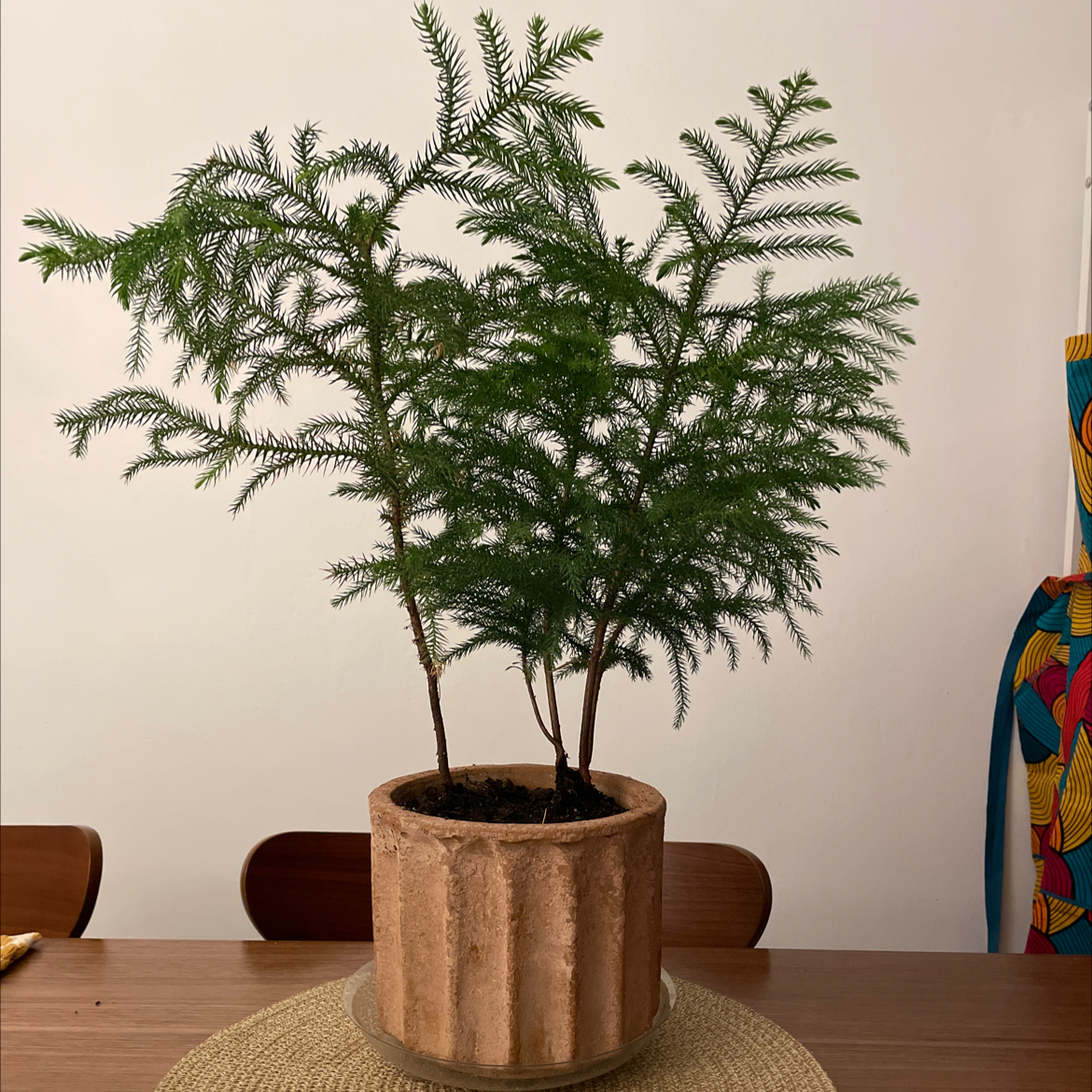
Norfolk Island Pine

How to Prune Norfolk Island Pine

Araucaria heterophylla
Reviewed by Kiersten Rankel M.S.
Quick Answer
Prune Norfolk Island Pine in spring, limiting yourself to removing dead or damaged branches and any that have lost their needles. Never cut the central top leader, as this tree grows from a single terminal bud and will not replace it if removed. Minimal pruning is best since this species does not regenerate from old wood.

When is the best time to prune?

Because Norfolk Island Pine is grown mostly indoors in zones below 9, timing is less about season and more about avoiding cold stress when moving plants in or out.

US pruning regions map
Pacific
Mar–Apr
Mountain
Apr–May
Midwest
Apr–May
Northeast
Apr–May
Southeast
Mar–Apr
Stay on top of plant care
Get seasonal reminders for watering and fertilizing — personalized for your plants.
Try Greg Free

Why Should I Prune My Norfolk Island Pine?

Norfolk Island Pine has a naturally symmetrical, tiered form. The goal of pruning is not to reshape it but to remove dead wood and maintain that tidy appearance. Most indoor plants only need light attention once a year.

The most important rule: never cut the central top stem. This tree grows upward from a single point at the very top called a terminal bud. If you remove it, the tree cannot replace it and will stay flat-topped permanently. No other branch will take over as the new leader.

Lower branches that have turned brown and dried out can be removed cleanly where they meet the trunk. This is normal as the tree matures, and removing them keeps the plant looking its best. Do not remove green, healthy lower tiers just to raise the canopy.

Indoor plants sometimes develop asymmetry from uneven light. Rotate the pot a quarter turn every few weeks rather than pruning to fix the imbalance.

Know Before You Cut

Difficulty Moderate
Max removal Dead branches only
Growth pattern Upright tree
Tools Clean, sharp pruners or scissors

What Should I Remove?

Remove brown, dried lower branches where they meet the trunk
Clip any damaged or dead branch tips
Wipe tools clean before and after to prevent disease
Never cut the central top leader
Don't remove healthy green branch tiers
Don't try to reshape by cutting into live wood
Don't expect cut stumps to regrow new branches

How Do I Prune Step by Step?

1
Check the plant for dead branches
Work from the bottom up and look for tiers where all the needles have dropped or turned brown. Gently tug on a branch tip to confirm it is dry rather than just dormant.
2
Remove dead branches at the base
Cut each dead branch flush where it meets the main trunk, using clean sharp pruners. A clean cut heals better than a ragged one. Do not leave stubs.
3
Trim any damaged branch tips
If only the tip of a branch is brown, cut back to where the branch is still green and healthy. Make your cut just beyond a healthy side bud if one is visible.
4
Leave the top leader untouched
Step back and confirm the central top stem is still intact before you finish. This is the most important step. If it looks healthy, leave it completely alone.

Got More Questions?

Can I cut the top off my Norfolk Island Pine to keep it shorter?
No. Cutting the terminal leader is permanent. The tree will not grow a new tip to replace it, and the flat top cannot be fixed. If your tree is outgrowing your space, consider a larger room or a new home for it.
Why are the lower branches dying on my Norfolk Island Pine?
Some loss of lower branches is natural as the tree matures and puts energy into upward growth. Low light and dry air speed up this process. Improve humidity and light before pruning off healthy but pale lower tiers.
What if I accidentally broke a branch?
Clean up the break with a sharp cut flush to the trunk. The tree will not regrow a branch from that spot, but one clean cut heals better than a jagged break and is less likely to cause rot.
Is there a best time of year to prune Norfolk Island Pine?
Spring is slightly better because the plant is moving into its active growing phase, which helps wounds seal faster. Avoid pruning in fall or winter when growth has slowed.
Stay on top of plant care
Get seasonal reminders for watering and fertilizing — personalized for your plants.
Try Greg Free

About This Article

Kiersten Rankel M.S.
Botanical Data Lead at Greg · Plant Scientist
About the Author
Kiersten Rankel holds an M.S. in Ecology & Evolutionary Biology from Tulane University. A certified Louisiana Master Naturalist, she has over a decade of experience in science communication, with research spanning corals, cypress trees, marsh grasses, and more. At Greg, she curates species data and verifies care recommendations against botanical research.
See Kiersten Rankel's full background on LinkedIn.
Editorial Process
Pruning guidance verified against Araucaria heterophylla growth data from Greg's botanical database, cross-referenced with USDA hardiness zone data and published horticultural research.
7,438+ Greg users growing this plant
USDA hardiness zones 9a–11b
Grow plants with confidence