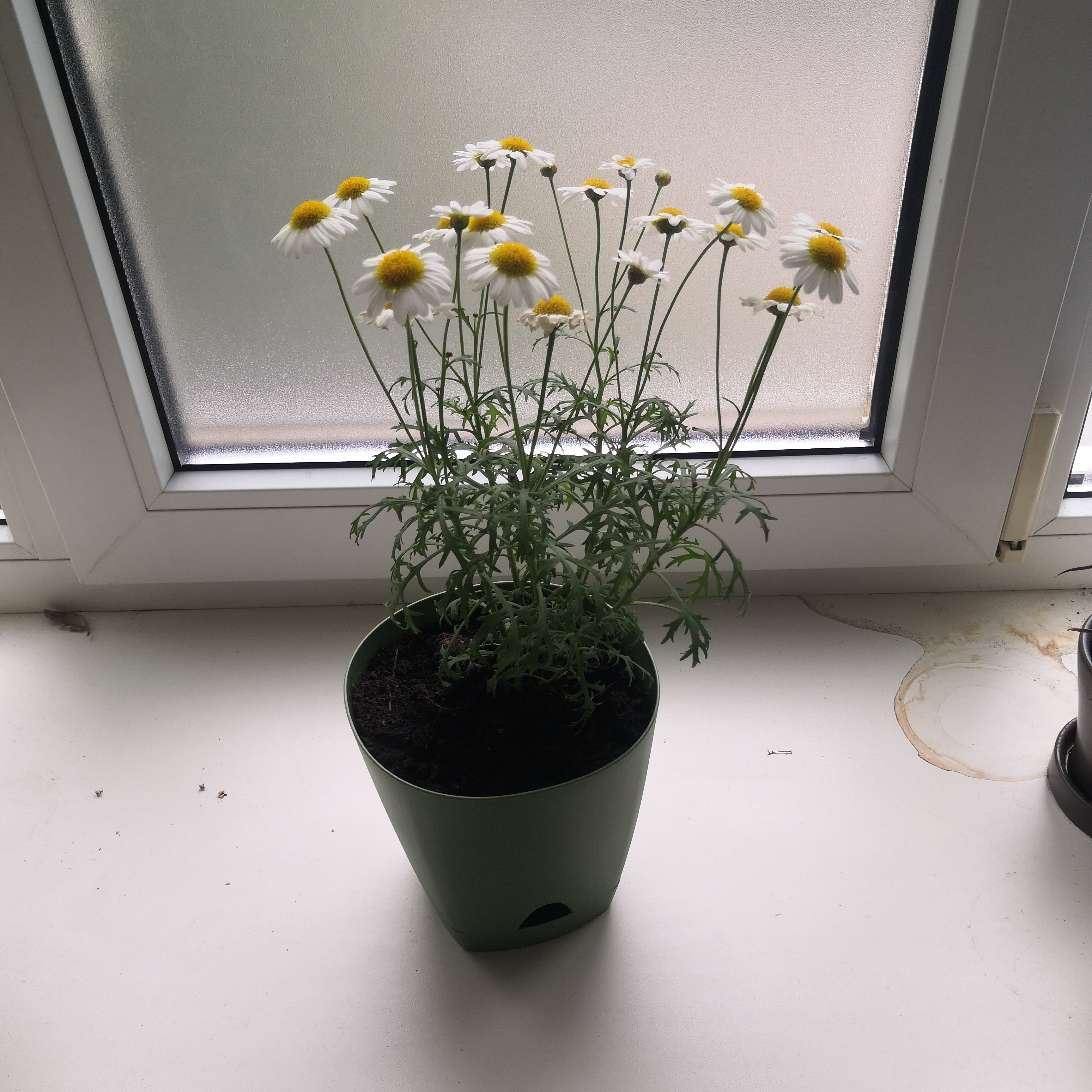
Marguerite Daisy

How to Prune Marguerite Daisy

Argyranthemum frutescens
Reviewed by Kiersten Rankel M.S.
Quick Answer
Deadhead Marguerite Daisy constantly throughout the blooming season by snipping spent flowers just above the nearest set of leaves. In late summer or early fall, cut the entire plant back by about a third to refresh it and push a second flush of blooms. Don't cut into woody bare stems as they rarely resprout.

When is the best time to prune?

Marguerite Daisy blooms on new growth and has a natural tendency toward woodiness, so pruning timing focuses on keeping young stems in production before the plant exhausts itself in heat.

US pruning regions map
Pacific
Apr–Sep (deadhead continuously)
Mountain
Jun–Sep
Midwest
May–Sep
Northeast
May–Sep
Southeast
Mar–May, Sep–Nov
Stay on top of plant care
Get seasonal reminders for watering and fertilizing — personalized for your plants.
Try Greg Free

Why Should I Prune My Marguerite Daisy?

Marguerite Daisy blooms prolifically but tires quickly if spent flowers are left in place. Each old flower signals the plant to put energy into seed production rather than making new blooms. Deadheading weekly redirects that energy back into flowering, which can extend the season by weeks.

Beyond deadheading, the plant has a tendency to become woody and leggy over the course of a season. The woody base doesn't bloom; only soft green stems produce flowers. Cutting back by a third in late summer removes the exhausted top growth and encourages a fresh flush from the softer stems below.

One thing to know about this plant: it does not recover well from cutting into old, brown woody stems. Always cut back to where you can see living soft green growth. If you cut past that point, the branch may not regrow.

In cooler climates, Marguerite Daisy is often grown as an annual, so end-of-season pruning matters less. In mild zones 9-11, where it's perennial, the late-summer cut-back is what keeps it going year after year.

Know Before You Cut

Difficulty Moderate
Max removal 1/3 of the plant per cut-back session
Growth pattern Mounding sub-shrub
Tools Sharp scissors or pruning shears

What Should I Remove?

Deadhead spent flowers weekly throughout blooming season
Cut back by a third in late summer to refresh the plant
Always cut back to soft green stems, not bare wood
Remove any fully dead or diseased stems at the base
Don't cut into old woody stems with no green growth
Don't skip deadheading during peak bloom or flowering slows
Don't cut back in the heat of summer in the Southeast

How Do I Prune Step by Step?

1
Deadhead spent flowers regularly
Snap or snip each spent flower just above the first set of healthy leaves below it. Do this at least once a week during peak blooming for best results.
2
Check for leggy or woody stems
As the season progresses, look for stems that are elongating with fewer flowers and browning at the base. These are candidates for the cut-back.
3
Cut back to soft green growth
Using shears, cut the plant back by about a third, always stopping where soft green stem tissue is visible. Avoid cutting into bare woody sections.
4
Remove any dead stems at the base
After the cut-back, pull or snip away any fully dead stems from the center of the plant. Good airflow at the base reduces the chance of disease.
5
Water and fertilize after cutting back
A light fertilizer application after the cut-back supports the new flush of growth. New flowering stems should appear within 2-3 weeks in warm weather.

Got More Questions?

Can I prune Marguerite Daisy in spring?
Light shaping in spring is fine to tidy up any winter dieback. The main cut-back is most useful in late summer or early fall to push a second flush of blooms.
My Marguerite Daisy stopped blooming mid-summer. What can I do?
Heat stress is the most common cause of a summer pause, especially in zones 8 and warmer. Cut it back by a third, keep it watered, and it should rebound with cooler temperatures in early fall.
What if I accidentally cut all the way into the woody base?
Recovery is unlikely from cuts into completely bare woody stems. However, if any green tissue remains anywhere on the plant, it has a chance. Keep it watered and wait a few weeks before giving up.
How do I keep my Marguerite Daisy from getting woody over multiple years?
The cut-backs each season help, but Marguerite Daisy tends to decline after 2-3 years regardless. Many gardeners treat it as a short-lived perennial and replace it with fresh plants from cuttings or the nursery every few years.
Stay on top of plant care
Get seasonal reminders for watering and fertilizing — personalized for your plants.
Try Greg Free

About This Article

Kiersten Rankel M.S.
Botanical Data Lead at Greg · Plant Scientist
About the Author
Kiersten Rankel holds an M.S. in Ecology & Evolutionary Biology from Tulane University. A certified Louisiana Master Naturalist, she has over a decade of experience in science communication, with research spanning corals, cypress trees, marsh grasses, and more. At Greg, she curates species data and verifies care recommendations against botanical research.
See Kiersten Rankel's full background on LinkedIn.
Editorial Process
Pruning guidance verified against Argyranthemum frutescens growth data from Greg's botanical database, cross-referenced with USDA hardiness zone data and published horticultural research.
708+ Greg users growing this plant
USDA hardiness zones 8a–11b
Grow plants with confidence