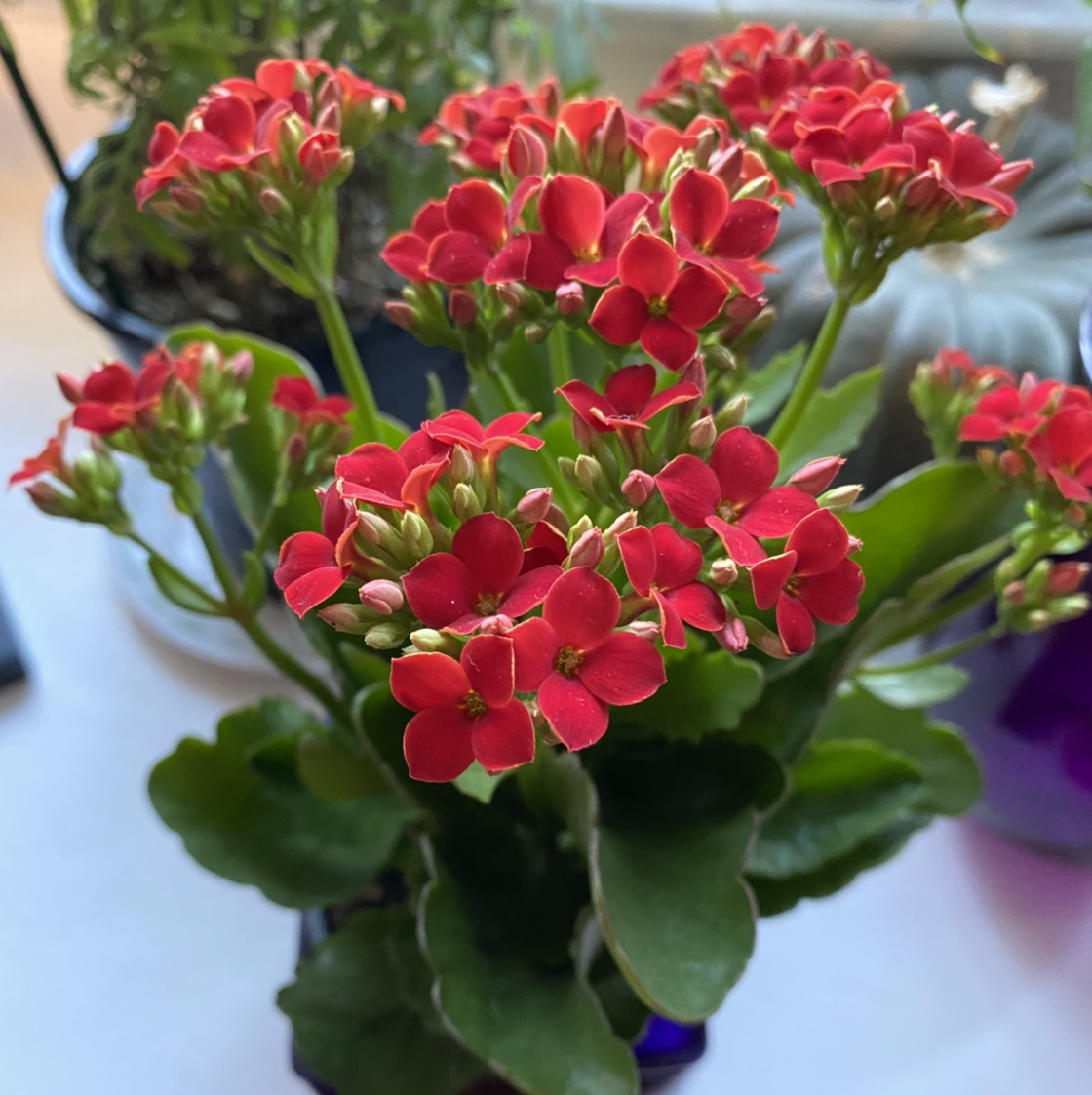
Florist Kalanchoe

How to Prune Florist Kalanchoe

Kalanchoe blossfeldiana
Reviewed by Kiersten Rankel M.S.
Quick Answer
Prune your florist kalanchoe right after it finishes blooming, typically in late spring. Deadhead spent flower stalks and trim back leggy stems to the second or third leaf pair. Avoid cutting more than a third of the plant at once to keep it healthy enough to rebloom.

When is the best time to prune?

Florist kalanchoe blooms in response to short days, so pruning after the bloom cycle in spring gives the plant a full growing season to set new buds.

US pruning regions map
Pacific
Apr–Jun
Mountain
May–Jul
Midwest
May–Jul
Northeast
May–Jul
Southeast
Apr–Jun
Stay on top of plant care
Get seasonal reminders for watering and fertilizing — personalized for your plants.
Try Greg Free

Why Should I Prune My Florist Kalanchoe?

Florist kalanchoe is one of those plants people often toss after the flowers fade, but with a little pruning it will bloom again. The key is removing the spent flower stalks so the plant redirects energy into new growth instead of trying to set seed.

Once the flowers are done, cut each flower stalk back to where it meets the main stem. Then look at the overall shape. If stems have gotten tall and leggy, especially from low light during winter, trim them back to a leaf pair about halfway down. This encourages branching and gives you a fuller plant next time around.

Kalanchoe is a succulent, so it handles pruning well as long as you let the cuts dry out. Don't water for a day or two after trimming. Use clean, sharp scissors or pruners since the stems are soft and crush easily with dull blades.

To get your kalanchoe to rebloom, it needs about 6 weeks of long nights (14 hours of darkness) in fall. Pruning in spring gives it the whole summer to grow new stems that will carry next winter's flowers.

Know Before You Cut

Difficulty Easy
Max removal 1/3 of total growth
Growth pattern Compact succulent shrub
Tools Sharp scissors or pruners

What Should I Remove?

Deadhead all spent flower stalks at the base
Trim leggy stems back to a leaf pair
Remove any yellowed or damaged leaves
Shape the plant into a rounded mound
Don't prune while the plant is actively blooming
Don't remove more than 1/3 of the plant at once
Don't water immediately after pruning

How Do I Prune Step by Step?

1
Wait for blooms to fully fade
Let all flowers on a stalk dry out before cutting. Removing partially open blooms wastes the plant's effort.
2
Cut flower stalks at the base
Trace each spent flower stalk down to where it meets the stem and snip it off cleanly. Don't leave a stub.
3
Trim leggy or stretched stems
Cut overgrown stems back to the second or third leaf pair from the base. Make your cut just above a leaf node to encourage branching.
4
Remove damaged foliage
Pick off any yellow, mushy, or scarred leaves by hand or with scissors. These won't recover and can harbor fungal issues.
5
Let cuts dry before watering
Wait 1–2 days before your next watering so the cut surfaces callus over and don't invite rot.

Got More Questions?

How do I get my kalanchoe to bloom again after pruning?
After pruning in spring, grow it in bright light all summer. In early fall, give it 14 hours of uninterrupted darkness each night for about 6 weeks. Buds should appear within a few weeks after that.
Can I prune kalanchoe if it's still flowering?
Wait until all the flowers on a stalk have faded. You can remove individual dead flower heads, but don't cut the stalk until it's fully spent.
My kalanchoe is really leggy. Can I cut it back hard?
You can cut it back to about 2 inches above the soil if needed, but it will take several months to fill out again. A gentler approach is cutting back to halfway and letting it branch.
Will the pieces I cut off root into new plants?
Yes. Let stem cuttings dry for a day, then stick them in moist potting mix. They usually root within 2–3 weeks.
Why are the stems on my kalanchoe so stretched out?
That's etiolation from insufficient light. After pruning the leggy growth, move the plant to a brighter spot so the new growth stays compact.
Stay on top of plant care
Get seasonal reminders for watering and fertilizing — personalized for your plants.
Try Greg Free

About This Article

Kiersten Rankel M.S.
Botanical Data Lead at Greg · Plant Scientist
About the Author
Kiersten Rankel holds an M.S. in Ecology & Evolutionary Biology from Tulane University. A certified Louisiana Master Naturalist, she has over a decade of experience in science communication, with research spanning corals, cypress trees, marsh grasses, and more. At Greg, she curates species data and verifies care recommendations against botanical research.
See Kiersten Rankel's full background on LinkedIn.
Editorial Process
Pruning guidance verified against Kalanchoe blossfeldiana growth data from Greg's botanical database, cross-referenced with USDA hardiness zone data and published horticultural research.
39,646+ Greg users growing this plant
USDA hardiness zones 10a–11b
Grow plants with confidence