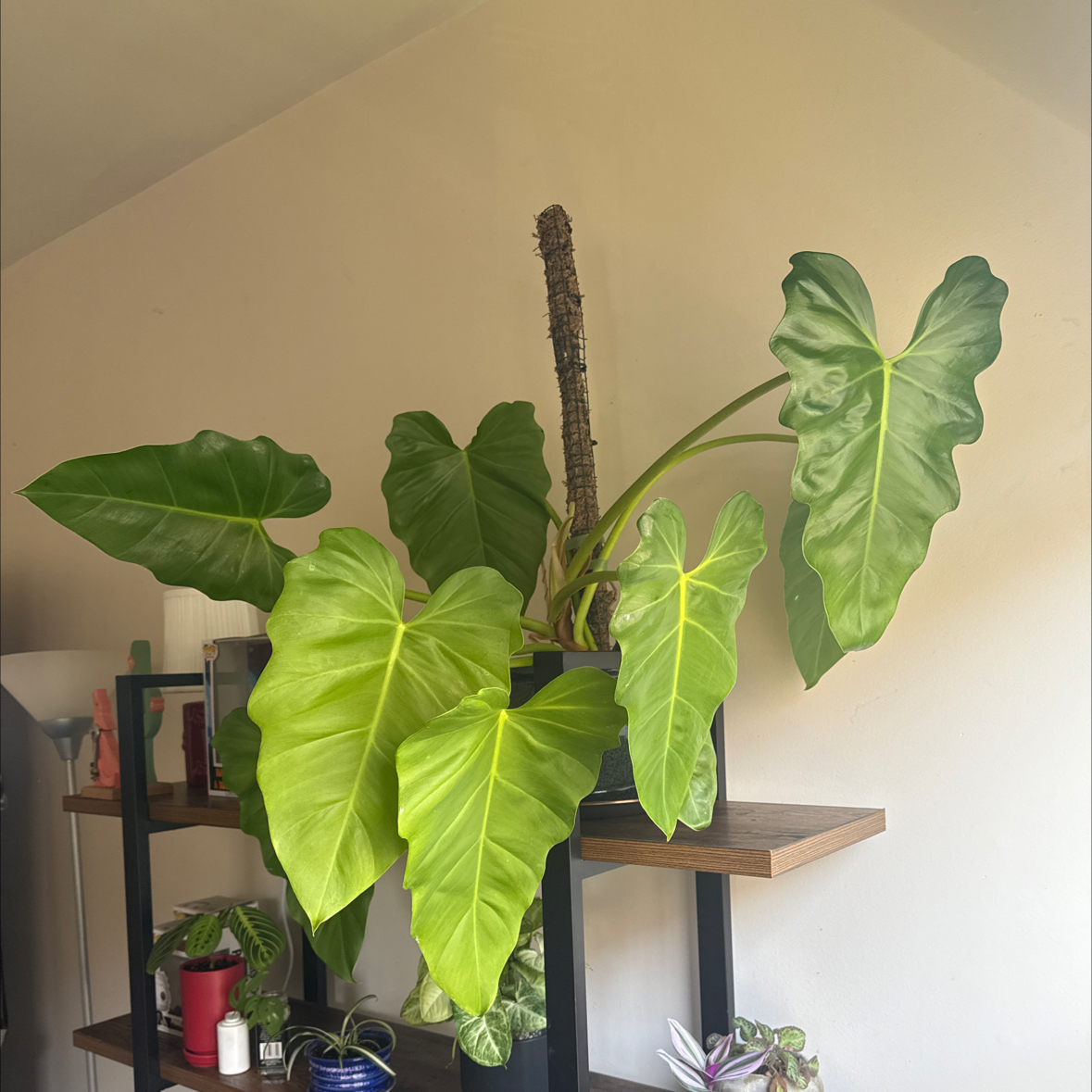
How to Prune Elephant Ear Philodendron
When is the best time to prune?
As a tropical from zones 10–12, Elephant Ear Philodendron grows year-round in warm climates, so pruning follows growth flushes rather than seasons in most regions.


Why Should I Prune My Elephant Ear Philodendron?
Elephant Ear Philodendron grows big leaves fast, and older leaves naturally yellow and decline as new ones emerge. Pruning keeps the plant looking lush and prevents the build-up of dead or dying foliage that can attract pests.
The most common pruning task is removing older lower leaves once they yellow or go limp. Cut the leaf's stem (petiole) as close to the main stem as you can, angling the cut slightly to allow moisture to drain away from the wound.
You can also remove leaves that are damaged, discolored from sunburn, or simply too large for your space. Removing a few large leaves won't harm the plant, but try not to strip more than a quarter of the leaves at once.
For indoor plants, regularly rotating the pot and removing declining leaves helps maintain an even, full shape. This plant can reach impressive sizes, so stay on top of it during the growing season.
Know Before You Cut
What Should I Remove?
How Do I Prune Step by Step?
Got More Questions?
About This Article

Royal Horticultural Society