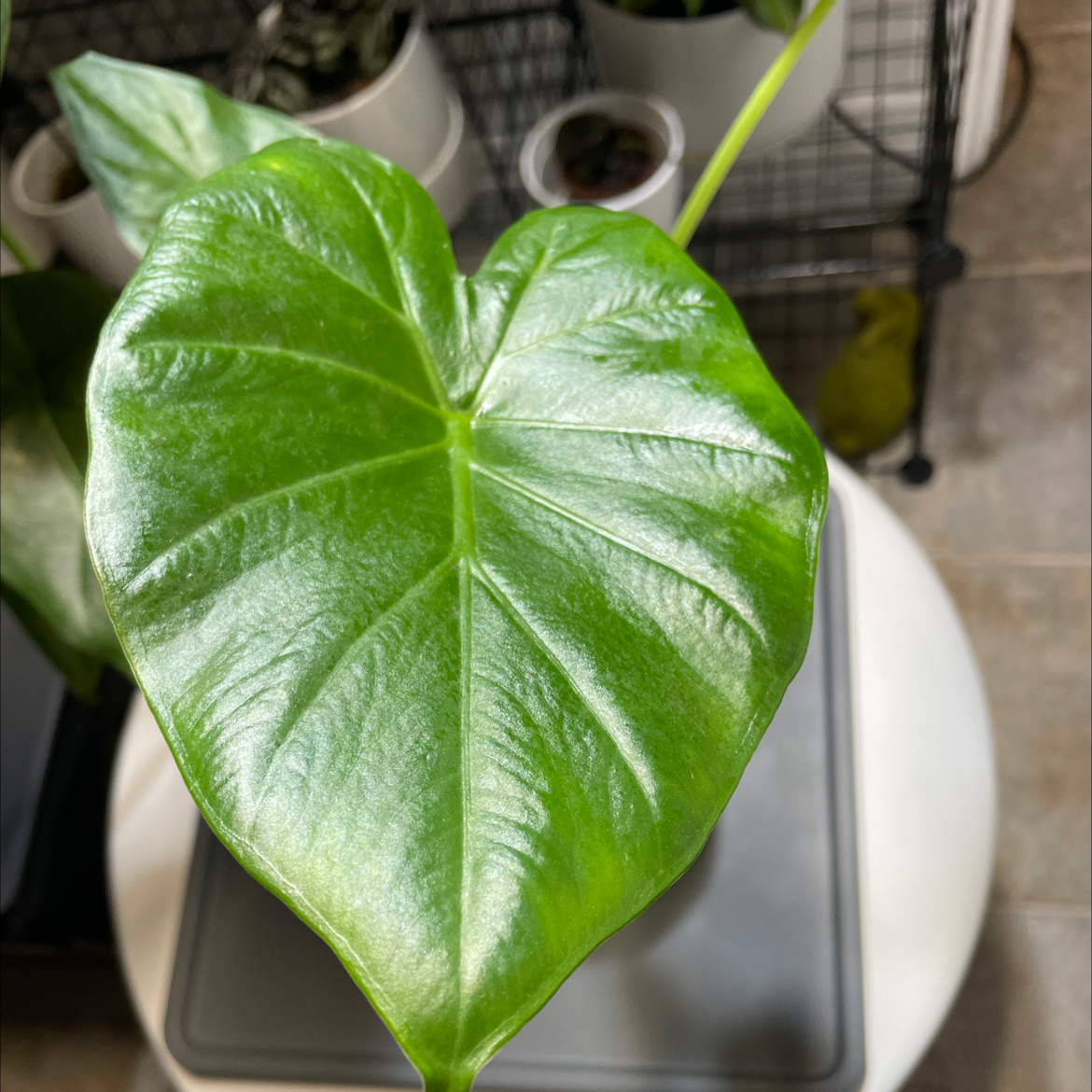
Chinese Taro

How to Prune Chinese Taro

Alocasia cucullata
Reviewed by Kiersten Rankel M.S.
Quick Answer
Prune Chinese Taro in spring or early summer by cutting away old or yellowing leaves at the base of their stalks. This species enters a partial dormancy in winter (November through February), so hold major pruning until new growth resumes in spring. Remove no more than one-quarter of the leaves at a time.

When is the best time to prune?

Chinese Taro enters partial dormancy from November through February, so spring pruning aligns with the resumption of active growth.

US pruning regions map
Pacific
Mar–Sep
Mountain
May–Aug
Midwest
Apr–Aug
Northeast
Apr–Sep
Southeast
Mar–Oct
Stay on top of plant care
Get seasonal reminders for watering and fertilizing — personalized for your plants.
Try Greg Free

Why Should I Prune My Chinese Taro?

Chinese Taro (Alocasia cucullata) is a bold upright tropical that grows large, heart-shaped leaves on tall stalks. Over time, older lower leaves naturally yellow and die back as the plant pushes new growth from the center. Removing these promptly keeps the plant looking dramatic rather than ragged.

This plant grows from a central corm and produces new leaves sequentially from the middle, with the oldest leaves at the outside. Each leaf grows on its own separate stalk, so pruning is simply a matter of identifying and removing the spent stalks at the base.

In winter this species slows down significantly and may drop more leaves than usual. Do not interpret this as a crisis. Hold back heavy pruning during this period. When new unfurling leaves appear in spring, that is your cue to remove any remaining old foliage.

Occasionally Chinese Taro produces offset plants (pups) around the base of the main plant. You can remove these by cutting them away at soil level to keep the plant looking clean, or pot them up separately.

Know Before You Cut

Difficulty Easy
Max removal 1/4 of leaves at a time
Growth pattern Upright tropical
Tools Clean sharp pruners or scissors

What Should I Remove?

Cut old yellowing or brown leaves at the base of their stalk
Remove leaf stalks fully rather than leaving short stubs
Wait until spring to do major cleanup after winter leaf drop
Remove or pot up pups growing at the base if desired
Don't prune heavily during winter dormancy
Don't remove more than 1/4 of the plant's leaves at once
Don't pull leaves off forcefully, cut cleanly to avoid crown damage

How Do I Prune Step by Step?

1
Wait for active growth in spring
If it is winter and the plant has slowed, hold off on heavy leaf removal. Wait until you see new leaves unfurling from the center of the plant before doing a full cleanup.
2
Identify leaves that are mostly yellow or brown
Old leaves that are more than half discolored will not recover. Young leaves with minor brown edges can stay. Start with the outermost, oldest leaves.
3
Cut leaf stalks at the base
Use clean pruners to cut each leaf stalk as close to the main stem or soil as possible without cutting into the central growing point. Do not pull or twist stalks off.
4
Manage pups if present
Small offset plants may appear around the base. If you want to keep the pot tidy, cut them away at soil level. If you want to propagate, wait until they have at least two or three leaves, then separate them with a clean cut and pot up individually.

Got More Questions?

Is it normal for Chinese Taro to drop a lot of leaves in winter?
Yes. This species naturally slows and may drop lower leaves in winter, especially if temperatures are cooler or light levels drop. Hold pruning to bare minimums in winter and the plant will recover in spring.
What if my Chinese Taro looks bare after pruning?
As long as the central growing point is intact and conditions are good, new leaves will emerge. Each new leaf can take two to four weeks to fully unfurl. Be patient and avoid overwatering while the plant recovers.
Can I cut the main stem of my Chinese Taro to make it shorter?
The main stem of Chinese Taro is not a branching trunk. Cutting it would damage or kill the plant. You can only remove individual leaf stalks, not shorten the main growth point.
How do I know if a leaf is just waking up from dormancy or actually dying?
A dormant plant will push new leaves in spring. If you see tight new leaf tips emerging from the center, the plant is waking up. Leaves that are fully yellow or brown and wilting are dead and can be removed.
Stay on top of plant care
Get seasonal reminders for watering and fertilizing — personalized for your plants.
Try Greg Free

About This Article

Kiersten Rankel M.S.
Botanical Data Lead at Greg · Plant Scientist
About the Author
Kiersten Rankel holds an M.S. in Ecology & Evolutionary Biology from Tulane University. A certified Louisiana Master Naturalist, she has over a decade of experience in science communication, with research spanning corals, cypress trees, marsh grasses, and more. At Greg, she curates species data and verifies care recommendations against botanical research.
See Kiersten Rankel's full background on LinkedIn.
Editorial Process
Pruning guidance verified against Alocasia cucullata growth data from Greg's botanical database, cross-referenced with USDA hardiness zone data and published horticultural research.
3,938+ Greg users growing this plant
USDA hardiness zones 10a–11b
Grow plants with confidence