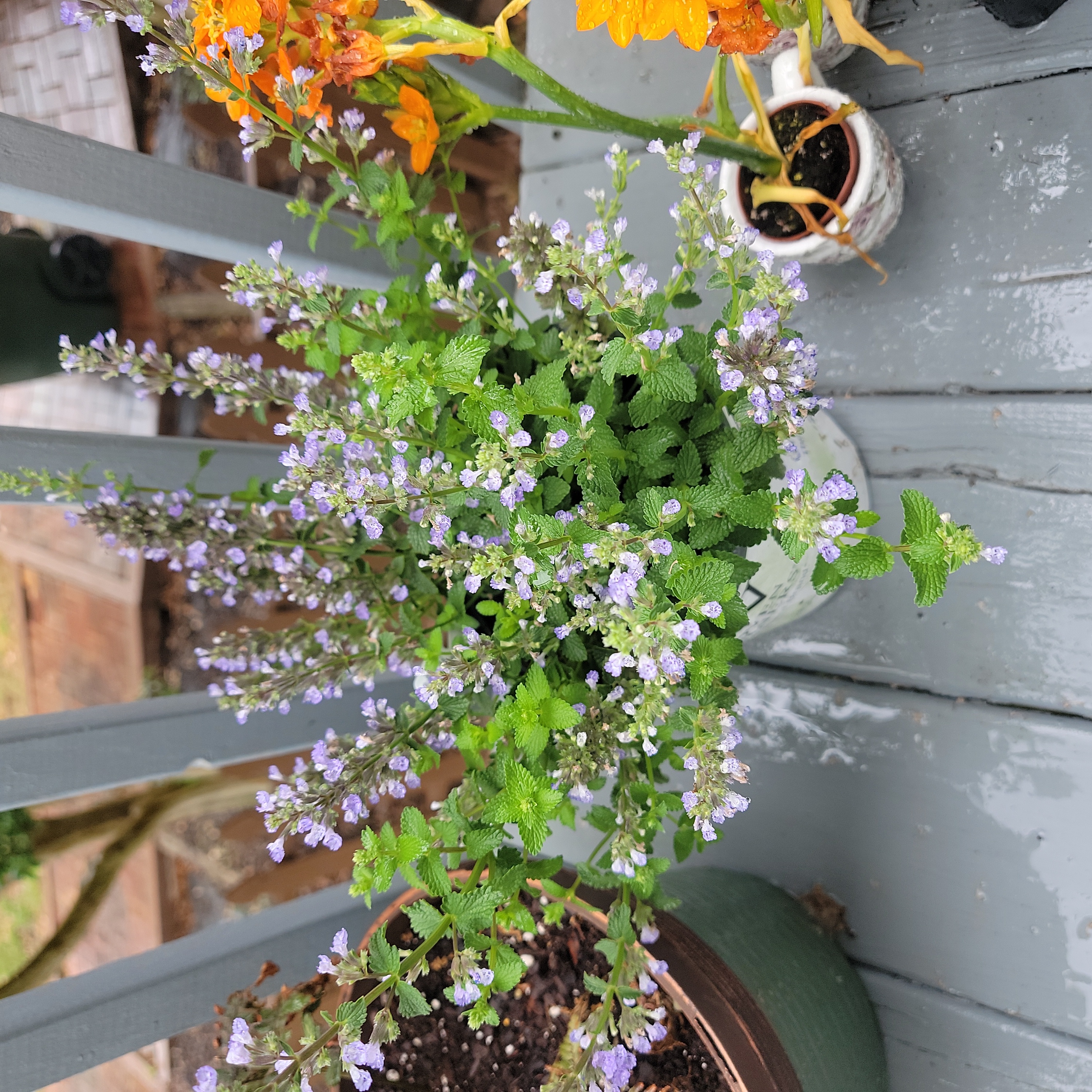
Dwarf catnip

How to Prune Dwarf Catnip

Nepeta racemosa
Reviewed by Kiersten Rankel M.S.
Quick Answer
Cut Dwarf Catnip back by about half right after its first flush of lavender-blue flowers fades in early summer. This hard shear triggers a second bloom within a few weeks and keeps the plant from getting floppy. In late fall, cut the remaining stems down to a few inches above the ground after the first frost.

When is the best time to prune?

Dwarf Catnip blooms on new growth, so pruning after each flowering flush encourages the plant to immediately rebloom rather than putting energy into seed production.

US pruning regions map
Pacific
Jun–Jul, then again Aug–Sep
Mountain
Jul, then again Aug
Midwest
Jun–Jul, then again Aug–Sep
Northeast
Jun–Jul, then again Aug–Sep
Southeast
May–Jun, then again Jul–Aug
Stay on top of plant care
Get seasonal reminders for watering and fertilizing — personalized for your plants.
Try Greg Free

Why Should I Prune My Dwarf Catnip?

Dwarf Catnip is a compact, low-mounding perennial that blooms its head off in early summer. Without pruning, the spent flower stems become woody and the plant looks brown and unkempt after that first flush. Cutting it back hard immediately after the flowers fade resets the plant and triggers a second, often equally strong wave of bloom.

The technique is simple: once the flowers look spent and the stems are going to seed, shear the whole plant back by about half. Use hedge shears or scissors for a quick, even cut. Within two to four weeks, you will see fresh green growth and new flower buds forming.

In most zones, you can get two full blooming periods out of Dwarf Catnip each season with this approach. The second bloom runs from late summer into early fall, well past what an unpruned plant would manage.

At the end of the season after frost, cut the whole plant down to about three inches above the ground. New growth will emerge from the base in spring.

Know Before You Cut

Difficulty Easy
Max removal 1/2 of total growth per cutback
Growth pattern Low mounding perennial
Tools Hedge shears or sharp scissors

What Should I Remove?

Cut back by half when flowers fade and look spent
Use shears for a quick, even cut across the whole plant
Cut to ground level in late fall after frost
Repeat after second bloom flush to tidy up
Don't deadhead individual flowers — shear the whole plant
Don't wait until the plant looks completely brown to cut back
Don't cut back in early spring before new growth appears

How Do I Prune Step by Step?

1
Wait for the first bloom to fade
Watch for the flowers to turn brown and the plant to start looking leggy and unkempt. This is usually 3-4 weeks after peak bloom. Don't wait too long or the stems get very woody.
2
Shear the whole plant back by half
Using hedge shears or sharp scissors, cut the entire plant back by about half its height. A quick, even cut across the whole mound works better than trying to selectively remove individual stems.
3
Water and wait for regrowth
After cutting back, give the plant a good soak to support the fresh growth push. Within 2-4 weeks you should see new shoots, followed by flower buds.
4
Repeat after the second flush
When the second bloom fades in late summer or early fall, you can shear again to tidy up or simply leave the plant to go dormant naturally. Either works.
5
Cut to the ground in late fall
After the first hard frost, cut all remaining stems down to about 2-3 inches above ground level. The plant will emerge fresh from the base in spring.

Got More Questions?

Can I prune Dwarf Catnip in spring?
Only lightly. In early spring, you can remove any dead stems left from last year before new growth appears. Once you see fresh shoots coming from the base, leave them alone and let the plant flower.
I cut my catnip back and now nothing is growing — did I kill it?
Dwarf Catnip is very resilient and almost always bounces back after a hard cut. If the cut happened in summer, give it 2-4 weeks for new growth to appear. If it was a late-season cut and winter is approaching, the plant may just be going dormant — look for new growth in spring.
How is Dwarf Catnip different to prune than regular catmint?
The technique is the same — shear after each bloom flush — but Dwarf Catnip's compact size makes it easier to manage. The same hard shear by half applies. Both respond the same way with a reliable second bloom.
My Dwarf Catnip is flopping over. Is that normal?
Yes, this happens after the first flush when the spent stems get heavy. Cutting back by half solves it. In future years, you can also shear lightly once in mid-spring before the plant flowers to encourage a more compact, upright habit.
Stay on top of plant care
Get seasonal reminders for watering and fertilizing — personalized for your plants.
Try Greg Free

About This Article

Kiersten Rankel M.S.
Botanical Data Lead at Greg · Plant Scientist
About the Author
Kiersten Rankel holds an M.S. in Ecology & Evolutionary Biology from Tulane University. A certified Louisiana Master Naturalist, she has over a decade of experience in science communication, with research spanning corals, cypress trees, marsh grasses, and more. At Greg, she curates species data and verifies care recommendations against botanical research.
See Kiersten Rankel's full background on LinkedIn.
Editorial Process
Pruning guidance verified against Nepeta racemosa growth data from Greg's botanical database, cross-referenced with USDA hardiness zone data and published horticultural research.
49+ Greg users growing this plant
USDA hardiness zones 4a–8b
Grow plants with confidence