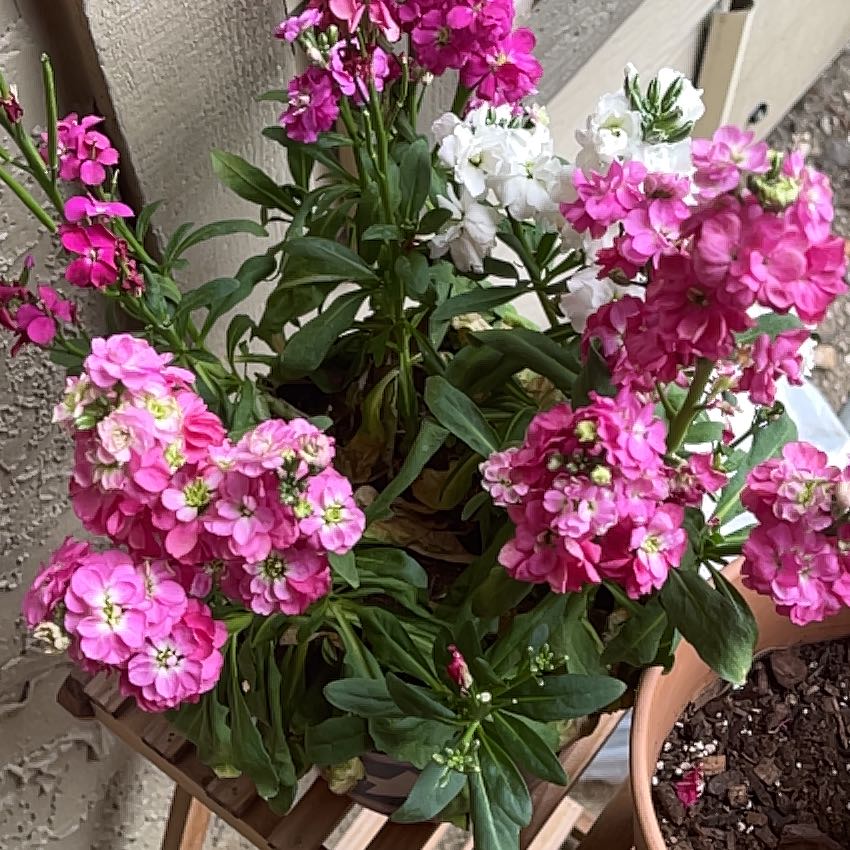
Brompton Stock

How to Prune Brompton Stock

Matthiola incana
Reviewed by Kiersten Rankel M.S.
Quick Answer
Deadhead Brompton Stock as flower spikes finish blooming by cutting them back to a lateral shoot or the base of the spike. Pinching the growing tip when plants are young encourages bushier growth and more flowering stems. As a cool-season plant, timing matters: in most regions it blooms in spring or fall, and the plant declines in summer heat.

When is the best time to prune?

Brompton Stock is a cool-season bloomer native to the Mediterranean, so pruning follows its bloom window, which falls in spring in colder regions and in fall through winter in mild climates.

US pruning regions map
Pacific
Feb–May (spring bloom); Oct–Dec (fall planting)
Mountain
Apr–Jun
Midwest
Apr–Jun
Northeast
Apr–Jun
Southeast
Feb–Apr; Oct–Nov
Stay on top of plant care
Get seasonal reminders for watering and fertilizing — personalized for your plants.
Try Greg Free

Why Should I Prune My Brompton Stock?

Brompton Stock (Matthiola incana) is a cool-season annual or biennial grown mainly for its fragrant, densely packed flower spikes. Pruning focuses on deadheading spent spikes and occasionally shaping young plants.

When a flower spike finishes blooming, cut it back to just above the nearest side shoot or to the base if no side shoots are visible. This prevents the plant from putting energy into seed production and encourages additional flowering stems to develop from the base.

Early in the season, pinching the main growing tip of young plants encourages multiple stems to branch out, giving you a fuller plant with more flower spikes rather than a single tall stem. This is especially useful if you want a bushy, compact display.

Brompton Stock does not perform well in summer heat. Once temperatures rise above about 75 F consistently, the plant declines quickly. At that point, pull it out rather than pruning it back, as it will not rebound from heat stress.

Know Before You Cut

Difficulty Easy
Max removal Full spike removal; avoid cutting into the woody base
Growth pattern Upright cool-season annual
Tools Pruners or fingers

What Should I Remove?

Deadhead spent flower spikes to a side shoot or the base
Pinch the growing tip of young plants to encourage branching
Remove any yellowed or dying lower leaves
Don't prune in summer heat expecting the plant to recover
Don't cut into the woody base stem; it rarely recovers
Don't leave seed pods to form if you want continued blooming

How Do I Prune Step by Step?

1
Pinch young plants early in the season
When seedlings have 4–6 pairs of leaves, pinch the very tip of the main stem above a set of leaves. This encourages side stems to develop, giving you a fuller plant with more flower spikes.
2
Deadhead spent flower spikes
As each flower spike fades, cut the stem back to just above the nearest side shoot. If there are no side shoots, cut the spike back to the base of the plant.
3
Remove yellowed lower leaves
Brompton Stock naturally drops its lower leaves as it matures. Snap or cut these off close to the main stem to keep the plant tidy and reduce disease entry points.
4
Remove plants when heat arrives
Once daytime temperatures consistently exceed 75 F (24 C), Brompton Stock will decline rapidly. Pull the whole plant at that point rather than cutting it back.

Got More Questions?

Can I cut Brompton Stock back hard to extend the season?
A light cutback to side shoots can sometimes extend blooming by a few weeks, but hard cutting into the woody base rarely results in recovery. It is a better use of effort to deadhead consistently rather than attempting a hard rejuvenation.
My Brompton Stock stopped blooming. Did I prune it wrong?
Brompton Stock goes off-bloom in response to heat more than improper pruning. Check daytime temperatures. If it has warmed up, the plant is simply finishing its natural season.
Can I save Brompton Stock over winter for a second year?
In zones 7 and warmer, Brompton Stock can be biennial and may survive a mild winter to bloom again. Cut it back by about a third in fall and it may overwinter and bloom the following spring.
When should I deadhead for the best results?
Deadhead as soon as the bottom flowers on each spike have faded, before the top flowers finish. This keeps the plant focused on blooming rather than seed-making.
Stay on top of plant care
Get seasonal reminders for watering and fertilizing — personalized for your plants.
Try Greg Free

About This Article

Kiersten Rankel M.S.
Botanical Data Lead at Greg · Plant Scientist
About the Author
Kiersten Rankel holds an M.S. in Ecology & Evolutionary Biology from Tulane University. A certified Louisiana Master Naturalist, she has over a decade of experience in science communication, with research spanning corals, cypress trees, marsh grasses, and more. At Greg, she curates species data and verifies care recommendations against botanical research.
See Kiersten Rankel's full background on LinkedIn.
Editorial Process
Pruning guidance verified against Matthiola incana growth data from Greg's botanical database, cross-referenced with USDA hardiness zone data and published horticultural research.
589+ Greg users growing this plant
USDA hardiness zones 7a–10b
Grow plants with confidence