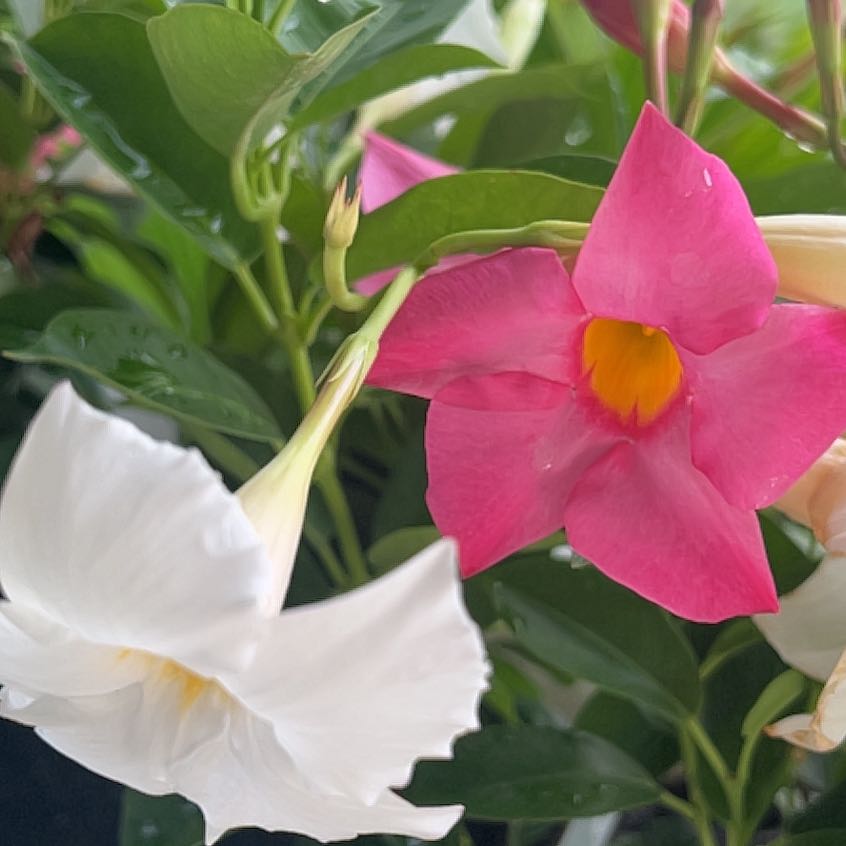
How to Plant a Mandevilla
Plant Mandevilla outside in late spring once nighttime temperatures stay above 50°F, in full sun with rich well-draining soil. Use a container at least 12 inches wide with drainage holes, or a sunny spot with a sturdy trellis for the twining vines. Water in deeply and expect the first trumpet flowers within four to six weeks. Bring potted plants indoors before the first frost in any zone below 10.

When and where to plant
Mandevilla is a tropical flowering vine that grows best in heat. Plant outside in late spring after nighttime temperatures hold steady above 50°F, since exposure to colder weather stalls growth and damages tender stems. In zones 10 and 11 the plant lives outside year-round. In zones 9 and below, treat it as a summer container plant and bring it indoors before the first fall frost.
The plant needs six or more hours of direct sun each day to bloom well, with full sun producing the heaviest flower display. Light afternoon shade in the hottest southern zones is fine, but anything less than four hours of direct light gives lush foliage with few or no flowers.
Soil should be rich and well-draining, since waterlogged roots rot quickly on this species. A standard high-quality potting mix works for containers. For in-ground planting in warm zones, choose a spot where water never pools after rain. Give each plant 18 to 24 inches of space and place a sturdy trellis, obelisk, or other support within reach so the twining stems have something to climb.
Planting from a nursery transplant
Most Mandevilla plants come home from the garden center already in bloom and often pre-staked on a small bamboo trellis. The critical rule is timing. Putting the plant outside before nights stay above 50°F sets it back for weeks, and a single light frost can kill it outright, so wait for settled warm weather even if the plant looks ready to go.
-
1Pick a warm planting day Wait until nighttime temperatures have stayed above 50°F for at least a week and the forecast shows no cold snaps. Aim for an overcast morning rather than midday sun, since fresh transplants lose water through their leaves faster than the roots can replace it on hot bright days. If you must plant on a sunny day, do it before 10 a.m. and give the plant some temporary shade through the first afternoon.
-
2Pick the right pot and prep it Choose a container at least 12 inches wide with drainage holes in the bottom, sized roughly 2 inches wider than the nursery pot. Containers without drainage hold water against the roots and cause rot within days. Set the pot in its final sunny location before planting, since a fully watered 12-inch pot is heavy and awkward to move.
-
3Place the plant and backfill the sides Add a 2-inch base layer of fresh potting mix to the bottom of the pot, then slide the plant out of its nursery container and set the root ball on top so the top of the root ball sits about an inch below the rim. Backfill around the sides with more potting mix, pressing gently to remove large air pockets and keeping the original soil line level with the new mix. Loosen any tightly circling roots at the bottom with your fingers before setting the plant in place.
-
4Set a trellis and start training the stems Push a sturdy trellis, obelisk, or bamboo tripod down into the pot until it hits the bottom, positioning it just behind the plant. Gently wind the longest stems around the support in a counterclockwise direction, since Mandevilla twines naturally that way. The new vines will grab on their own once they find the support, but the first guided wraps give them a head start.
-
5Water in deeply and place in full sun Water slowly until you see moisture draining from the bottom holes, which settles the soil around the roots and removes any remaining air pockets. Move the pot to a spot with six or more hours of direct sun. Skip fertilizer for the first two weeks, since fresh potting mix already holds light feed and new transplants do better focusing energy on root recovery.
The first month and a half
A freshly planted Mandevilla spends its first weeks adjusting to its new pot and conditions, then moves quickly into active vine growth and flowering. Unlike slower perennials, this plant rewards correct planting with visible payoff fast.
The most common new-grower mistake during this stretch is overwatering. The soil should feel dry to the touch about an inch down before the next watering, and pots without drainage holes or saucers left full of water are the fastest path to root rot. Watch the leaves rather than the calendar to time water, since hot sunny weeks call for more and cool cloudy stretches call for much less.
Healthy first-month signs include green foliage that holds color, longer vines reaching for the trellis, and the first new flower buds forming at the growing tips. Light yellowing of the very lowest leaves can be normal as the plant redirects energy into new growth.
What can go wrong
-
Leaves wilting in the first days after planting
Transplant shock is the usual cause, especially when the plant was moved on a hot sunny day. Check that the soil is moist but not soggy, then give the plant some temporary afternoon shade for two or three days while the roots recover. Mild drooping that perks back up in the cool of evening is normal, but persistent wilting with wet soil points to root rot rather than thirst. -
Lots of leaves but no flowers
Insufficient direct sun is almost always the cause. Mandevilla needs at least six hours of strong direct light each day to set flower buds, and shaded plants put all their energy into leafy vine growth instead. Move the pot to a brighter spot, and avoid high-nitrogen fertilizers that push leaf production at the expense of blooms. A balanced or bloom-boosting feed works better through the growing season. -
Yellowing lower leaves
A few yellow leaves near the bottom of the plant are normal as it redirects energy upward into new growth. Widespread yellowing usually signals overwatering, especially in cool weather when the soil dries slowly. Let the top inch of soil dry between waterings, check that the pot drains freely, and empty any saucer that holds standing water. If yellowing continues, check the roots for soft brown spots that confirm rot. -
Soft black roots and mushy stems at the base
Root rot from soggy soil is the cause, and Mandevilla is highly vulnerable to it. Unpot the plant, trim away any dark mushy roots with clean scissors, and repot in fresh well-draining mix in a clean pot with drainage holes. Going forward, water only when the top inch of soil feels dry and never let the pot sit in a saucer of water for more than an hour. -
Cold damage on stems and leaves
Temperatures below 50°F bruise the soft tissue, leaving blackened patches on leaves and limp dark stem tips. There is no recovery for the damaged sections, so prune them back to healthy green growth with clean shears. Move the plant to a warmer spot right away and watch for new growth at the next healthy node, which should appear within a week or two if temperatures stay warm. -
Buds dropping before they open
Sudden temperature swings, drying out between waterings, or a recent move to a darker spot all trigger bud drop on Mandevilla. Settle the plant into one consistent sunny location and keep the soil evenly moist without going soggy. Avoid moving the pot frequently during heavy bud set, since the plant treats each change of light angle as a stress event and may shed buds in response. -
Sticky leaves with tiny green or black insects
Aphids cluster on new soft growth, sucking sap and leaving sticky honeydew on the leaves below. Knock them off with a strong spray of water from the hose, then treat heavier infestations with insecticidal soap, focusing on the undersides of leaves and growing tips. Check the plant once a week through the first month, since early control prevents the population from exploding. -
Fine webbing and stippled pale leaves
Spider mites thrive on warm dry plants and show up first as faint yellow speckling on the upper leaf surface, often with thin webbing on the undersides. Spray the foliage thoroughly with water every few days to break the dry conditions they prefer, then treat with insecticidal soap or a horticultural oil. Both treatments work best when the plant is out of direct sun to avoid leaf burn.
About This Article
