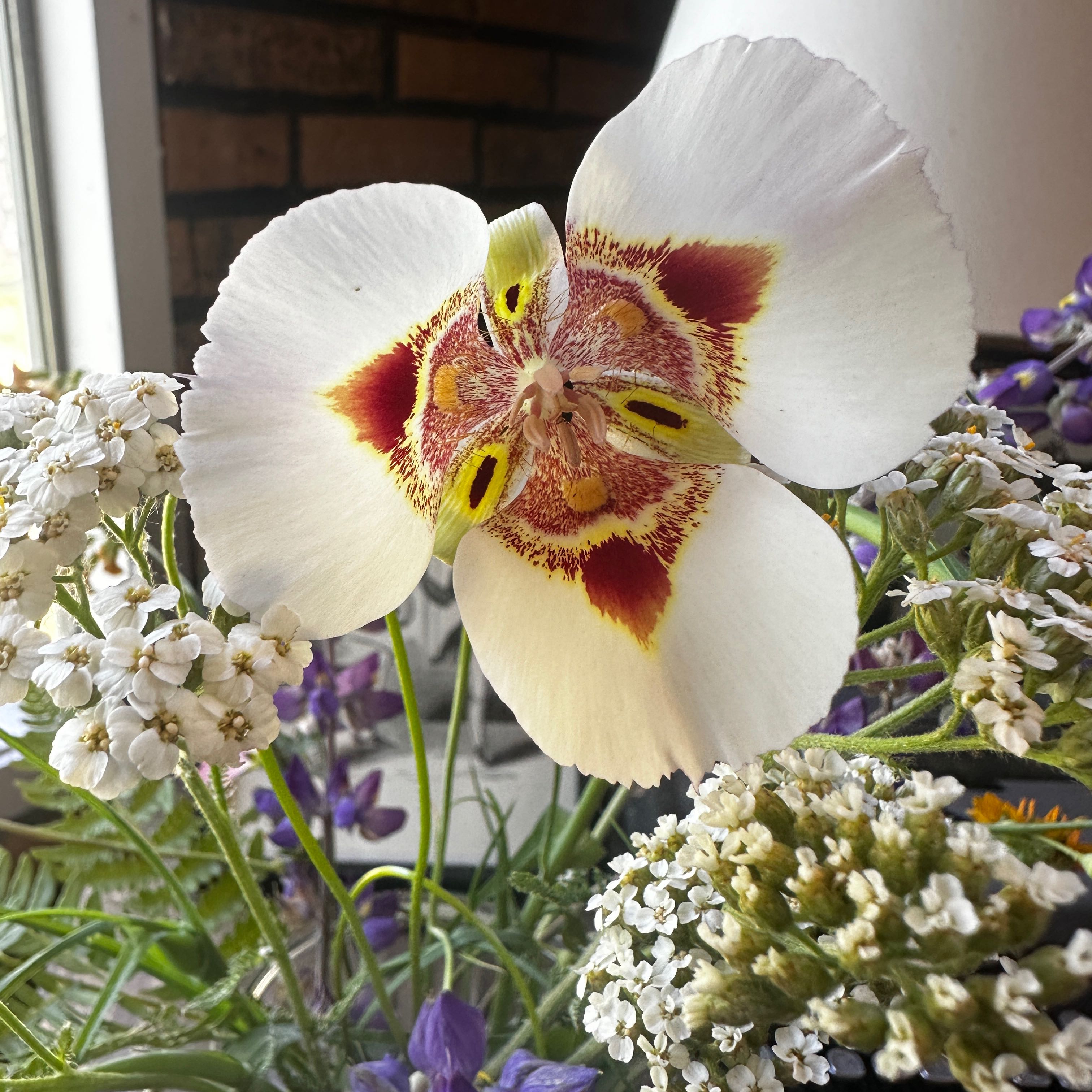
How to Plant a Sego Lily
Plant Sego Lily bulbs in fall, three to four inches deep and four to six inches apart, in lean gritty soil that drains fast. Pick a full sun spot that goes naturally dry through summer, since the bulbs need a hot dry rest after blooming. Set bulbs pointed end up and water once after planting, then leave them alone. Expect the first grass-like leaves in early spring and the first tulip-shaped white flowers in late spring or early summer.

When and where to plant
Sego Lily is a Great Basin native that grows wild on dry rocky slopes, sagebrush flats, and gravelly meadows across Utah and the Mountain West. Place the bulbs where they get full sun for at least six hours a day and where the soil stays naturally dry from late June through September. Irrigated lawns, drip-zone beds, and low spots that collect runoff are the worst sites for this plant.
Soil drainage matters more than soil fertility. The bulbs need sharp, fast-draining ground with grit or coarse sand mixed in if your native soil is heavy. Clay soils hold water against the dormant bulb and rot it within one summer. On heavier ground, plant on a slight mound or build a small raised rock garden bed with one part garden soil to one part coarse sand and one part fine gravel.
Plant the bulbs in fall, between mid-September and late October in most of the range, after the soil has cooled but six to eight weeks before the ground freezes hard. Sego Lily is hardy from zone 4 through zone 8 and tolerates winter cold well as long as the soil stays dry rather than soggy. Space bulbs four to six inches apart so the foliage can dry quickly after rain.
Planting your bulbs
Pick firm bulbs with no soft spots, mold, or shriveling. The single most important rule for Sego Lily is drainage. The bulbs evolved on parched summer slopes and rot fast in any soil that stays wet through their dormant rest, so getting the soil mix right at planting matters more than any later care decision.
-
1Prepare a fast-draining bed Loosen the soil eight to ten inches deep and mix in equal parts coarse sand and fine gravel if your native ground is anything heavier than a sandy loam. The goal is a gritty mix that water runs straight through, since standing moisture in summer is the most common cause of bulb loss. On clay sites, build a small raised mound four to six inches above grade rather than digging down.
-
2Dig planting holes 3 to 4 inches deep Measure from the base of the bulb to the soil surface and aim for a planting depth of three to four inches. Shallower planting risks frost heaving in cold zones and rodent damage in any zone, while deeper planting can delay or weaken emergence. Space holes four to six inches apart in informal drifts of five to fifteen bulbs.
-
3Set bulbs pointed end up Place each bulb in its hole with the pointed tip facing up and the flat root plate down. If you cannot tell which end is which, lay the bulb on its side and let the new shoot find its own way up. A small handful of coarse sand sprinkled into the bottom of each hole gives the root plate a dry seat and an extra margin against rot.
-
4Backfill and water once Cover the bulbs with the gritty soil mix and firm it gently with your hand to remove air pockets. Water the bed once at planting to settle the soil around the bulbs, then stop. Fall rain and winter snowmelt will provide everything the bulbs need until spring growth begins, and any added irrigation now risks rot before the roots ever form.
The first year
The first year for a newly planted Sego Lily is mostly an underground story. The bulb pushes roots through fall, sits quiet through winter, and only starts visible growth once the soil warms in early spring. You should not expect much above-ground change until then.
The most common new-grower mistake is reading the summer disappearance of the foliage as a problem and reaching for the hose. This is exactly wrong. Once the leaves yellow and die back in June or July, the bulb is going into its required summer rest and any watering during that period invites rot. Mark the location with a small stake at planting so you do not water the spot by mistake.
Healthy first-year growth looks like one or two thin grass-like leaves in spring, then a slender stem rising eight to fifteen inches with one to three white or cream tulip-shaped flowers, each marked with a deep purple blotch at the base of every petal.
What can go wrong
-
Bulbs rotting in the ground over summer
Excess summer moisture is the cause. Sego Lily evolved on parched slopes and any water during its dormant rest from late June through September will rot the bulb in place. Check that the planting bed sits well above any irrigated lawn, drip line, or low spot that collects runoff. If the ground is staying damp through August, dig the surviving bulbs in early fall and replant on a raised mound with much sharper drainage. -
No emergence the first spring
The bulbs may have rotted before they ever rooted, or rodents found them over winter. Carefully dig in one or two spots to check. Firm white bulbs that simply have not pushed yet should be left alone. Soft mushy bulbs confirm rot from heavy or poorly drained soil, while missing bulbs and small tunnels point to pocket gophers or voles. Replant on better-drained ground and add a wire mesh basket below the bulbs if rodents are common in your area. -
Leaves come up but no flowers
Too much shade is the most common cause. Sego Lily needs a full six hours of direct sun to build the energy reserves for flowering, and bulbs planted under taller perennials or shrubs often produce only foliage. Thin overhanging growth before next spring or move the bulbs in fall to a sunnier open site. First-year bulbs sometimes also skip flowering as they settle in, even with good light. -
Small or sparse blooms in year one
Some bulbs simply need a full establishment season before flowering reliably. The bulb is spending year one building roots and storage for next spring rather than producing a strong flower stem. As long as the foliage is healthy green and the bed stays dry through summer, expect a stronger bloom in year two and a fuller clump by year three. Avoid the temptation to fertilize, which pushes leafy growth at the expense of flowers. -
Flopping leaves and weak stems
Soils that are too rich, too wet, or too shaded cause leggy floppy growth. Sego Lily wants lean gritty ground and full sun, which produce a compact upright plant. If you amended the bed with compost or rich potting soil, the bulbs will lean toward whatever light they can find and the stems will stretch thin. Replant in fall using a mix of one part garden soil, one part coarse sand, and one part fine gravel, in a sunnier spot. -
Bulbs pushed to the surface after winter
Frost heaving from repeated freeze and thaw cycles can shove shallow bulbs out of the ground. This usually means the bulbs were planted less than three inches deep or that the soil is unusually compacted and freezing in slabs. Push the heaved bulbs gently back to a full three to four inch depth, then top the bed with a thin half-inch layer of fine gravel to buffer the soil temperature without trapping moisture against the crown. -
Rodents digging up the planting
Pocket gophers, voles, and ground squirrels love calochortus bulbs and can clear a planting in a single winter in some areas. Lining the planting hole with quarter-inch hardware cloth before backfilling gives the bulbs lasting protection without restricting roots. A topdressing of sharp crushed gravel also discourages surface digging. If pressure is heavy, plant a larger drift than you need so a few losses still leave a strong display. -
Mulch trapping moisture against the bulb
A thick organic mulch of bark or compost holds water against the crown and invites the rot the dry-summer rule is meant to prevent. Skip organic mulches entirely for Sego Lily. If you want a topdressing, use a thin layer of coarse gravel or pea stone instead, which lets the soil surface dry quickly after rain while still moderating soil temperature.
About This Article
