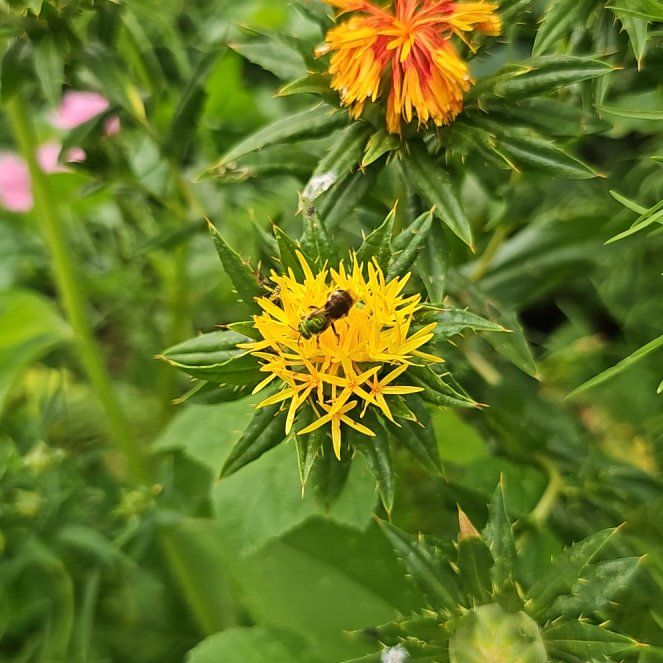
How to Plant a Safflower
Direct-sow safflower seeds outside in early spring as soon as the soil can be worked, half an inch deep and six inches apart in a sunny spot with loose well-drained soil. Skip starting indoors because the taproot resents disturbance and seedlings sulk after transplant. Thin the row to one plant every twelve inches once the rosettes are an inch across. Expect first flowers about a hundred to a hundred and twenty days after sowing.

When and where to plant
Safflower is hardy in zones 6 through 9 and grows best in full sun, at least six hours of direct light a day. The plant evolved in the dry summer climates of the Mediterranean and central Asia, so it asks for heat, sun, and air movement around the leaves. Shade gives weak stems and few blooms.
Sow in early spring as soon as the soil can be worked and has dried enough to crumble in your hand. In most of the country that lands two to four weeks before the last spring frost. Safflower seedlings handle a light frost and the plant actually sets a deeper taproot when it germinates in cool soil, so there is no benefit to waiting for warmth. In zones 9 and warmer with mild winters, fall sowing also works and gives a longer cool establishment window.
The site needs loose, well-drained soil. Heavy clay holds water around the taproot and invites root rot during the long growing season. Slightly alkaline ground around pH 6.0 to 7.5 is ideal, and safflower tolerates the salty or poor soils that defeat other crops. Allow twelve inches between mature plants and twenty-four to thirty inches between rows so air can move through the spiny foliage and dry the leaves after rain.
Planting from seed
The critical rule for safflower is to sow directly into the ground rather than starting indoors. The plant builds a long taproot in the first few weeks and that root snaps or kinks when a seedling is moved, leaving a stunted plant that rarely catches up. Fresh seed from the most recent harvest also germinates much more reliably than seed older than two years, so check the packet date before you sow.
-
1Prepare the bed Work the top six inches of soil with a fork or broadfork until the bed is loose and free of large clods. The taproot will drive straight down through whatever you leave behind, so a compacted layer at four inches stops the plant from reaching its full root depth. Rake the surface smooth and pull any visible perennial weed roots, since young safflower competes poorly with established weeds.
-
2Open shallow furrows Use the corner of a hoe or a stick to draw furrows half an inch deep, spaced twenty-four to thirty inches apart. The shallow depth matters because safflower seeds need warmth and light contact with surface soil to germinate evenly. Deeper sowing buries the seed below the warm zone and slows or skips germination.
-
3Sow the seeds and cover lightly Drop a seed every two to three inches along the furrow, then sweep loose soil over the top and press down gently with the flat of your hand. Pressing improves seed contact with the soil so moisture moves into the seed coat reliably. Water the furrow with a fine spray until the top inch of soil is damp but not muddy.
-
4Keep soil evenly moist until emergence Check the surface every day or two for the first one to two weeks and water lightly whenever the top half inch has dried out. Safflower seeds need consistent moisture to swell and break dormancy, and a dry crust can stop emerging seedlings cold. Once you see green shoots above the soil, back off to a deeper less frequent watering rhythm.
-
5Thin to one plant per foot When the rosettes are about an inch across and have two to four true leaves, pinch or snip the weaker seedlings at the soil line so one plant remains every twelve inches. Crowded safflower stretches for light, produces fewer flowers, and traps humidity that invites leaf disease. Leave the strongest, sturdiest seedling at each spot and discard the rest.
The first month
The first month for a newly sown safflower bed is a quiet stretch above ground while the taproot pushes down. Most of the visible action comes in the second and third weeks as cotyledons emerge and the rosette forms. You should not expect a flower bud during this window, and the plant looks more like a spiny thistle seedling than a future bloom.
The most common new-grower mistake is overwatering once the seedlings are up. Safflower drinks deeply early on because the roots are still shallow, but the plant is built to survive on infrequent deep watering. Daily light sprinkles encourage shallow roots and damping off, so once shoots are an inch tall, switch to a thorough soak once or twice a week.
Healthy first-month growth looks like even green color, no significant leaf yellowing, and a low spreading rosette four to six inches across by the end of week four. That rosette is the launch pad for the flower stalk that will bolt up in week five or six.
What can go wrong
-
Seeds rotting before they sprout
Cold wet soil is the most common cause. Soil sitting saturated below 50°F invites the same fungi that cause damping off, and safflower seed coats are not very thick. Wait for the soil to crumble in your hand before sowing and avoid heavy mulches over the row. On poorly drained ground, sow on slightly mounded rows three or four inches higher than the path to help water drain away from the seed. -
Patchy or sparse germination
Old seed is usually the problem. Safflower germination drops off sharply after the seed is two years old, and a packet that sat in a warm garage loses viability even faster. Buy fresh seed from a reputable source and check the packet date. If you must use older seed, sow at twice the rate and thin more aggressively to the strongest plants once they emerge. -
Seedlings falling over at the soil line
Damping off is the cause. Soil pathogens attack the stem right where it meets the surface and the seedling collapses overnight, often with a dark pinched spot at the base. Avoid overhead watering once shoots are up and water at the soil line instead. Thin crowded stands promptly so air moves between plants, and avoid sowing in beds that had damping off the year before. -
Pale leggy seedlings
Too little sun is the cause. Safflower stretched in partial shade or under afternoon shadow grows tall and thin with weak stems that snap in wind. There is no fix for a stretched seedling once it has set growth habit, so the move is to start over in a brighter spot. If a tree or fence shades the bed for half the day, pick a different site entirely rather than trying to compensate with extra fertilizer. -
Stunted plants after transplanting
The taproot was disturbed. Safflower starts a deep tap within days of germination, and lifting it for any reason kinks or breaks that root. The plant then puts its energy into rebuilding instead of growing, and the season often ends before it catches up. Always sow directly in the ground, and if a row needs replacing, sow fresh seed rather than moving a seedling from a fuller spot. -
Frost damage to young seedlings
Established safflower handles a light frost, but the cotyledon stage is more fragile and a hard freeze below 28°F can blacken the tips. Watch the forecast in the first three weeks after emergence. If a hard freeze is coming, lay a light row cover or a sheet over the bed in the late afternoon and remove it once temperatures climb back above freezing in the morning. -
Weeds outpacing the seedlings
Pre-emergent weed pressure is a real risk because safflower seedlings are slow to canopy. Hoe shallowly between the rows once a week through the rosette stage and pull anything within four inches of a seedling by hand to avoid disturbing the taproot. A thin half-inch layer of straw mulch laid between the rows after the seedlings are an inch tall slows new weed germination without smothering the crop. -
Yellowing rosette leaves
Soggy soil is the usual culprit at this stage rather than nutrient deficiency. The taproot is sensitive to oxygen starvation and will yellow lower leaves first when water stands around the crown. Skip watering for a week and let the soil dry to an inch below the surface before the next deep soak. If the yellowing continues on dry soil, a light side-dressing of balanced fertilizer at week four can give the plant a boost into flowering.
About This Article
