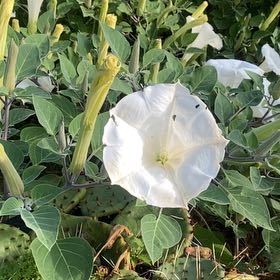
How to Plant a Sacred Datura
Plant Sacred Datura outdoors in late spring after the last frost in full sun with sharply draining soil. Site it well away from children, pets, livestock, and food gardens because all parts of the plant are highly toxic. Direct sow seeds a quarter inch deep, or set a nursery transplant at the same depth it grew in the pot. Space plants three to four feet apart. Expect the first large white dusk-opening blooms by midsummer.

When and where to plant
Sacred Datura belongs in a sunny spot with at least six hours of direct sun each day. It is native to dry open ground from the southwestern United States into northern Mexico and performs best where the soil dries quickly between rains. Heavy clay or low ground that stays soggy will rot the roots, so choose a slope, a raised bed, or amend the planting area with coarse sand and gravel before planting.
Wait until air temperatures stay reliably above 60°F at night and the last frost has passed, usually mid to late spring depending on your zone. Sacred Datura is hardy in zones 7 through 10 and grows as a returning perennial in those areas. In zone 6 and colder, the top dies back hard and may not return, so treat it as an annual or grow it in a container that can move to shelter.
The single most important siting rule is to plant well away from anywhere children, pets, or livestock might encounter the leaves, flowers, or seed pods. All parts of Sacred Datura contain potent tropane alkaloids that are highly toxic if eaten, and the sap can irritate skin and eyes. Keep it out of children's play areas, fenced from grazing animals, and far from your food garden so leaves and pods cannot be confused for anything edible. Space plants three to four feet apart, since a single plant easily reaches three to four feet wide in one season.
Planting from seed
Direct sowing works well because Sacred Datura has a deep taproot that resents being disturbed once it grows. Handle the seeds with care and wash your hands after, since the seeds themselves carry the same toxic alkaloids as the rest of the plant. Plant only when the soil has warmed to at least 65°F at one inch deep, because cool wet soil will rot the seeds before they sprout.
-
1Wait for warm soil Hold off until daytime soil temperature at one inch deep reads at least 65°F and your last frost date has passed by two weeks. Sacred Datura is a warm-season plant and seeds will sit and rot in cool damp ground. A simple soil thermometer pushed in around midday gives the most reliable reading.
-
2Prepare a draining seedbed Loosen the top six inches of soil and work in a few inches of coarse sand or fine gravel if your ground holds water. Remove rocks, weeds, and clods from the surface so the small seedlings can emerge cleanly. Avoid adding rich compost or fertilizer, since lean soil produces a stronger and more compact plant.
-
3Sow seeds and water in lightly Press two or three seeds about a quarter inch deep into the soil where you want each plant to grow, then cover and tamp gently. Mist the surface or water with a fine spray until the top inch is damp but not soaked. Wear gloves while handling seeds and wash hands thoroughly afterward, since the seeds are highly toxic if accidentally ingested.
-
4Thin to the strongest seedling Seeds usually emerge in seven to twenty-one days depending on warmth. Once each clump has two sets of true leaves, snip off all but the strongest seedling at the soil line. Pulling seedlings out disturbs the taproot of the one you want to keep, so always cut rather than pull.
Planting from a nursery transplant
Nursery starts give you a head start of several weeks and a more predictable plant. Acclimate the transplant to outdoor sun for a few days before planting if it has been growing under shade cloth or indoors. Handle the plant with gloves throughout, and remember to site it well away from anywhere children, pets, or food crops are present because every part of the plant is highly toxic.
-
1Harden off the transplant Set the potted plant in a sheltered spot outside for an hour or two on the first day, then add an hour each day for about a week before planting. This step prevents sun scald on tender foliage and reduces transplant shock. Skip this only if the plant has already been displayed outdoors at the nursery in full sun.
-
2Dig a wide planting hole Dig a hole twice as wide as the root ball and the same depth, not deeper. A wide hole loosens the surrounding soil so the new roots can push out laterally with less resistance. If your ground is heavy clay, mix a few handfuls of coarse sand or fine gravel into the backfill to improve drainage.
-
3Set the plant at the same depth Slide the plant out of its pot while wearing gloves and place it in the hole so the top of the root ball sits level with the surrounding soil. Planting too deep buries the lower stem and invites stem rot, while planting too shallow leaves roots exposed to drying. Backfill around the sides with the loosened native soil, firming gently to remove large air pockets.
-
4Water in and skip the mulch ring Water slowly until the planting hole settles and the surrounding soil is moist a few inches down. Hold off on heavy mulch directly against the stem, because trapped moisture there encourages rot in a plant this drought-adapted. A thin layer of gravel or coarse sand a few inches out from the stem helps suppress weeds without holding water.
The first year
Sacred Datura grows quickly once warm weather settles in. Most of the first month is spent building roots and pushing out the broad gray-green leaves that signal the plant has taken hold. Flowering follows surprisingly fast, often by midsummer from a spring planting.
The most common new-grower mistake is overwatering. Sacred Datura is drought-adapted and prefers soil that dries fully between waterings, especially once established. Soggy roots are far more dangerous than dry ones in this plant. Water deeply when the top two inches feel dry, then back off entirely as the plant matures into late summer.
Healthy first-year growth looks like steady leaf production, a bushy upright form reaching three or four feet by midsummer, and a strong push of large white trumpet flowers opening at dusk and fading by midmorning. Avoid the urge to fertilize, because rich feeding produces floppy growth and fewer blooms.
What can go wrong
-
Seeds rotting before they sprout
Cool wet soil is the usual cause. Sacred Datura needs soil warmth at one inch deep of at least 65°F and a draining seedbed to germinate, and seeds sown into damp cool ground simply rot. Wait two weeks past your last frost date before sowing, work coarse sand into heavy soil, and water sparingly until shoots appear. If seeds fail to come up, resow once soil has warmed further rather than trying to push the earlier date. -
Transplant wilting in the first week
Some droop is normal after planting, especially in hot dry weather, because roots have not yet bridged into the surrounding soil. Water deeply once at the base and shelter the plant from harsh afternoon sun for two or three days with a piece of shade cloth or an upturned light-colored bucket. Avoid watering daily, since saturated soil makes the problem worse. Most transplants perk up within a week if the planting depth and drainage are correct. -
Yellow lower leaves and mushy stems
Root rot from overwatering or poorly draining soil is almost always the trigger. Sacred Datura tolerates extreme drought far better than it tolerates wet feet, and one or two weeks of saturated ground can kill an otherwise healthy plant. Let the soil dry out fully and check whether the planting site holds water after rain. If the spot drains poorly, lift the plant in fall, amend the area heavily with sand and gravel, and replant on a slight mound. -
Flea beetle damage on young leaves
Tiny shothole pits across the leaf surface point to flea beetles, which can knock back seedlings quickly in early summer. Healthy established plants shrug off the damage, but seedlings sometimes need a temporary floating row cover for the first few weeks. Check the underside of leaves at midmorning for the small dark jumping beetles. Avoid broad-spectrum sprays, because natural predators usually catch up by midsummer. -
Tobacco hornworm chewing leaves
Large green caterpillars with a horn at the tail end are tobacco hornworms, a common pest on Sacred Datura because the plant is in the same family as tobacco and tomato. Damage shows up as ragged holes and stripped stems almost overnight. Pick the caterpillars off by hand wearing gloves and drop them in soapy water. Check daily for a week after first sighting because they often arrive in waves. -
Lots of leaves but few flowers
Too much shade or too much fertilizer is the cause. Sacred Datura needs at least six hours of direct sun to bloom heavily, and rich soil pushes the plant to grow lush foliage instead of flowers. Move the plant or thin overhead branches that shade it, and stop adding any fertilizer for the rest of the year. Lean dry conditions consistently produce more blooms than pampering does. -
Leggy floppy stems
Stretching toward limited light or excess nitrogen produces tall weak stems that flop in summer storms. Confirm the plant is getting unobstructed sun for at least six hours a day, then cut back on water and skip any further fertilizer. You can prune the longest stems back by a third in early summer to encourage a bushier shape, working with gloves and washing tools afterward because the sap is toxic. -
Top dying back after first frost
This is normal in any climate where temperatures drop below the upper twenties. In zones 7 through 10, the roots survive and resprout from the crown the following spring, often returning larger each year. In colder zones the plant rarely returns and is best treated as an annual. Cut the dead top growth back to the ground in late fall while wearing gloves, because the dried leaves and seed pods remain toxic.
About This Article
