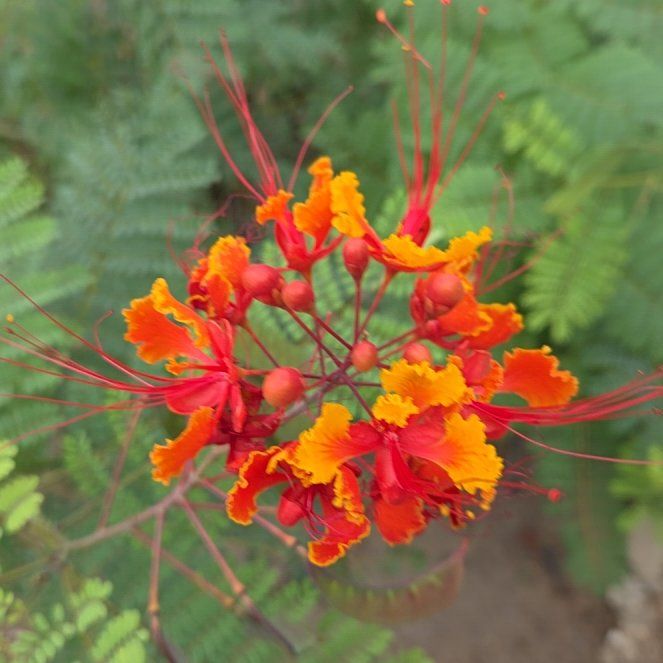
How to Plant a Mexican Bird of Paradise
Plant Mexican Bird of Paradise outside in spring after the last frost, in full sun with well-drained soil and the root ball top sitting level with the ground. Dig a hole twice as wide as the root ball but no deeper. Space plants four to six feet apart. The plant is hardy in zones 9b to 11 in the ground, and grows as a container shrub brought indoors over winter in cooler zones. Expect first flowers in the same summer.

When and where to plant
Mexican Bird of Paradise, also sold as Pride of Barbados, Red Bird of Paradise, Dwarf Poinciana, and Peacock Flower, is a heat-loving shrub native to the warmer parts of the Americas. It needs full sun, six or more hours of direct light each day, and produces the most flame-orange and yellow flowers when planted somewhere unshaded and unprotected from afternoon heat.
This plant is hardy in the ground in USDA zones 9b through 11, where winter lows rarely dip below the mid 20s°F. In zones 8 and colder, grow it in a large container and bring the container indoors near a bright window once nighttime temperatures drop below 50°F. Wait to plant until spring after your last hard frost has passed and the soil has warmed to at least 65°F.
The site needs well-drained soil. Heavy clay or low spots that collect water lead to root rot fast in a plant adapted to dry conditions, so on poor ground plant on a raised mound or in a raised bed. Mexican Bird of Paradise is not picky about pH and handles slightly acidic through alkaline soil. Space plants four to six feet apart for a hedge or screening row, or six to eight feet for a single shrub with room to spread.
A quick note on names. The Mexican Bird of Paradise covered here is a tender flowering shrub in the legume family and is not the same plant as the true Bird of Paradise, Strelitzia reginae, which has large paddle-shaped leaves and a single beak-like flower. If you bought a shrub with fern-like compound leaves and bright orange-red flowers, you are in the right article.
Planting from a nursery transplant
Look for a stocky plant with healthy green compound leaves and no yellowing at the lower stems. The most important rule for Mexican Bird of Paradise is drainage. The plant evolved in seasonally dry climates and rots quickly in soggy ground, so the planting site and the way you set the root ball both need to shed water rather than hold it.
-
1Pick a warm planting day Wait until daytime temperatures are reliably in the 70s°F and overnight lows stay above 50°F. A warm cloudy morning is ideal because the new roots will not be fighting hot afternoon sun on day one. If the forecast shows a cool spell or a late frost, hold off until it passes.
-
2Dig the hole twice as wide Measure the root ball and dig a hole twice as wide but the same depth, not deeper. A wide hole loosens surrounding soil so the new roots can push out into native ground instead of circling. On clay or compacted sites, mix a shovel of coarse sand or fine gravel into the backfill to help drainage.
-
3Set the root ball at ground level Place the plant in the hole so the top of the root ball sits at or just barely above the surrounding soil line. Buried trunks invite rot in this heat-loving plant, and a slightly proud root ball drains away from the crown rather than into it. Pull back any nursery mulch or potting mix piled against the trunk before backfilling.
-
4Backfill, water in, and mulch Hold the plant upright and backfill with the native soil you removed, firming gently as you go to settle large air pockets. Water the planting hole deeply once until it drains away, then top with a two to three inch layer of mulch kept four inches back from the trunk. Mulch piled against the bark traps moisture against living wood and undoes the drainage work.
The first year
The first year for a newly planted Mexican Bird of Paradise is the year roots stretch out into surrounding soil and the plant decides how big a top to support. You should see steady leaf growth through the warm months and a first round of flowers by mid to late summer, sometimes lighter than what the plant will produce in later years.
The most common new-grower mistake is overwatering. Mexican Bird of Paradise is drought-tolerant once established, and soggy roots in year one are the fastest way to lose the plant. Water deeply but only when the top inch or two of soil has dried out, and skip fertilizer the first season so the plant invests in roots before leaves.
In zones 9b to 11, the plant may die back to the ground after a hard frost and resprout from the base in spring. This is normal. In container culture in cooler zones, move the pot indoors to a bright cool spot before frost and reduce watering through winter.
What can go wrong
-
Wilting after transplant
Some leaf droop in the first few days is normal as the plant rehydrates through a smaller working root system. Check that the root ball is moist but not soaked, and shade the plant with a light cloth or umbrella through the hottest part of the day for the first week. If the wilt persists past a week, gently lift one side of the root ball with a trowel to confirm the soil below is not sitting in water. Drying air and direct afternoon sun on a stressed plant are the most common drivers. -
Yellow leaves dropping in the first weeks
Overwatering is almost always the cause. Mexican Bird of Paradise evolved in seasonally dry conditions and will shed leaves when the roots cannot breathe. Let the top two inches of soil dry out before the next deep watering, and feel down into the planting hole with a finger to check moisture before reaching for the hose. If the site is staying wet between waterings, work on drainage now rather than later. -
Mushy stems or rotting crown
This is advanced overwatering or a too-deep planting. Check whether the trunk is buried below the original root ball line and excavate gently if so. If the lower stems feel soft, cut back to firm green tissue with clean pruners and pull mulch and soil away from the crown. On heavy clay sites, lifting the plant onto a six-inch mound is often the only durable fix. -
Slow growth and pale washed-out leaves
Too little sun is the usual reason. Mexican Bird of Paradise needs at least six hours of direct light to grow well and bloom, and a half-shaded site fades both the foliage color and the flower count. Move container plants to a sunnier spot through the growing season. In-ground plants will not move, so thin overhead branches or accept the lighter performance and consider a better site next year. -
No flowers in the first summer
First-year plants often put their energy into roots rather than blooms, especially if planted late in spring. Hold off on fertilizer through year one because nitrogen-rich feed pushes leaves at the expense of flowers. If the plant gets full sun and well-drained soil, expect a much heavier bloom flush in year two and beyond. Patience is the cheapest fix here. -
Whole plant blackened after a cold snap
In zones 9b to 11 the top may freeze back to the ground after a hard frost while the roots stay alive. Wait until late spring to assess regrowth from the base before cutting anything. Once new shoots emerge, cut the dead stems back to a few inches above ground and let the plant rebuild. In colder zones, a container that lived outdoors all summer needs to come inside well before the first hard freeze. -
Leaves chewed with caterpillars present
Several butterfly and moth caterpillars feed on the compound leaves, and the damage usually looks worse than it is. Hand-pick the larger caterpillars off into soapy water if the plant is small or you can reach them. On an established plant the leaves regrow quickly, so light feeding is rarely worth a spray. Avoid broad insecticides because they kill the pollinators the flowers depend on. -
Black sooty coating on lower leaves
This is sooty mold growing on the sticky honeydew secreted by aphids or scale insects feeding on the plant. Spray the plant down with a strong stream of water to dislodge the insects, then wipe the mold from the leaves with a damp cloth once the pest is gone. Repeat the spray every few days until populations crash. Look up the underside of the leaves and along stem tips, which is where these pests cluster.
About This Article
