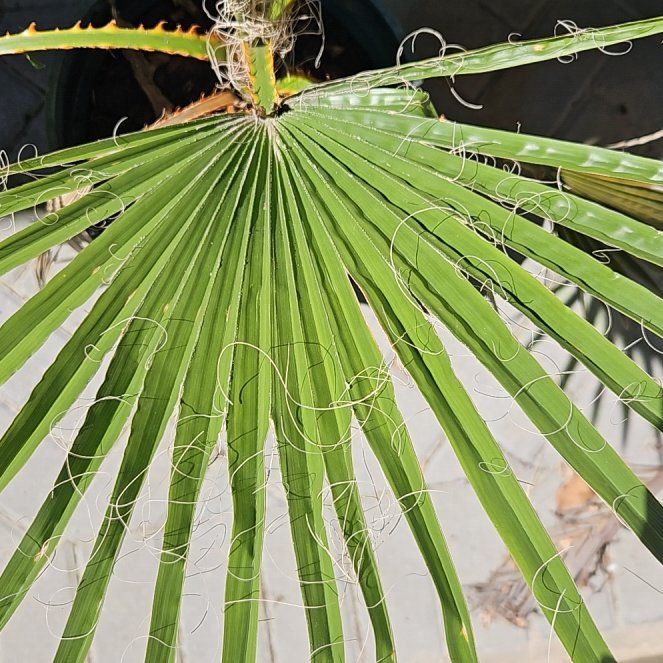
How to Plant a Mexican Fan Palm
Plant Mexican Fan Palm in late spring or early summer once soil holds above 65 degrees, in full sun with fast-draining sandy soil. Set the trunk base so the root initiation zone, the swollen band just above the original soil line, sits at or just above finished grade. Water deeply twice a week through the first growing season. Pick a spot clear of overhead lines and roofs because mature plants reach 80 to 100 feet tall.

When and where to plant
Mexican Fan Palm wants full sun, six or more hours of direct light a day. The plant is native to dry washes and rocky slopes in northwest Mexico, so it thrives where heat is high, drainage is fast, and sun is unfiltered. Hardiness runs from zone 9a through 11, with mature plants tolerating brief dips near 20 degrees Fahrenheit but young plants damaged below 25 degrees.
Plant in late spring or early summer once both soil and night air hold steadily above 65 degrees Fahrenheit. Palms put out roots in warm soil, so cool-season planting stalls establishment and exposes the root ball to rot. Avoid planting in the rainy parts of fall and winter.
The site needs fast-drained soil, ideally sandy or gravelly, with no standing water after rain. Heavy clay holds moisture against the roots and is the most common cause of failure. Spacing is the other site decision worth getting right. The trunk stays narrow at one to one and a half feet thick, but the plant reaches 80 to 100 feet tall at maturity. Set the palm at least 15 feet from buildings, walls, and overhead power lines, and farther from anything you do not want shaded by an eventual towering crown.
Planting a container-grown palm
The single most important rule for any palm is the root initiation zone, the slightly swollen band at the base of the trunk where new roots emerge, must sit at or just above the finished soil level. Bury this band and the palm slowly suffocates, often pulling a fatal spear within a season. Set it too high and the emerging roots dry out before they reach soil. Most container palms arrive with the zone right at the top of the root ball.
-
1Pick a warm planting day Aim for a morning in late spring or early summer when daytime temperatures hold in the 75 to 90 degree range and nights stay above 65. Cool weather stalls root growth and gives the freshly cut feeder roots a chance to rot before they regenerate. If you must plant on a hot dry day, do it before 10 in the morning and water thoroughly.
-
2Dig the hole twice as wide Measure the root ball, then dig a hole twice as wide and the same depth, not deeper. A wide hole loosens compacted ground so the rope-like palm roots can push outward into native soil. Going deeper than the root ball causes the palm to settle and bury the root initiation zone after the first deep watering.
-
3Find the root initiation zone and set the depth Slide the palm out of the container and brush soil away from the top of the root ball with your fingers until you can see the swollen pale band at the base of the trunk where roots emerge. Position the palm in the hole so this band sits at or just above finished grade. Palms buried below this zone slowly suffocate, and the first symptom is often a fatal spear pull months later.
-
4Backfill with native soil and water in Hold the palm vertical and backfill the hole with the same native soil you removed, firming gently with your hands every few inches to remove large air pockets. Build a low ring of soil at the edge of the hole to hold water over the root ball. Fill the ring slowly twice, letting the water soak in fully between rounds, until the root zone is fully saturated.
-
5Mulch and stake only if needed Top the planting area with two to three inches of bark or gravel mulch, keeping the mulch six inches back from the trunk. Mexican Fan Palms rarely need staking because the trunk is heavy enough to stay upright, but tall recently transplanted plants in windy sites can be braced for the first season with three padded straps angled to wooden stakes. Remove any bracing after six to twelve months so the trunk can flex and build wind tolerance.
The first year
The first year for a freshly planted Mexican Fan Palm is almost entirely about the roots. Palms shed most of their cut feeder roots after transplant and regenerate a fresh set from the root initiation zone over the first several months. Top growth in this phase looks quiet or stalled even on a perfectly healthy plant, which is the source of most new-grower panic.
The two most common first-year mistakes both come from misreading that pause. Overwatering on the theory that the palm looks stressed pushes the regrowing roots into rot, especially on any clay-leaning soil. Fertilizing to force visible growth before the roots can support it burns the limited feeder roots that did regenerate. Stick to deep twice-weekly water through the warm season, drop to once a week through any cool stretch, and skip fertilizer entirely until the second growing season.
Healthy first-year growth looks like the existing fronds holding green and standing upright, the central spear leaf staying firm, and one or two new fronds pushing in the warm half of the year.
What can go wrong
-
Spear pull (the central new leaf comes loose)
The unopened spear leaf at the top of the crown lifting out with a gentle tug is the most serious symptom on a palm and usually traces to bud rot from cold, overwatering, or a buried root initiation zone. Stop all watering and pull back any mulch or soil piled against the trunk to expose the root band. Apply a copper-based fungicide drench into the crown according to label rates. Recovery is possible if caught while the inner crown tissue is still firm but is unlikely once the crown turns soft or smells sour. -
Buried root initiation zone (slow decline)
If the pale swollen band at the trunk base disappeared into the planting hole or under added mulch, the palm is slowly suffocating and may go a full year before showing serious symptoms. Carefully excavate the soil and mulch around the trunk with your hands until you can see the band, then leave the area open. Caught in the first six to twelve months recovery is usually full. Caught after years of decline the palm often cannot be saved. -
Browning lower fronds after transplant
Some lower frond browning in the first weeks is normal as the palm rebalances its canopy against the reduced root system. Trim only fully brown fronds, leaving any with green tissue still attached because the palm pulls nutrients back from yellowing leaves before it drops them. Cutting too aggressively forces the palm to spend stored energy on replacement growth it cannot yet support. -
No new fronds in the first growing season
Palms put almost all of their first-year energy into regenerating roots, so a freshly planted Mexican Fan Palm pushing zero or one new frond in year one is normal. Check that the central spear leaf is still firm, green, and standing upright. As long as the spear stays healthy the palm is establishing on schedule and new frond pushes pick up in year two. -
Trunk leaning toward the light
A young palm planted near a wall, fence, or shaded side of the property can tilt as the crown reaches for unfiltered sun, locking in a permanent lean once the trunk hardens. Either move the palm to an open site within the first establishment year while corrective replanting is still possible, or brace the trunk vertical with three padded straps. After two to three years the lean is set into the wood and cannot be corrected. -
Mushy roots and soggy soil
Heavy clay, a low spot that collects rain, or steady overwatering starves the regenerating roots of oxygen and leads to root rot. Lift the palm if the ground is staying saturated for more than a day after rain, and replant on a six-inch mound of native soil mixed with coarse sand. Water based on whether the soil feels dry an inch down rather than on a fixed schedule, and skip irrigation entirely during cool wet stretches. -
Cold damage on young leaves
Young palms damaged by a brief drop below 25 degrees Fahrenheit show brown patches on the newest fronds and a softer spear leaf within a few days. Do not cut damaged fronds for at least two months because the palm uses them as insulation for the central bud through any further cold. Wrap the trunk and crown with frost cloth during forecast freezes for the first two winters until the plant clears 10 feet of trunk. -
Sunscald on a smooth young trunk
A palm moved from a shaded nursery row into open sun can develop cracked or bleached patches on the south or west side of the trunk in the first summer. Wrap the trunk loosely with burlap or use a tree-trunk paint product in the first two seasons until the trunk hardens and self-shades with skirt fronds. Once an established skirt of dead fronds builds up the trunk no longer sunscalds and the skirt can be left or pruned to taste.
About This Article
