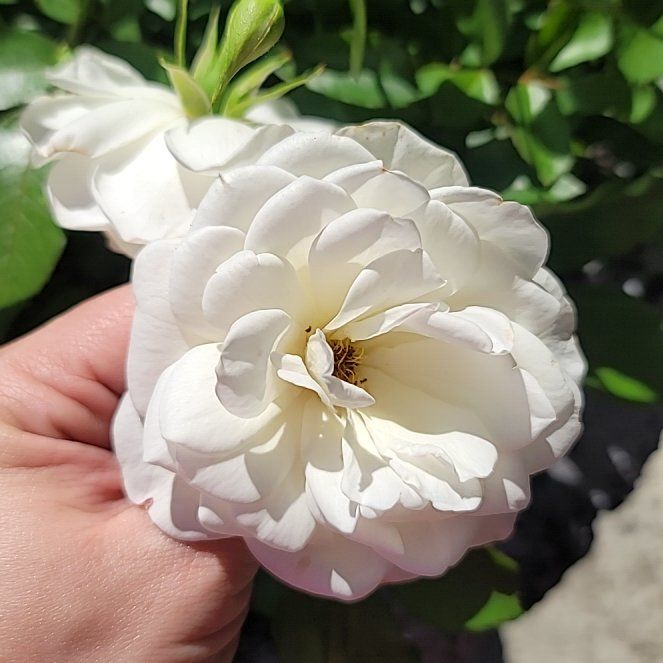
How to Plant an Iceberg Rose
Plant Iceberg Rose in spring or fall in full sun and rich, well-drained soil. Set the bud union 2 to 4 inches below the soil surface in zones 5 and 6, at or just above soil level in zones 7 through 9. Dig a hole twice as wide as the root ball. Space plants 3 feet apart. Expect the first flush of white blooms within 6 to 8 weeks of planting a container rose, longer for bareroot.

When and where to plant
Iceberg Rose is hardy in zones 5 through 9 and grows best in full sun, 6 or more hours of direct light each day. Fewer hours and the plant still survives, but the bloom count drops sharply and disease pressure climbs.
For container-grown roses, plant in spring after the last hard frost or in early fall about 6 weeks before your first freeze. For bareroot roses, plant in late winter or very early spring while the canes are still dormant, as soon as the ground can be worked.
The site needs rich, well-drained soil with a pH between 6.0 and 6.8. Heavy clay holds water against the roots and crown, leading to rot, so on poor sites work in 2 to 3 inches of compost across the planting area before digging the hole. Allow 3 feet between plants for air to move through the foliage. Crowded roses stay wet too long after rain and dew, which is what triggers most rose diseases.
Planting a container-grown rose
The single most important rule for any grafted rose like Iceberg is the depth of the bud union, the swollen knob where the named rose was grafted onto the rootstock. In zones 5 and 6, bury the bud union 2 to 4 inches below the finished soil so winter cold doesn't kill the graft. In zones 7 through 9, set the bud union at or just above the soil so the rootstock doesn't get encouraged to send up its own shoots.
-
1Pick a planting day and soak the pot Aim for a cool, overcast morning in spring after the last hard frost or in early fall 6 weeks before your first freeze. The afternoon before you plant, water the rose in its container until water runs out the drainage holes. A fully hydrated root ball pulls apart more cleanly and transitions into native soil with less shock.
-
2Dig the hole twice as wide Measure the root ball, then dig a hole twice as wide and just slightly deeper than the root ball is tall. A wide hole loosens the surrounding soil so new roots can push out laterally into native ground. Mix a few inches of compost into the soil you removed and reserve it for backfill.
-
3Find the bud union and set the depth The bud union is the swollen knot at the base of the canes where the named rose was joined to the rootstock. In zones 5 and 6, position the plant so the bud union sits 2 to 4 inches below your finished soil line. In zones 7 through 9, set the bud union at or just above the soil. Use the handle of a shovel laid across the hole as a depth reference.
-
4Backfill, water in, and mulch Hold the rose upright as you fill the hole with your compost-amended native soil, firming gently with your hands to remove air pockets. Water the planting hole slowly until the soil settles, then top with 2 to 3 inches of mulch, keeping the mulch pulled back 4 inches from the canes. Mulch piled against the canes holds moisture against living wood and invites the same rot the depth rule is meant to prevent.
Planting a bareroot rose
Bareroot Iceberg Roses ship in winter while the plant is dormant, with no soil around the roots. The critical rule is to soak the roots before planting and to set the bud union at the correct depth for your zone. A bareroot rose that goes into the ground with dry shriveled roots, or with the bud union at the wrong depth, often fails to break dormancy at all in spring.
-
1Soak the roots Submerge the entire root system in a bucket of cool water for 8 to 24 hours before planting. The roots arrive partly dried out from shipping, and this soak rehydrates them so they can push new feeder roots into the soil right away. Don't skip this step, even if the roots look fine on arrival.
-
2Trim and inspect the roots Lift the rose from the bucket and trim off any broken, blackened, or mushy root tips with clean pruners. Healthy roots are firm and tan, sometimes with white tips. If a long root is too tangled to spread out in the hole, shorten it rather than coil it, since coiled roots establish poorly.
-
3Dig the hole and build a cone of soil Dig a hole 18 inches wide and 12 to 15 inches deep. Mix compost into the backfill soil, then mound a firm cone of that mixture in the center of the hole. The cone supports the rose at the right height and gives the roots something to drape over, which prevents them from bending or coiling at the bottom.
-
4Set the bud union and spread the roots Place the rose on top of the cone and spread the roots evenly down all sides. Check the depth so that the bud union sits 2 to 4 inches below your finished soil line in zones 5 and 6, or right at the soil surface in zones 7 through 9. Adjust the cone height before you start filling.
-
5Backfill in stages and water deeply Fill the hole halfway with your compost-amended soil and firm it gently around the roots, then add water and let it drain before finishing the backfill. Watering halfway through removes the last air pockets, which is the difference between a bareroot rose that takes off and one that stalls. Mulch 2 to 3 inches deep, keeping mulch 4 inches back from the canes.
The first year
The first year for a newly planted Iceberg Rose is mostly about the roots, even though the top growth is the part you notice. A container rose pushes its first flush of bloom within 6 to 8 weeks while the roots are still settling, and a bareroot rose spends much of spring just breaking dormancy and pushing its first leaves.
The most common new-grower mistake is reading slow early growth as a problem and overcompensating with extra fertilizer. Roses need rich soil to thrive, but heavy feeding in year one pushes weak leafy growth before the root system can support it. Stick to deep weekly watering and skip the synthetic fertilizer until the second spring. A handful of compost top-dressed in late spring is plenty.
Healthy first-year growth looks like steady cane extension, several flushes of white clusters across the season, and dark green leaves with minimal disease spotting. A small amount of black spot in humid weather is normal even on a disease-resistant rose like Iceberg.
What can go wrong
-
Bareroot canes fail to leaf out in spring
The roots dried out before or during planting, or the bud union sits too deep for the zone and the graft can't push through. Check that you soaked the roots for 8 to 24 hours before planting next time. If a few canes are still green when scratched with a thumbnail, give the plant another 3 to 4 weeks before giving up, since some bareroot roses are slow to break dormancy in cool springs. -
Leaves dropping shortly after planting
Transplant shock from heat or root disturbance is the usual cause for a container rose, especially if it was planted on a hot sunny day. Keep the soil evenly moist, not soaked, for the first 3 weeks. Set up temporary shade cloth or a propped umbrella if afternoon highs are above 85°F. New leaves usually push within 2 weeks of the drop as the roots catch up. -
Black spots with yellowing leaves
Black spot is the most common rose disease, caused by a fungus that thrives on leaves that stay wet for more than 6 hours. Iceberg is rated disease-resistant, not immune, and humid weather can still push it past that threshold. Water at the base of the plant in the morning, not overhead in the evening, and pick off and bag affected leaves so the fungus can't overwinter in the mulch. -
Red or wild-looking shoots from below the bud union
These are rootstock suckers, growth from the wild rose used as the rootstock for the grafted Iceberg. They steal energy from the named plant and never bloom the same way. Trace each sucker down to where it joins the rootstock below ground and pull it off sharply rather than cutting, since pulling removes the buried buds that would otherwise resprout. -
Yellowing leaves on lower stems
A small amount of lower leaf yellowing in year one is normal as the plant sheds leaves that grew in the nursery. Heavy yellowing across many stems usually means either overwatering, where the soil is staying soggy and starving the roots of oxygen, or a nitrogen shortage in poor soil. Check soil moisture an inch down. If it's wet, back off watering. If it's dry, top-dress with an inch of compost. -
Few or no blooms in the first season
A bareroot Iceberg planted in late winter may bloom lightly in its first summer, or skip blooming until the second spring while it builds root mass. A container rose usually blooms in the first season but may push only one flush if the bud union is buried too deep in a warm zone. Check that the bud union is set correctly for your zone and be patient. Iceberg is famous for repeat bloom once it settles. -
Wilting in summer heat despite watering
If the leaves wilt on hot afternoons even when the soil is moist, the roots can't pull water fast enough to match what the leaves are losing. This is normal for a newly planted rose and the plant recovers overnight. Confirm by checking again at sunrise. If the wilt holds past morning, water deeply and add a 3 inch mulch ring out to the drip line to slow soil evaporation. -
Cane dieback after the first winter
In zones 5 and 6, the tips of the canes often die back over winter, leaving brown wood that needs to be pruned down to live green tissue in early spring. This is normal and the rose pushes new growth from lower buds. To reduce dieback, stop watering 6 weeks before your first frost so the canes harden off, and mound 6 to 8 inches of soil or mulch over the bud union once the ground freezes for the first winter.
About This Article
