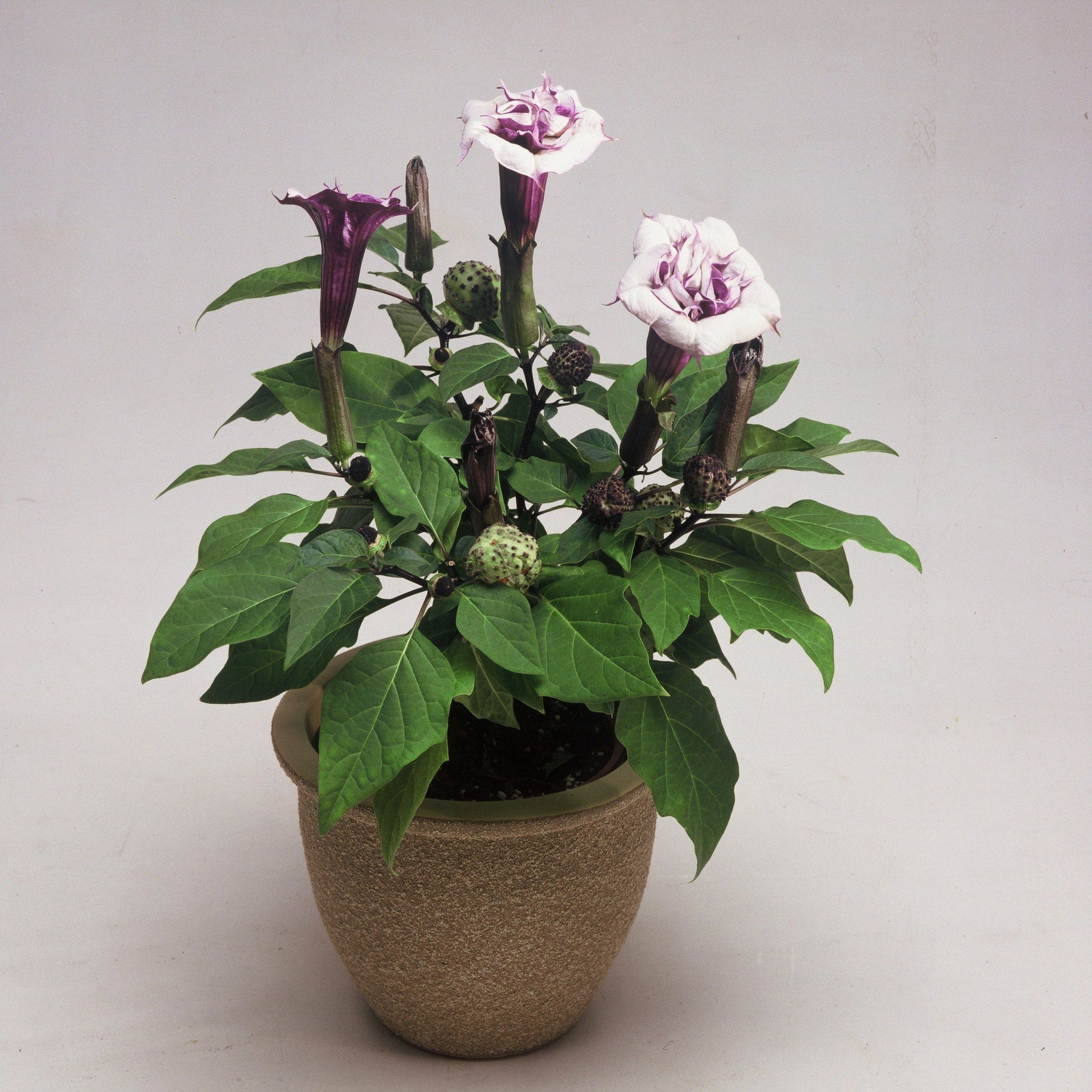
How to Plant a Datura Metel
Direct-sow Datura metel seeds outdoors after the last spring frost, half an inch deep and eighteen inches apart in full sun and well-drained soil. Soak the hard seeds in warm water for 24 hours first to speed germination. All parts of this plant are highly toxic, so pick a spot well away from children, pets, and edible crops. Expect flowers in 70 to 90 days.

When and where to plant
Datura metel is a warm-season annual in most of the country, perennial only in zones 9 through 11. Sow seeds outside after your last spring frost, once soil at one inch deep stays above 65°F. The plant needs full sun, six or more hours of direct light a day, and prefers light, well-drained soil. Heavy clay or wet sites cause the roots to rot before the plant ever blooms.
The most important siting decision for this plant is keeping it away from people and animals who might touch or eat it. Every part of Datura metel, including the leaves, flowers, seeds, and roots, contains tropane alkaloids that can be deadly if ingested by children or pets. Plant it in a back border, a fenced cutting bed, or any spot where curious kids, dogs, cats, and grazing livestock cannot reach it. Never plant near a vegetable garden, play area, or pet run, and wash your hands thoroughly after handling the plant or its seeds.
Space plants eighteen to twenty-four inches apart. A mature Datura metel grows three to four feet tall and wide in a single season, with large trumpet flowers that need room to display.
Planting from seed
Datura metel seeds have a hard coat that slows germination, so soaking them in warm water for 24 hours before sowing wakes them up reliably. The critical rule for this plant is siting, not technique. Every part of Datura metel is toxic enough to kill a child or pet that chews on it, so plant only where curious hands and mouths cannot reach, and always wash up after handling.
-
1Soak the seeds for 24 hours Place the seeds in a small bowl of warm water the day before you plan to sow, and leave them on the counter overnight. The hard seed coat softens and germination times drop from three weeks to about ten days. Discard the soaking water down a drain, not in the garden, and wash the bowl thoroughly before reusing.
-
2Prepare the bed away from kids and pets Loosen the top six inches of soil in a sunny back border, fenced bed, or any area off-limits to children and animals. Rake the surface smooth and remove rocks and weeds. Do not plant this species near vegetables, play structures, dog runs, or anywhere livestock graze. Toxic plant parts that drop to the ground later in the season cannot be policed in those spots.
-
3Sow the seeds half an inch deep Push each seed about half an inch into the soil and space them eighteen to twenty-four inches apart in all directions. Cover lightly with soil and press down with the flat of your hand so the seed makes good contact with moist ground. Wear gloves while handling the seeds, and wash hands thoroughly when finished.
-
4Water in and keep the surface moist Water the bed gently with a watering can or a soft hose spray until the top inch of soil is evenly damp. Continue watering every two or three days while you wait for germination so the soil never dries to dust. Once seedlings emerge and have two or three true leaves, cut back to a deep weekly soaking.
The first month
The first month after sowing is mostly about getting seeds to sprout and the seedlings rooted in. Datura metel germinates fastest when soil sits between 70 and 85°F, which usually means waiting a week or two after your last frost rather than rushing it.
The most common new-grower mistake is letting the surface dry out during germination, which stalls or kills the still-emerging sprouts. Check the bed every day for the first two weeks and water gently when the top half inch feels dry. Once the seedlings are up and the first true leaves appear, the plant takes off quickly and watering can drop to once a week.
Healthy first-month growth looks like full germination within ten to fourteen days, dark green seedlings standing upright on sturdy stems, and a clear push of new leaves every few days through the back half of the month.
What can go wrong
-
Seeds failing to germinate
Cold soil is the most common cause. Datura metel needs soil at least 65°F at one inch deep to sprout reliably, and ideally closer to 75°F. Wait until two or three weeks after your last frost before sowing, soak the seeds for a full 24 hours first, and keep the top inch of soil consistently moist. If nothing has sprouted after three weeks of warm weather, resow with fresh soaked seed. -
Seedlings flopping at the soil line (damping off)
A soil fungus that hits seedlings kept too wet in cool weather causes a thin pinched section at the soil line, and the seedling falls over. Let the surface dry slightly between waterings instead of keeping it constantly damp. Improve airflow by thinning crowded sprouts early, and water in the morning so the soil surface dries by evening. Lost seedlings cannot be saved, but resown seed in the same bed will do fine if conditions are corrected. -
Tall, leggy, pale seedlings
Not enough light is almost always the cause. Datura metel needs full sun from sprout to bloom, and seedlings that emerge in partial shade stretch toward whatever light they can find. Move container-sown plants into stronger sun, or thin overhead branches if a nearby tree is shading the bed. Seedlings that have already stretched can be gently mounded with soil to the lowest leaves to add stability. -
Wilting after a hot sunny afternoon
Transplant shock or shallow roots that have not yet reached down to consistent moisture can cause sudden afternoon wilt in new seedlings. Water deeply in the early morning so the plant goes into the heat with a full tank. Avoid watering the leaves directly during the hottest part of the day. Most seedlings perk back up overnight as long as the root zone is moist. -
Holes chewed through young leaves (flea beetles)
Tiny dark beetles that jump when disturbed leave a shotgun pattern of small holes in young Datura leaves. Light damage is cosmetic and the plant grows past it. Heavy infestations on small seedlings can be slowed by floating row cover until plants are at least six inches tall. Avoid sprays unless absolutely necessary, since the plant is already toxic enough that handling sprayed foliage adds risk on top of risk. -
Sticky leaves and clusters of soft insects (aphids)
Aphids cluster on new growth and leave a sticky residue that attracts ants and sooty mold. A strong morning blast of water from the hose dislodges most of them, and beneficial insects usually take care of the rest within a week or two. Skip insecticidal soaps and oils on this plant unless you can guarantee no child or pet will touch it afterward. The plant tolerates light aphid pressure without losing flower production. -
Lots of leaves, few flowers
Too much nitrogen pushes leaf growth at the expense of blooms. If the bed was recently amended with high-nitrogen fertilizer or fresh compost, the plant may grow into a bushy green pile with only a handful of flowers. Skip further feeding for the rest of the season, and the plant usually shifts back to bloom production within a few weeks once nitrogen drops. Full sun and slightly lean soil produce the best flower displays. -
Plant collapses overnight in early fall
Datura metel is frost-tender, so the first hard fall freeze wilts and blackens the entire plant top to bottom in a single night. This is normal end-of-season behavior in zones 8 and colder, where the plant is grown as an annual. Pull the dead plant up by the roots with gloves on, bag it for the trash rather than composting, and wash hands and tools afterward to keep toxic plant material out of food beds.
About This Article
