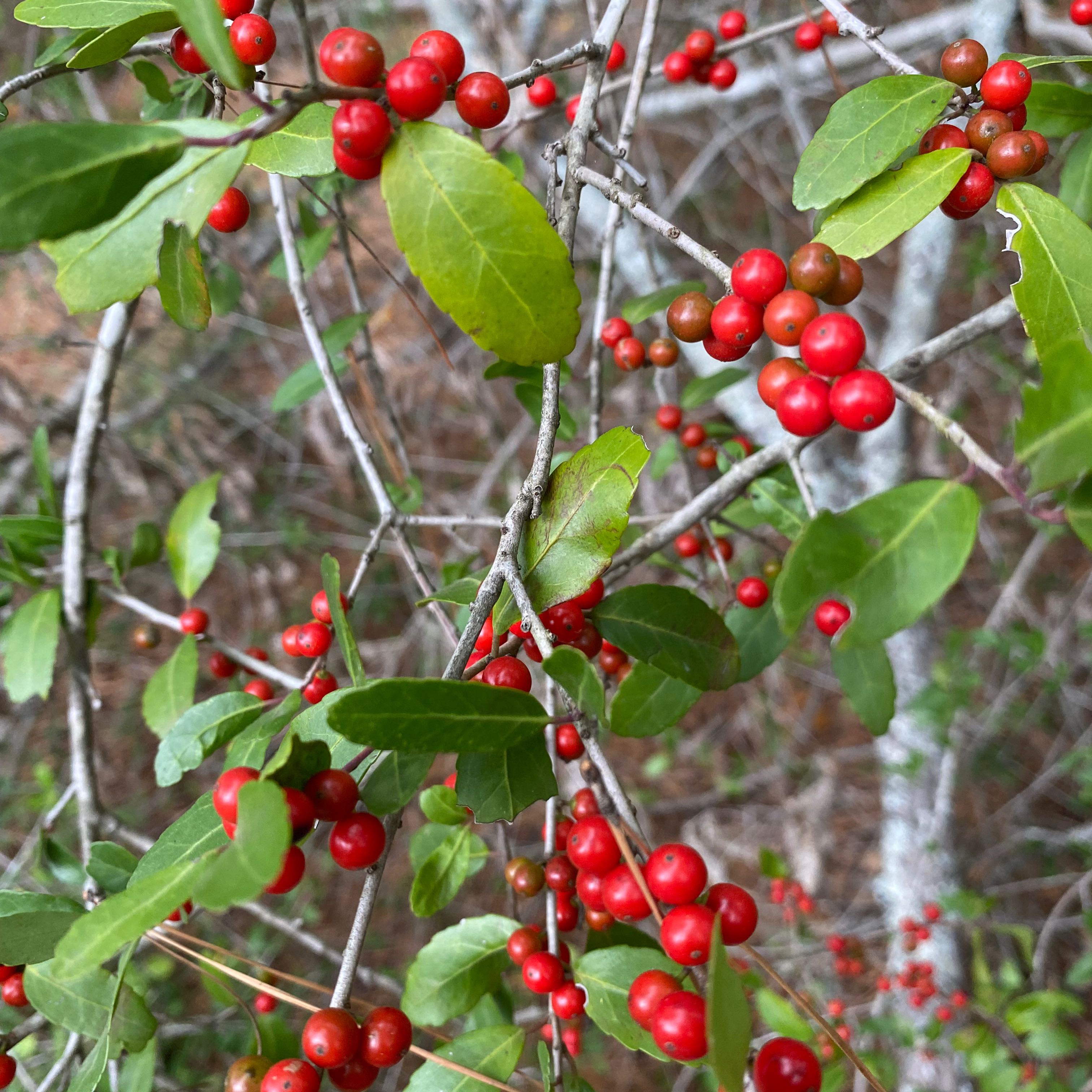
How to Grow a Yaupon Holly
Plant Yaupon Holly in full sun to part shade, in well-drained soil, and pair a female with a male within 50 feet so the berries set. Water deeply once a week through the first year, then mostly rely on rainfall. Prune in late winter before new spring growth.

Where to plant
Yaupon Holly is a tough native evergreen for USDA zones 7 through 10. It grows 10 to 20 feet tall and 8 to 12 feet wide as a large shrub or small tree, so the spot needs room for the mature size now.
Sun
Full sun to part shade works well. Six or more hours of direct sun produces the densest foliage and the heaviest berry set. In light shade the plant grows looser and sets fewer berries, but still looks fine as a screen or hedge.
Drainage
Yaupon Holly tolerates a wide range of soils, including clay, sand, and occasionally wet spots, but it cannot sit in standing water for weeks. Dig a one-foot test hole and fill it with water. If it drains within a day, the spot is fine. If water sits longer, plant on a slight mound 6 to 12 inches above grade.
Soil
Average garden soil is plenty. The plant tolerates poor, sandy, or rocky soil where many landscape plants struggle. Work a few inches of compost into the planting area to give the roots a head start, but skip the heavy amendments since this plant prefers lean ground.
Space and pollination
Give each plant 8 to 12 feet of clear space at maturity, or space 4 to 6 feet apart for a tight hedge. Yaupon Holly is dioecious, meaning each plant is either male or female. Only female plants set berries, and they need a male within about 50 feet to pollinate the flowers. One male can pollinate several females, so a hedge of females with one or two males mixed in gives the heaviest fruit display.
How to plant
Plant in fall or early spring while temperatures are cool and rainfall is reliable. Container-grown plants can go in any time during the growing season as long as the watering schedule keeps up.
-
1Dig a wide shallow hole Twice as wide as the root ball but only as deep. The roots spread sideways more than down, and a wide loose hole helps them establish faster than a deep narrow one.
-
2Loosen the root ball If the roots are circling tightly inside the nursery pot, gently tease them apart or score the outside with a clean knife. Roots that circle in the pot keep circling in the ground unless you break the pattern by hand.
-
3Set the plant level with the surrounding soil The top of the root ball should sit right at grade or about an inch above. A buried crown holds extra moisture and rots faster than one planted high.
-
4Backfill with native soil Use the soil you dug out, mixing in a few handfuls of compost. Avoid filling the hole with pure compost or potting mix, since roots stay in that rich pocket instead of pushing into the surrounding yard.
-
5Water deeply Soak the entire root zone until the top six inches feel uniformly damp. This first watering settles the soil around the roots and is the most important watering of the plant's first year.
-
6Mulch two to three inches deep Use shredded bark or wood chips, kept a few inches back from the trunk. Mulch keeps the shallow root zone cool and reduces watering needs through the establishment year.
Watering and feeding
Watering
Water deeply once a week through the first growing season to help the plant establish, soaking the root zone rather than sprinkling the leaves. A slow trickle from a hose at the base or a soaker line works best.
After the first year, Yaupon Holly is highly drought-tolerant and rarely needs supplemental water in most climates. A deep soak during long summer dry spells keeps the foliage glossy and helps the berry crop fill out.
Feeding
Feed once in early spring with a slow-release balanced fertilizer or one labeled for trees and shrubs. Established plants in average soil rarely need feeding at all, and overfeeding pushes leafy growth at the expense of berries.
Skip late-summer feeding so new growth has time to harden off before the first frost.
Pruning
Yaupon Holly tolerates heavy pruning and responds well to shaping. The plant blooms on new wood, so pruning in late winter before bud-break preserves the spring flowers that become the fall and winter berries on female plants.
When to prune
Late winter, just before new spring growth pushes, is the best time. Light shaping cuts in early summer after the flowers fade are also fine. Avoid heavy pruning in fall, since fresh cuts heal slowly and the new growth that pushes does not have time to harden off before cold weather.
What to cut
Remove any dead, broken, or crossing branches at the base. Thin out crowded interior branches to open the canopy and improve airflow. For a hedge, shear lightly two or three times during the growing season to keep the shape tight.
For a small tree form, choose a single leader or a few main trunks and remove competing shoots low on the plant. Limb up the lower branches gradually over a few years to expose the trunks.
Renovating an overgrown plant
Yaupon Holly resprouts vigorously even from old wood, which makes it one of the most forgiving plants to renovate. Cut a badly overgrown plant back hard in late winter, even down to within a foot or two of the ground, and fresh shoots fill in within one season. The trade-off is that a hard renovation removes that year's berry crop on female plants.
Blooming and color
Yaupon Holly is grown for the bright red berries that cover female plants from fall through late winter. Small white flowers in spring are the precursor, but the show belongs to the fruit.
Bloom timing
Tiny white flowers open along the stems in mid spring. The bloom is not showy on its own and is easy to miss, but it is what carries the berry crop. Bees and other small pollinators handle the work.
Berry display
Female plants ripen berries from green through translucent yellow to deep red in fall. The fruit holds on the plant from October through late winter in most regions, giving a long season of color when little else in the yard is bright. Birds eventually clean the plant before spring, but only after months of display.
Yellow-fruited forms exist and give a warmer winter look against the dark green leaves. The pollination rule is the same — a male still needs to be within 50 feet for berries to set.
Cutting branches for arrangements
Cut berried branches in late fall and early winter for holiday arrangements and wreaths. The cut stems hold their leaves and berries for two to three weeks in cool conditions. Trim the lower leaves off the stems before placing in water, and pick stems sparingly so the outdoor display still reads from the street.
Common problems and pests
Most Yaupon Holly complaints are pest pressure on new growth or the disappointment of an unfruitful female plant without a male partner nearby. The plant is otherwise low-maintenance and resistant to most landscape problems.
No berries on a known female plant
Almost always a missing pollinator partner, since females need a male of the same species within about 50 feet. Confirm the plant is mature enough to flower, which usually takes 3 to 4 years from a nursery start. If a male is not in the yard or next door, plant one within the 50-foot radius for next year's crop.
Yellowing leaves on the older growth
Usually a sign of poor drainage or compacted clay holding water against the roots. Dig a test hole next to the plant and check whether water sits overnight. If it does, build up the soil around the plant with a mound of compost and topsoil to lift the crown above the wet zone. A small amount of leaf shed is also normal in spring as old leaves drop and fresh ones replace them.
Scale insects on stems
Small bumpy growths on stems and the undersides of leaves, often with a sticky residue and black sooty mold on lower branches. Wipe individual scales off with a cotton swab dipped in rubbing alcohol on small plants. For heavier infestations, spray horticultural oil in late winter while the plant is dormant to smother the overwintering insects.
Leaf miners
Squiggly brown trails through the leaf surface, caused by larvae feeding inside the leaf tissue. Damage is mostly cosmetic and the plant tolerates it well. Pick off and discard the worst leaves. A spinosad spray timed to the early summer adult flight reduces the next generation if the trails are heavy.
Spider mites in hot dry weather
Fine stippling on leaves and faint webbing in the leaf joints, worst on plants in full sun during summer drought. A strong spray of water on the underside of the leaves dislodges the mites and washes off webbing. Horticultural oil or insecticidal soap clears heavier infestations. Healthy watering through dry spells is the best prevention.
Sooty mold on lower leaves
Black sooty coating on the leaves, caused not by the leaves themselves but by sap-sucking insects on the plant or one above it dripping honeydew. Find and treat the scale, aphids, or whitefly source. Once the insect is under control, the sooty mold washes off the leaves with soapy water and weathers away within a season.
Browning leaf tips in winter
Cold winter winds in zone 7 can desiccate exposed foliage on young plants. Mulch the root zone deeply going into winter, and water the plant well before the ground freezes if the fall has been dry. Established plants outgrow this sensitivity within a few years.
Branch dieback after a harsh freeze
Hard freezes at the cold edge of zone 7 can kill back the outer canopy on young plants. Wait until late spring before cutting any wood, since buds along the apparently dead stems often push fresh growth once warm weather returns. If a stem stays brown and brittle by late May, cut back to the lowest green bud.
Deer browsing on young plants
Deer occasionally test young Yaupon Holly even though established plants are usually left alone. Spray with deer repellent through the first year or two and protect new plantings with a temporary cage during heavy deer pressure. Once the plant is taller than the browse line, the trouble usually stops.
About This Article
