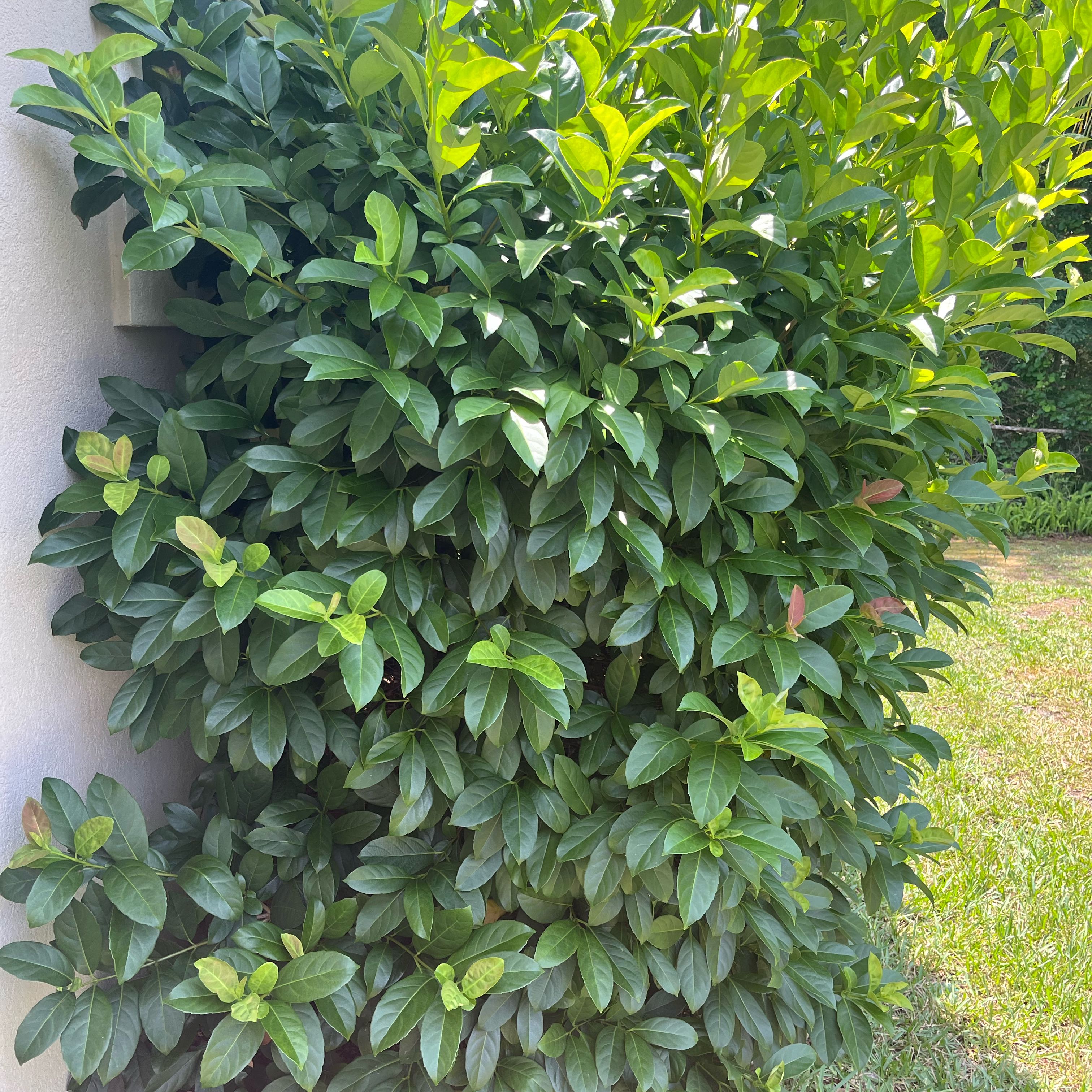
How to Grow a Sweet Viburnum
Plant Sweet Viburnum in full sun to part shade in well-drained soil with plenty of organic matter. Space 4 to 6 feet apart for a fast hedge or 8 to 10 feet apart as a freestanding shrub. Prune in early summer right after the spring bloom, since later cuts remove next year's buds.

Where to plant
Sweet Viburnum is a fast-growing evergreen shrub for USDA zones 8 through 11. Untrimmed plants reach 10 to 20 feet tall in five to seven years and form a dense screen or freestanding shrub. It is a popular hedge plant in the southern U.S., Mediterranean climates, and parts of Australia.
Sun
Full sun to part shade works well. Six or more hours of direct sun produces the densest growth and the heaviest spring bloom. Part shade plants still look full but bloom more lightly.
In zone 10 and warmer, light afternoon shade through the hottest part of summer prevents leaf scorch on the hottest days. Deep shade produces leggy growth with sparse blooms.
Drainage
Sweet Viburnum needs well-drained soil. Roots in soggy ground rot quickly and the plant declines from the inside out. Dig a one-foot test hole and fill it with water. If it drains within a few hours, the spot is fine. If water sits overnight, plant on a raised mound 6 to 12 inches above grade.
Soil
Rich loamy soil with plenty of organic matter is what this plant wants. Work two to three inches of compost into the planting area before you set the shrub in. The plant tolerates a wide pH range from slightly acidic to slightly alkaline.
Space
Space plants 4 to 6 feet apart for a fast-growing hedge that knits together within three years. As a freestanding shrub or small tree, give it 8 to 10 feet of clear space in every direction.
Avoid planting too close to a wall or driveway, since this plant can reach 20 feet tall and 10 feet wide untrimmed. The roots are not aggressive, but the canopy needs room.
How to plant
Plant in fall or early spring while the weather is mild, so the roots can establish before summer heat. Container-grown plants can go in any time of year in zones 9 and warmer, but extra care with watering is needed in summer plantings.
-
1Dig a wide shallow hole Twice as wide as the root ball but only as deep. Sweet Viburnum roots spread sideways, and a wide hole helps them establish faster than a deep one.
-
2Loosen the root ball If the roots are circling tightly inside the nursery pot, gently tease them apart or score the outside with a knife. Circling roots stay circling unless you break the pattern.
-
3Set the plant slightly high The top of the root ball should sit about an inch above the surrounding soil. The shrub settles as the soil compacts, and a buried crown rots faster than a high one.
-
4Backfill with native soil and compost Mix a few shovels of compost into the dug-out soil and use that to fill the hole. Firm the soil gently with your hands and water in as you fill to settle out air pockets.
-
5Water deeply Soak the root zone until the top six inches feel uniformly damp. This first deep watering is the most important watering of the plant's first year.
-
6Mulch two to three inches deep Use shredded bark or wood chips, kept a few inches back from the trunk. Mulch keeps the root zone cool, holds moisture, and suppresses competing weeds.
Watering and feeding
Watering
Water deeply once or twice a week through the first growing season, soaking the root zone rather than splashing the leaves. A soaker hose or drip line at the base is much better than overhead spray, which spreads leaf disease.
After the first year, Sweet Viburnum is moderately drought-tolerant and gets by on rainfall in most climates. A deep weekly soak through extended summer dry spells keeps the foliage looking fresh and helps the bush set strong bud growth for next year's blooms.
Feeding
Feed in early spring as new growth pushes, using a slow-release balanced fertilizer or one labeled for flowering shrubs. A second light feeding after the spring bloom helps the shrub put on summer growth.
Stop feeding by late summer so new growth hardens off before any cool weather. Heavy late-season feeding produces soft growth that is more vulnerable to cold damage at the cold edge of the zone.
Pruning
Sweet Viburnum blooms in spring on stems that grew the previous year. The single most important pruning rule is to cut right after the spring bloom fades, so next year's flower buds, which form in summer, are not removed.
When to prune
Prune within a few weeks of the last flowers fading in late spring or early summer. New flower buds form in mid to late summer for the following year, so any later cut takes those buds with it.
Light shaping cuts to remove stray shoots can happen any time during the growing season. The full prune happens right after bloom.
What to cut
Remove dead, broken, or crossing stems at the base. Shorten longer shoots back to a leaf node to keep the form tight. For a hedge, hand pruners give a cleaner cut than power shears and reduce the shredded leaf edges that invite disease.
Avoid shearing into bare interior wood with no leaves. Sweet Viburnum regrows from old wood reliably but the recovery takes a season.
Renovating an overgrown shrub
If the shrub has outgrown its space or become bare at the base, renovate it gradually over three years. Each year right after flowering, cut one third of the oldest stems to within a foot of the ground. Fresh shoots fill in from the base, and by year three the shrub has a new framework without losing all of its top growth at once.
Blooming and color
Sweet Viburnum is grown both for its evergreen dense foliage and for the lightly fragrant white spring blooms. The flowers are followed by clusters of red berries that ripen to black in fall and feed birds through winter.
Bloom timing
Clusters of small white flowers open in mid to late spring on stems that grew the previous year. Each cluster lasts about two weeks, with the whole shrub blooming for three to four weeks total. The fragrance is light and sweet, strongest on warm still mornings.
Berries and bird visitors
After the bloom, clusters of small red berries develop and ripen to black through late summer and fall. The berries are attractive against the dark green foliage and feed mockingbirds, robins, and other songbirds through winter.
The berries are mildly toxic to people, so do not plant where children might be tempted to eat them.
Evergreen presence
The dense glossy dark green foliage is the main payoff of this plant for many growers. A row of plants forms a thick screen year-round and tolerates pruning into formal shapes for hedge use. The leaves stay green through winter in the warmer parts of the range.
Common problems and pests
Most Sweet Viburnum problems trace back to fungal leaf disease in humid weather or to root rot in poorly drained ground. Air circulation, well-drained soil, and pruning sanitation prevent most issues.
Black or dark spots on leaves
Fungal leaf spot in humid weather. Spots start small and dark, expand to brown blotches, and the affected leaves yellow and drop. Rake up and bag fallen leaves through the season, never compost. Improve airflow by thinning the shrub and avoiding overhead watering. A copper fungicide applied at first sign slows new infection.
White powdery film on leaves
Powdery mildew shows up in mild dry days followed by humid nights. Improve airflow during pruning by removing crowded interior stems. A potassium bicarbonate or horticultural oil spray at the first sign clears mild outbreaks. Avoid overhead watering.
Cottony white masses on stems
Mealybugs or cottony cushion scale on the stems and leaf undersides. Wipe individual scales off with a cotton swab dipped in rubbing alcohol. Heavier infestations respond to horticultural oil sprayed in late winter while temperatures are mild. The sticky residue often grows sooty mold, which washes off with soapy water once the scale is controlled.
Yellow leaves with green veins
Iron chlorosis on alkaline soil. Apply chelated iron as a foliar spray for a quick fix and amend the soil with elemental sulfur or pine bark mulch for a long-term correction. Soil pH above 7.5 makes iron unavailable to the roots.
Aphids on new shoots
Small green or black insects cluster on tender new growth in spring. Knock them off with a strong spray of water. Insecticidal soap handles heavier infestations. Avoid broad-spectrum insecticides that also kill the ladybugs and lacewings that control aphids naturally.
Whole branches wilting and dying
Phytophthora root rot or canker in soggy soil. Check the lower trunk for sunken oozing bark and the roots for blackened decay. There is no cure for advanced root rot. Improve drainage by raising the bed or moving to a drier spot.
Leaves chewed with ragged edges
Caterpillars and weevils occasionally chew the leaves. Hand-pick small infestations and drop into soapy water. A Bt (Bacillus thuringiensis) spray applied early when caterpillars are small handles larger outbreaks without harming pollinators.
Browning leaf edges
Salt damage near roads or coastal sites, or summer drought stress in inland sites. Flush salty soil with deep watering in early spring. Mulch the root zone two to three inches deep to even out soil moisture and water deeply during summer dry spells.
Winter dieback at the cold edge of the range
Dead-looking stem tips in early spring are common at zone 8 sites in harsh winters. Wait until new growth pushes in late spring before cutting anything, since the buds you cannot see at first often replace the damage. Cut back to the lowest green bud once it is clear which stems are dead.
About This Article
