How to Grow a Sugar Apple
Plant Sugar Apple in full sun, in rich well-drained soil, in USDA zones 10 to 11 only. Outside those zones, grow in a large container moved indoors before any night below 50F. Hand-pollinate the flowers in the early morning to set fruit reliably, and expect the first harvest in year 3 to 4.

Where to plant
Sugar Apple is a tender semi-deciduous tropical tree from the Caribbean and tropical Americas. It grows hardy outdoors in USDA zones 10 and 11 only. Frost kills young trees and badly damages mature ones. In any cooler climate, the realistic option is a large container that summers outside and winters indoors.
Sun
Six to eight hours of direct sun produces the strongest growth and the heaviest fruit set. Young trees in their first year benefit from light afternoon shade while they establish, then a move into full sun in year two.
Indoor container plants in cool climates need the brightest window in the house, ideally south-facing, and a grow light through the short days of winter.
Drainage
Roots rot fast in soggy soil. Dig a one-foot test hole and fill it with water. If water sits overnight, build a raised mound a foot above grade or grow in a large container with generous drainage holes.
Soil
Sandy loam with good organic content is ideal. Sugar Apple tolerates less fertile soils than many tropical fruits and even handles rocky or limestone soils common in south Florida and parts of the Caribbean. Heavy clay soils need a raised planting mound and a generous compost amendment.
Space
Sugar Apple grows into a small tree 15 to 20 feet tall with a similar spread. Give it 12 to 15 feet of clear space in every direction. The tree is briefly deciduous in late winter, dropping leaves before a fresh flush starts in spring. Plant in a spot where a bare period is acceptable. Container plants stay smaller (8 to 10 feet) with annual pruning.
How to plant
Plant in spring once nights stay reliably above 55F. New roots establish fastest when soil temperatures sit in the 70s. Container-grown trees can go in any time during the warm season.
-
1Dig a wide hole Twice as wide as the root ball but only as deep. Lateral roots spread sideways into loose soil and establish faster than they would in a narrow deep hole.
-
2Loosen the root ball If the roots circle tightly inside the nursery pot, tease them apart by hand or score the outside with a clean knife. Roots that go in circling tend to stay that way and slowly girdle the tree.
-
3Set the tree slightly high The top of the root ball should sit about an inch above the surrounding soil. The plant settles as the soil compacts, and a buried trunk flare invites rot at the base.
-
4Backfill with native soil and compost Mix a couple of shovels of compost into the dug-out soil and use that mix to fill the hole. Avoid pure compost or pure potting mix in the planting hole, since roots stay confined to rich pockets and never spread out.
-
5Water deeply Soak the entire root zone until the top six inches feel uniformly damp. This first watering settles the soil around the roots and is the most important watering of the tree's first year.
-
6Mulch two to three inches deep Use shredded bark or wood chips, kept a few inches back from the trunk. Mulch keeps the shallow root zone cool, holds moisture between waterings, and protects the surface roots from drying out.
Watering and feeding
Watering
Water deeply twice a week through the first growing season to help the tree establish, soaking the root zone rather than splashing the leaves. Drip irrigation or a soaker hose at the base works best.
After the first year, Sugar Apple tolerates short dry spells once established. A deep weekly soak through the dry season keeps fruit development steady. Reduce watering noticeably during the brief winter dormancy when the tree drops its leaves, since wet cool soil at that point causes root rot.
Feeding
Feed every two months through the warm growing season with a balanced slow-release fertilizer or one labeled for tropical fruit. Young trees benefit from higher-nitrogen blends in their first two years to build canopy.
Once the tree is flowering, switch to a fertilizer with extra potassium and phosphorus to support fruit set. Stop feeding entirely once the leaves start dropping for the brief winter dormancy.
Pruning
Sugar Apple fruits on new growth, so the goal of pruning is to encourage fresh shoots each spring and keep the canopy open enough that sun reaches the inside branches. Heavy pruning at the end of the dormant period is the main shaping work.
When to prune
Prune at the end of the brief winter dormancy, just as new growth is about to push (late winter or early spring depending on the climate). Light shaping cuts are fine through the warm season, but avoid heavy pruning in late fall.
What to cut
Remove any dead, broken, or crossing branches at the collar. Take out vertical water sprouts that shoot straight up from main limbs. Thin the canopy so that you can see daylight through it from below, which improves airflow and improves fruit set.
Cut the main leaders back by about a third on young trees to encourage branching and a stocky structure. Mature trees that have grown out of reach can be hard-pruned back to a manageable height once every few years.
Container plants
Container Sugar Apple needs yearly pruning to stay at a size that fits the patio or greenhouse. Cut the leaders back by a third each spring and pinch the tips of new shoots through summer to keep growth stocky.
Harvest
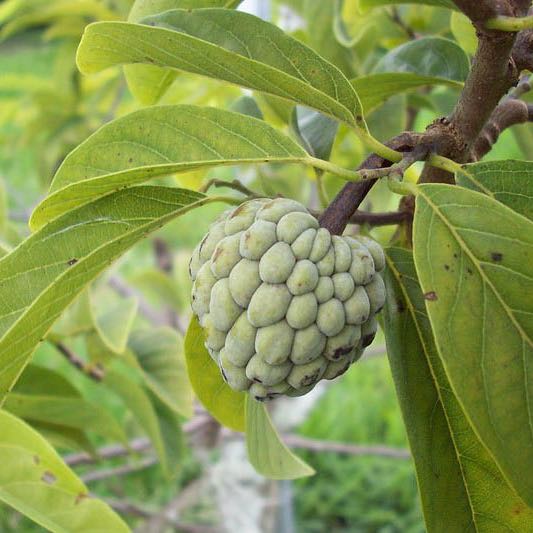
Sugar Apple is grown for its bumpy green heart-shaped fruit, which weigh 4 to 10 ounces each. The flesh is creamy white, soft, and intensely sweet with a flavor that suggests custard, banana, and pineapple. First fruit comes in year 3 to 4 from a young grafted tree.
When fruit is ready
The bumpy segments on the outside of the fruit start to spread apart and the skin between them lightens to a pale green or yellow-green. The fruit also gives slightly when pressed firmly, similar to a barely-ripe avocado. Pick at this stage and let the fruit finish ripening on the counter, since fully tree-ripe fruit splits and attracts insects.
Fruit ripens individually on the tree over a long stretch in summer and fall, so plan to walk the tree every few days during the season.
Hand pollination for better yields
Sugar Apple flowers are poorly pollinated by most insects in cultivation outside the native range. Hand-pollinating in the early morning dramatically improves fruit set. Use a small soft brush to transfer pollen from male phase flowers (with pollen visible on the inner petals) to female phase flowers (sticky stigma exposed). A few minutes of hand work during a bloom flush more than doubles typical fruit set.
Picking and storing
Cut fruit from the branch with pruners, leaving a short stem attached. Pulling damages the branch. Counter-ripen at room temperature for two to four days until the fruit feels soft and gives evenly. Eat immediately once fully ripe, since ripe fruit holds for only a day or two before the flesh oversoftens. The fresh pulp freezes well for smoothies, ice cream, and drinks.
Common problems and pests
Most Sugar Apple complaints come from cold damage and pollination issues. The tree is otherwise productive in suitable climates with reasonable care.
Leaves dropping after a cold night
Some leaf drop in cool weather is normal during the brief winter dormancy. Severe drop or branch dieback follows temperatures below 50F. Cover young outdoor trees with frost cloth on the coldest nights and move container plants indoors before any cool night.
Few or no fruit on a flowering tree
Poor pollination is the single most common cause of low yields in cultivation. Hand-pollinate in the early morning with a soft brush, transferring pollen from male phase flowers to female phase flowers. Adequate water and balanced feeding during bloom also matter for set.
Fruit dropping while still small
Premature fruit drop is usually caused by inconsistent watering, poor pollination, or pest pressure from seed borers. Mulch the root zone two to three inches deep to even out soil moisture and water deeply through the dry season. Inspect dropped fruit for entry holes from seed borers.
Holes in fruit with sawdust-like residue
Annona seed borer or other fruit borers tunneling into developing fruit. Bag developing fruit with paper or fine mesh fruit bags once they reach golf ball size to physically exclude the borers. Pick up and destroy any fallen fruit promptly so the larvae do not complete their cycle in the soil.
White cottony masses on stems or fruit
Mealybugs feeding on sap and excreting a sugary residue. Wipe small populations off with a cotton swab dipped in rubbing alcohol. Heavier infestations respond to horticultural oil sprayed in the cool of early morning. Check the joint where the fruit attaches to the stem, where mealybugs cluster.
Sticky residue and black sooty mold
Scale insects or mealybugs feeding on sap and excreting a sugary substance that grows black mold on the leaves and fruit. Treat the underlying pest first with horticultural oil. The mold washes off the foliage with soapy water once the pest is gone.
Yellow leaves with green veins
Iron deficiency, common on alkaline soils or in old container mix. Apply a chelated iron foliar spray for a quick fix. For a long-term solution, lower the soil pH with elemental sulfur or pine bark amendment, or repot container plants with fresh acidic mix.
Black spots spreading on the fruit
Anthracnose, a fungal disease that thrives in warm wet weather. Prune to improve airflow through the canopy and remove any fruit showing spots. A copper fungicide applied to developing fruit slows the spread during prolonged wet weather.
Sudden wilting with damp soil
Root rot from waterlogged soil, often after heavy rain on poorly drained ground. Reduce watering immediately and improve drainage with a raised mound or French drain. Severely affected trees rarely recover.
Webbing on leaf undersides
Spider mites, common on stressed indoor or container plants during hot dry spells. Rinse the foliage with a strong spray of water, focusing on leaf undersides. Repeat every few days for a week. Heavier infestations respond to insecticidal soap.
About This Article
