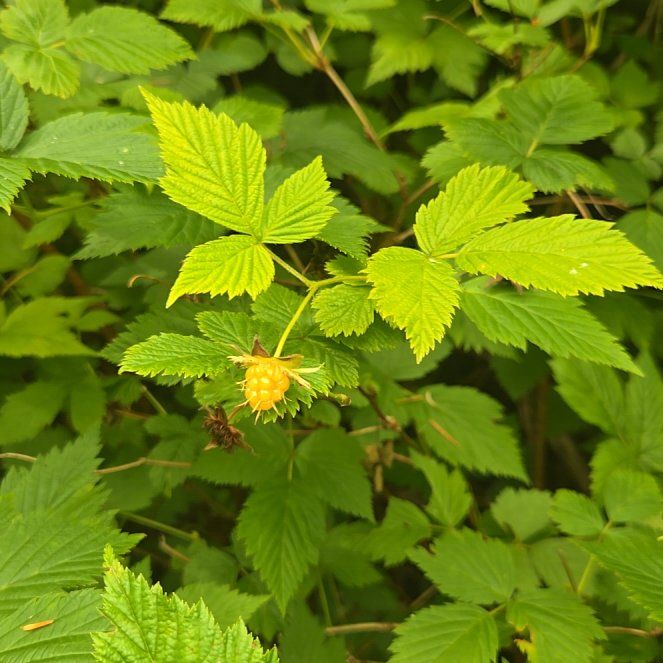
How to Grow a Salmonberry
Plant Salmonberry in part shade in moist rich soil, in a spot where the suckering shrub can spread without taking over a tidy bed. Magenta blooms open in early spring, followed by salmon-red berries in early summer. Cut old canes to the ground each winter and dig out unwanted suckers. USDA zones 5 to 9.

Where to plant
Salmonberry is a deciduous suckering shrub native to the Pacific Northwest, hardy in USDA zones 5 through 9. A single plant becomes a thicket of canes 4 to 8 feet tall over a few years, spreading by underground suckers in moist shaded conditions.
Sun
Part shade is ideal, matching the streamside and forest-edge habitat of the wild plant. Four to six hours of dappled or morning light produces good bloom and berry set. Full hot afternoon sun in summer scorches the leaves and reduces berries, while deep shade leads to leggy weak canes with little fruit.
Drainage
Salmonberry likes moist soil and tolerates damper sites than most fruit shrubs, including the edges of streams and ditches. The plant still resents standing water, so pick a spot that stays moist after rain but drains within a day. Heavy clay that pools indefinitely causes crown rot.
Soil
Rich loamy soil with plenty of organic matter and a slightly acidic pH is the goal. Work several inches of compost or composted leaves into the planting area before you set the shrub in. Salmonberry tolerates a wider range of soils than most cane fruits but produces the most berries in rich woodland-edge conditions.
Space and the spreading thicket
Give a single plant at least 6 to 8 feet of clear space in every direction, since the shrub spreads outward by underground runners and forms a thicket over time. For a hedge or wildlife planting, set plants 4 to 5 feet apart and let them grow together.
Avoid planting at the edge of a tidy bed or lawn, since the suckers find their way into open ground fast. A spot with a natural border like a path, driveway, or strip of mowed lawn helps contain the spread.
How to plant
Plant in early spring as the ground thaws or in early fall at least six weeks before the first hard frost. Bare-root and container plants both establish well, with bare-root the more affordable option in the native range.
-
1Soak bare-root canes If planting a bare-root cane, submerge the roots in a bucket of water for 2 to 6 hours before planting to rehydrate them. This single step is the difference between strong establishment and a struggling plant for bare-root cane fruits.
-
2Dig a wide hole About 12 inches deep and 18 inches wide. The roots spread sideways more than down, so a wide hole helps the side roots establish faster than a deep one.
-
3Set the plant at the original soil line Look for a color change on the cane that marks where the plant sat in the nursery soil. Plant at the same depth in the new hole, since a buried crown rots quickly in the moist conditions this shrub prefers.
-
4Backfill with native soil and compost Mix a few handfuls of compost into the dug-out soil and use that to fill the hole. Press the soil down gently to remove air pockets but do not pack hard, since compacted soil keeps water from reaching the roots.
-
5Water deeply Soak the entire root zone until the top six inches feel uniformly damp. The first watering settles the soil around the roots and is the most important one of the first growing season.
-
6Mulch three inches deep Use shredded bark, composted leaves, or aged wood chips, kept a few inches back from the canes. Mulch keeps the shallow root zone cool, holds moisture between waterings, and adds organic matter as it breaks down.
Watering and feeding
Watering
Water deeply once or twice a week through the first growing season to help the plant establish, soaking the root zone rather than splashing the canes. The plant prefers consistently moist soil, never bone-dry between waterings.
From year two onward, Salmonberry still appreciates steady moisture. A deep weekly soak through summer dry spells keeps the canes producing fresh berries and the new shoots growing strong for next year's crop. Skipping water during dry summers leads to weak canes and a poor crop the following year.
Feeding
Feed once in early spring as new growth pushes, using a balanced slow-release fertilizer scattered around the drip line. The plant is a moderate feeder and a heavy hand with nitrogen pushes leafy growth at the expense of berries.
A two-inch annual top-up of compost worked gently into the soil surface is usually plenty. Skip lawn fertilizer or anything strong on nitrogen, since the extra growth produces canes that flop and bear poorly.
Pruning
Salmonberry bears berries on canes that grew the previous year, so each cane has a two-year cycle. The first year a cane grows tall and leafy, the second year it bears berries, and then it should be cut to the ground. Without pruning the thicket becomes a tangled mass of old non-productive canes.
Late-winter cane rotation
In late winter while the shrub is dormant, cut every cane that bore berries last summer down to the ground at the base. Old fruited canes have grey-brown bark and look woodier than the smooth fresh new canes from last year. The fresh canes carry this year's crop.
Aim to leave 6 to 10 strong young canes per square yard. Cut any extras at the base to keep the thicket open and airy. A crowded thicket bears less than a well-thinned one.
Managing the spread
Through the growing season, watch for new canes pushing up outside the intended thicket area. Dig out unwanted suckers with a spade as they appear, getting as much of the underground runner as possible. Suckers left in place become next year's canes and gradually expand the thicket.
A barrier strip of mowed lawn, a wide path, or a buried metal edging 12 inches deep all help slow the spread.
Renovating an old neglected thicket
If the shrub has gone unpruned for several years, renovate it gradually over two winters. The first winter, cut half the canes (the oldest and woodiest) to the ground. The next winter, cut the rest of the old canes to the ground. By year three the thicket is back to fresh productive canes.
Harvest
Salmonberry is grown for the early-summer berries, which ripen earlier than most other native cane fruits and bridge the gap between spring strawberries and midsummer raspberries. The berries are soft, mildly sweet, and range from yellow-orange to bright salmon to deep red on different plants.
When it is ready
Berries ripen in late spring to early summer, four to six weeks after the magenta blooms fade. A ripe berry pulls off the receptacle with just a gentle tug and shows full uniform color. A berry that takes any effort to pick is not ripe yet, even if the color looks right.
The picking window for a single berry is short, maybe a day or two before the fruit drops or molds. Plan to check ripe canes every other day during peak season.
Picking and storing
Pick berries gently into a shallow container, since the fruit is soft and crushes under its own weight in a deep pile. Salmonberries hold poorly compared to firmer cane fruits, lasting only one to two days in the refrigerator. Plan to eat fresh, freeze on a tray then bag, or cook same-day into syrup or jam.
Wild yields and flavor vary plant by plant, even in the same patch. Some plants produce sweeter berries than others, since flavor varies by genetics across the native range. Taste a berry from each plant when picking and note the best plants.
Eating and using the berries
Eat fresh as a trail nibble, blend into smoothies, or stir into yogurt and pancakes. The flavor is mild and slightly sweet, sometimes a little watery, and benefits from a touch of stronger-flavored fruit in mixed preparations. Jam and syrup are the classic uses, often blended with cooking blueberries or blackberries for better depth.
Birds and competition
Birds love salmonberries and find ripe canes fast. For human harvests, drape lightweight bird netting over the canes as the berries color up. For a wildlife planting, let the birds have the crop and enjoy the show. The shrub is a major early-summer food source for native birds in its range.
Common problems and pests
Salmonberry is a tough native shrub that rarely has serious trouble in its preferred conditions. Most issues come from a too-sunny site, dry soil, or pest pressure that affects related cane fruits.
Few berries on a healthy-looking shrub
Almost always means too much shade or last year's canes were cut off, taking this year's fruiting wood with them. Salmonberry bears on year-old canes, so removing fresh smooth canes in late winter removes the crop. Make sure the late-winter prune cuts only the older grey-barked canes that already fruited.
Sucker shoots in unwanted spots
Normal for this spreading shrub. Underground runners push new shoots outside the intended thicket area, especially in moist loose soil. Dig out unwanted suckers with a spade as soon as they appear, getting as much of the runner as possible. Repeat through the season since the suckers keep coming.
Yellow leaves in midsummer
Usually drought stress when summer dry spells hit, since the plant evolved on damp streamside soils. Mulch the root zone three inches deep and water deeply once a week during dry weather. Yellow leaves with green veins specifically indicate iron deficiency, which a chelated iron foliar spray corrects quickly.
Sticky residue on canes
Aphids feeding on sap and excreting a sugary residue, which then grows black sooty mold and attracts ants. Knock the aphids off with a strong spray of water. Heavy infestations respond to insecticidal soap. Lady beetles handle aphids faster than any spray, so plant sweet alyssum nearby to attract them.
Worms inside the berries
Spotted wing drosophila, an invasive fruit fly that lays eggs in ripening fruit. Pick berries as soon as they are ripe and refrigerate immediately to stop development. Clean up dropped fruit under the shrub, since fallen berries are a major source of next year's flies. Severe infestations are very hard to control in a garden setting.
Orange powdery pustules on canes or leaf undersides
Cane rust, a fungal disease that overwinters in old canes. Cut affected canes back to the ground and burn or trash them rather than composting. The annual cane rotation that this shrub already needs naturally limits rust by removing the canes where the fungus overwinters.
Brown spots on leaves
Leaf spot, a fungal disease that shows up in humid weather with poor airflow. Rake up and discard fallen leaves to break the disease cycle. Thin canes to improve airflow within the thicket, and avoid splashing the leaves when watering. Soak the soil directly instead.
Wilting canes even in moist soil
Cane borers, which tunnel into the canes and cause sudden wilting above the entry point. Cut affected canes back to healthy wood well below the wilted area and burn or trash the cut pieces. Regular cane rotation removes most of the borers each year along with the old canes.
Whole shrub stays small or weak
Usually too dry, too much sun, or competition from aggressive nearby plants. Mulch heavily, water deeply during summer, and clear competing roots from a 3-foot zone around the crown. Salmonberry rewards good moist woodland-edge conditions and sulks in dry exposed sites.
About This Article
