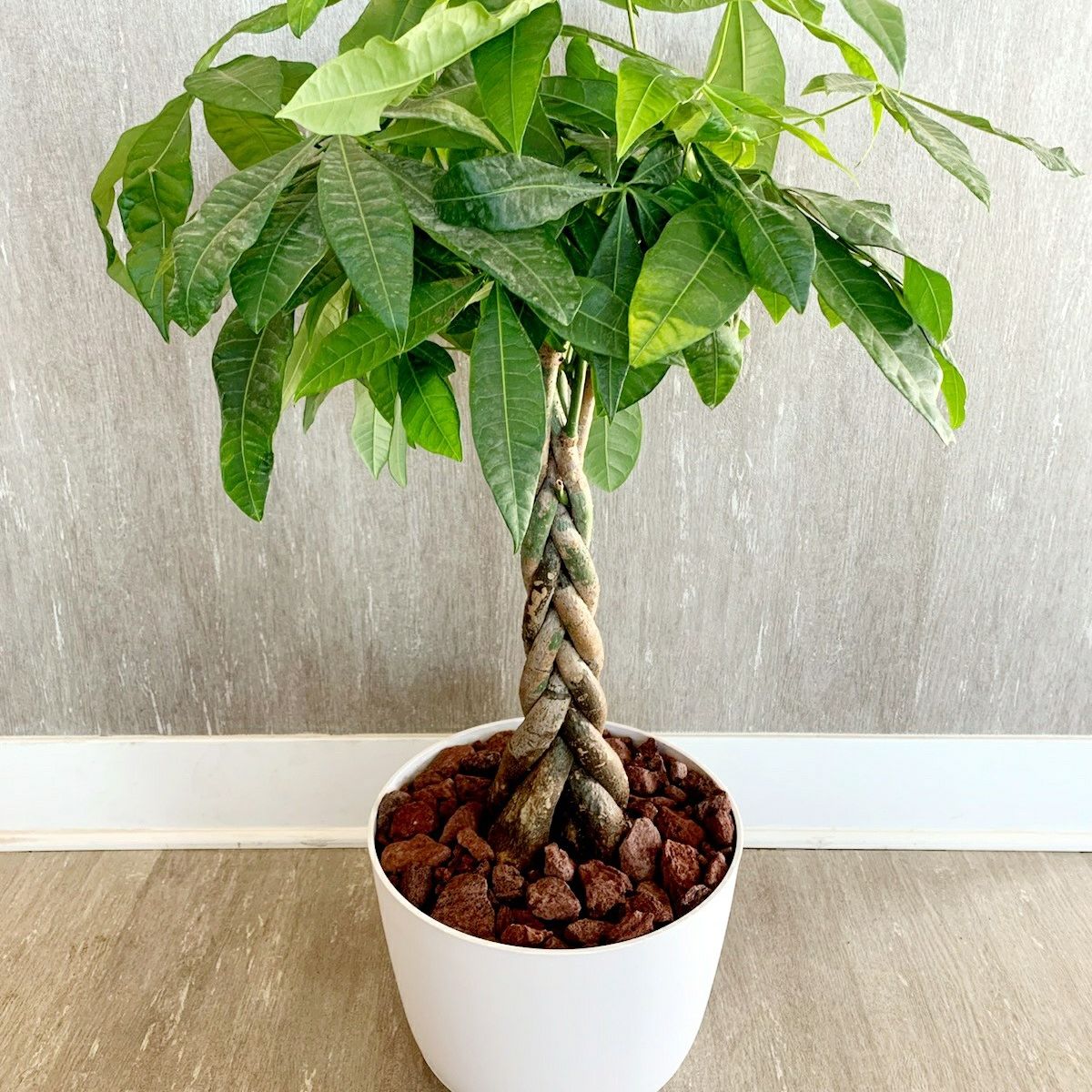
How to Grow a Pachira
Grow Pachira in a chunky well-draining mix, water only when the top two inches of soil are dry, and place it in bright indirect light. The tree handles a wide range of household conditions and is among the easier tropical trees to keep indoors. Repot every 2 to 3 years.

Where to put it
Pachira is a tropical tree native to wetlands of Central and South America, hardy only in USDA zone 10 and warmer. Most growers keep it as a houseplant year-round, where it tolerates a wider range of conditions than most tropical trees.
Light
Bright indirect light is ideal. A spot a few feet back from an east or west-facing window, or filtered light from a south-facing window, suits the plant well. Direct midday sun through a south window can scorch the leaves, so a sheer curtain helps in summer.
The hand-shadow test gives a quick read. Hold your hand a foot above the leaves at midday. A clear medium-strength shadow with soft edges means the light is about right. Very faint shadows mean the spot is too dim and the tree will stretch and drop leaves.
Avoid drafts
Keep the tree away from cold drafts in winter and from air conditioning vents in summer. Temperature swings below 50 degrees Fahrenheit damage the foliage and stress the trunk. A bright spot in the interior of a room is often safer than a cold window.
Soil and potting
Pot in a container only 1 to 2 inches wider than the root ball, in a chunky well-draining mix that holds some moisture without staying soggy. Pachira tolerates the wet-and-dry swing better than most tropical trees, but consistent root rot still kills it.
-
1Pick a pot with strong drainage Choose a pot 1 to 2 inches wider than the root ball, with a drainage hole at the bottom. Bigger pots hold too much wet soil around the small root mass and slow growth. Terracotta or any plastic with good drainage works.
-
2Mix a chunky soil blend Combine two parts standard houseplant potting mix with one part orchid bark and one part perlite or pumice. The chunks let air reach the roots and prevent the soil from going dense over time. Avoid moisture-retaining peat-only mixes that stay wet for days.
-
3Set the tree in the pot Place the root ball so the top sits about half an inch below the rim. Backfill with the mix and tap the pot a few times to settle the soil around the roots. Do not press the mix down hard, since compaction reduces drainage.
-
4Water thoroughly and let it drain Soak the pot once after planting until water runs freely from the drainage hole. Let the excess drain fully before placing the pot back in its saucer. Never let the tree sit in a tray of standing water for more than a few minutes.
-
5Wait before watering again Let the top two inches of soil dry out before the next watering. The first weeks after repotting are the highest-risk time for root rot, so err on the dry side rather than the wet side.
Watering and feeding
Watering
Water when the top two inches of soil are dry, which usually works out to every 7 to 14 days indoors depending on light, temperature, and pot size. Stick a finger into the soil to check rather than guessing by the calendar. The plant tolerates occasional drying but resents staying wet between waterings.
Soak thoroughly when watering, letting water run from the drainage hole, then drain the saucer fully. Standing water at the roots leads to root rot, the most common cause of trouble with this tree.
Feeding
Feed once a month during the active growing season from spring through early fall, using a balanced houseplant fertilizer at half the label rate. The plant is not heavy-feeding, and stronger doses push weak elongated growth.
Skip feeding through winter when growth slows. Resume in spring when fresh leaves start to push.
Pruning and support
Pachira tolerates pruning well and can be shaped into a compact tree. Most pruning work is light shaping plus the occasional retraining of new growth. The braided trunk that the tree is often sold with is set at the nursery from multiple young plants and does not need further work from the grower.
Shaping
Pinch off the growing tip of each main stem in spring to encourage branching. New shoots emerge from the leaf joints below the cut and fill the canopy out. Use clean sharp pruners and make cuts just above a leaf node.
Remove any leggy stretched growth that develops in lower light. The remaining shorter shoots take over and the tree refills into a more compact shape.
Repotting
Repot every 2 to 3 years in spring, only when the roots clearly fill the current pot. Move up just one pot size — 1 to 2 inches wider. Bigger jumps hold too much wet soil and slow growth.
Refresh the top inch of soil between repotting years to renew nutrients without disturbing the roots. Slide the tree out, replace the surface soil with fresh mix, and water lightly to settle it.
Braided trunks
Braided money trees are usually sold with three to five young trunks woven together. The braid does not need to be redone or trained — the trunks fuse and lignify over years on their own. Avoid cutting any of the trunks out, since removing one breaks the braid pattern permanently.
Propagation
Pachira is propagated most reliably from stem cuttings, since true seed is hard to come by outside of tropical climates. The process is straightforward and a single mature tree provides plenty of cutting material each spring.
Taking cuttings
Take 6 to 8 inch cuttings from the tips of healthy semi-mature stems in late spring or early summer. Make the cut just below a leaf node with clean sharp pruners. Strip the lower leaves so the bottom 2 to 3 inches of the cutting are bare, leaving the top two or three leaves intact.
Dip the cut end in rooting hormone powder for stronger root formation, though the cuttings root without hormone too.
Rooting and potting up
Stick the cuttings into moist perlite or a half-and-half mix of perlite and peat. Cover loosely with a clear plastic bag or place the pot inside a propagator to hold humidity around the leaves. Keep the cuttings in bright indirect light at room temperature.
Roots form in 4 to 6 weeks. Once new top growth appears and a gentle tug meets resistance, the cutting is rooted. Pot up into the same chunky mix used for mature trees and water lightly for the first few weeks while the roots settle.
Common problems and pests
Most Pachira complaints are watering-related — either too much or too little, since the plant signals both with the same yellowing-leaf response. Light pest pressure indoors is common but usually manageable.
Yellow leaves throughout the canopy
Most often a watering issue. Yellow leaves with wet soggy soil mean overwatering. Yellow leaves with bone-dry soil mean the plant went too long between drinks. Check the soil with a finger before adjusting — feel determines the fix more reliably than a fixed schedule.
Brown crispy leaf tips
Usually low humidity, dry soil between waterings, or fluoride and chlorine in tap water. Bunch the plant with other houseplants to lift local humidity, water more evenly so the soil never goes bone dry, and switch to filtered or rainwater if the tap water is heavily treated.
Leaves dropping
A sudden environmental change is the leading cause — moving the tree to a new spot, a cold draft, or a watering schedule shift. Hold conditions steady and wait. Most trees regrow leaves from the existing branches within a few weeks once the routine stabilizes.
Soft mushy trunk near the soil line
Root rot from chronically wet soil, the most serious problem this tree faces. Unpot immediately and inspect the roots. Cut away any black or mushy tissue with clean pruners and let the root ball dry for a day. Repot in fresh chunky mix and water sparingly going forward. A trunk that has gone soft up the base usually cannot recover.
Spider mites
Fine stippling on leaves and faint webbing in the leaf joints, worst on plants in dry heated indoor air. Wipe the leaves with a damp cloth and rinse the foliage in the shower. Increase humidity around the plant with a pebble tray or by clustering with other plants. Insecticidal soap or neem oil clears heavier infestations.
Mealybugs in leaf joints
Small white cottony clusters in the leaf joints and on the undersides of leaves. Dab each one with a cotton swab dipped in rubbing alcohol. For heavier infestations, spray the plant with insecticidal soap every five to seven days for three weeks. Check the plant weekly for several months after, since mealybugs hide in cracks and return easily.
Scale insects on stems
Small bumpy growths on the stems, often with a sticky residue and black sooty mold on lower leaves. Wipe scales off with a swab dipped in alcohol. Heavier infestations respond to horticultural oil applied to the stems and the undersides of leaves. Repeat treatment every two weeks until the population clears.
Stretched leggy growth
Insufficient light. The stems elongate reaching for the window, and leaves space out along the branches. Move the tree to brighter light or supplement with a grow light placed 6 to 12 inches above the canopy. Prune back the leggy growth in spring to encourage compact regrowth from the existing trunks.
Fungus gnats around the pot
Small black flies hovering around the soil surface, usually a sign of chronically damp soil. Let the top two inches of soil dry out between waterings. Sticky yellow traps reduce adult populations. A drench with Bt-h (Mosquito Bits) kills the larvae in the soil.
About This Article
