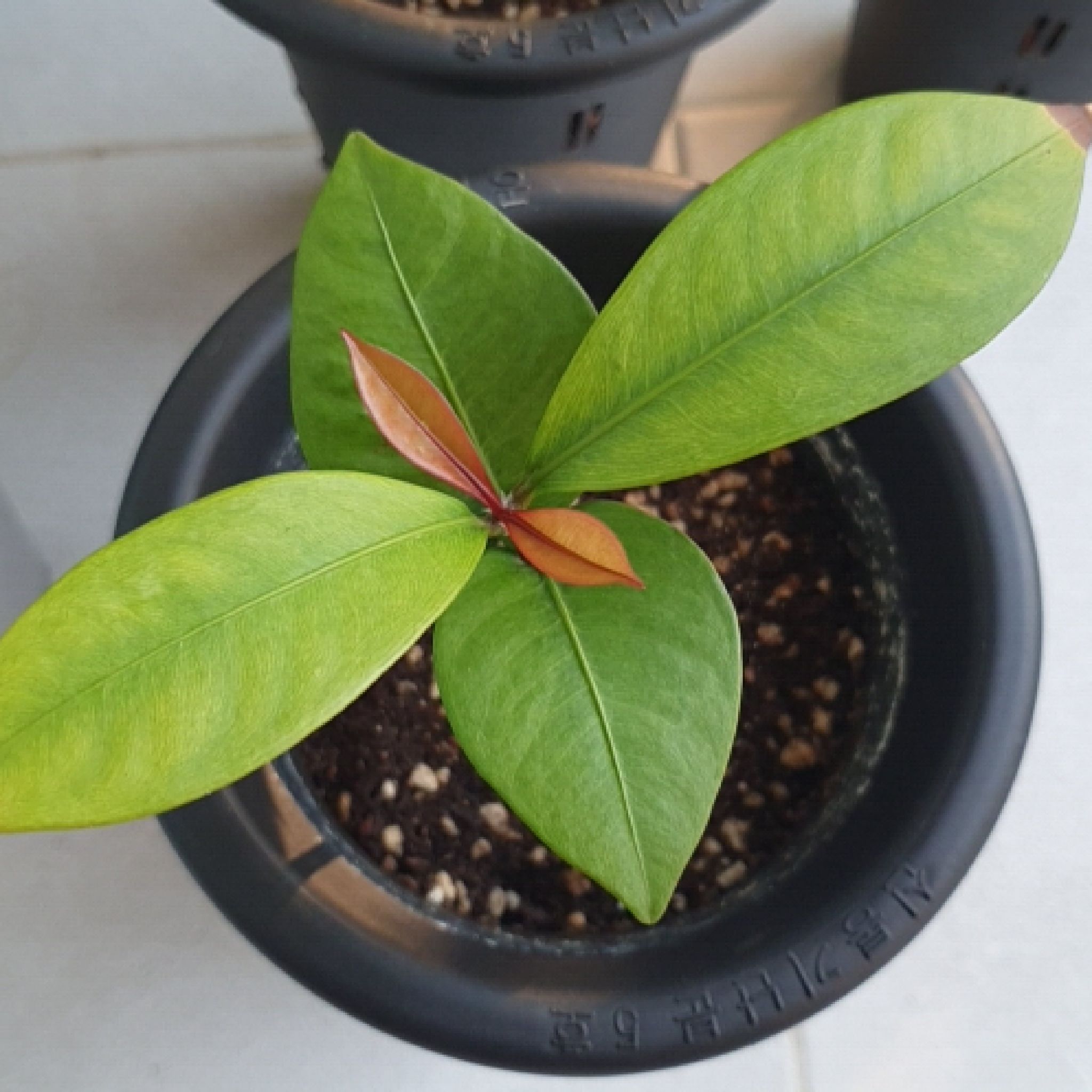
How to Grow a Mangosteen
Plant Mangosteen in part shade for the first few years and dappled sun once mature, in deep rich well-drained soil, in USDA zones 11 to 12 only since the tree dies below 40 degrees. Water consistently to keep the soil evenly moist, protect from wind and direct hot sun, and expect the first fruit 8 to 12 years from planting.

Where to plant
Mangosteen is a slow-growing evergreen tropical fruit tree hardy only in USDA zones 11 to 12, where winter lows stay reliably above 40 degrees. The tree reaches 20 to 35 feet tall in 15 to 20 years and lives for decades. Outside its narrow climate window, Mangosteen survives only in a large greenhouse or conservatory with carefully controlled humidity and temperature.
Sun
Part shade for the first 2 to 4 years, then gradually more sun once the canopy fills in. Young Mangosteen leaves scorch easily in direct hot sun. Even mature trees grow best with morning sun and afternoon shade or with high dappled shade from taller trees overhead. Full direct sun on heavy clear days bleaches the foliage.
Drainage
Mangosteen needs consistently moist but well-drained soil, which is a narrow target. Standing water rots the roots within days, but the soil should never fully dry out. Dig a one-foot test hole and fill with water. If it drains within an hour or two, the spot works. If water sits overnight, choose a different location or build a deep raised mound 12 to 18 inches above grade.
Soil
Deep rich loamy soil enriched with several inches of compost is ideal. Slightly acidic conditions (pH 5.5 to 6.5) suit the tree best. Heavy clay needs significant amendment with compost and grit to open the structure. Pure sand benefits from a generous addition of compost and well-aged organic matter to hold moisture.
Space
Give the tree 25 to 30 feet of clear space in every direction. Mangosteen reaches 20 to 35 feet tall at maturity and produces a dense pyramidal canopy. Plant well away from house foundations, hardscape, and overhead power lines. The tree is sensitive to wind, so a sheltered spot in the lee of larger trees or a fence works best.
How to plant
Plant grafted nursery trees in spring or early summer, ideally during the rainy season in tropical climates, once temperatures are reliably above 65 degrees at night. Mangosteen is one of the slower-growing tropical fruit trees, and a healthy start matters enormously for long-term success.
-
1Dig a generous hole Make the hole 3 feet wide and 2 feet deep. Mangosteen develops a deep root system and benefits from loose soil well below the original root ball. Pile the dug-out soil to the side for amending.
-
2Mix the backfill with compost Combine the dug-out soil with several large shovels of well-aged compost. The goal is roughly one-third compost to two-thirds native soil. Skip synthetic potting mix or peat in the planting hole, both of which break down and create air pockets around the roots.
-
3Loosen the root ball gently Mangosteen has a fragile root system that does not tolerate rough handling. Slip the tree out of the nursery pot, examine for circling roots, and tease them out by hand. If the root ball is solid and undisturbed-looking, leave it alone and plant as-is.
-
4Set the tree at the original soil line The top of the root ball should sit level with the surrounding soil. Burying the trunk deeper than it grew in the nursery container rots the lower trunk within a season.
-
5Backfill and water immediately Add the amended soil in stages, watering between each stage to settle the soil around the roots without air pockets. A heavy soak after backfilling is the most important watering of the tree's first year.
-
6Mulch heavily and provide shade Apply 4 to 6 inches of shredded bark, leaf mulch, or coconut coir in a 5-foot circle around the trunk, kept several inches back from the trunk itself. Set up shade cloth or position the tree on the shaded side of a building for the first 2 years to protect from direct sun.
Watering and feeding
Watering
Water deeply two to three times a week through the first two growing seasons to establish the root system, soaking the root zone slowly each time. Drip irrigation or a soaker hose at the dripline works best, and a thick mulch layer holds soil moisture between waterings.
Mature Mangosteen needs consistent soil moisture year-round and is not drought-tolerant. The soil should stay evenly moist without going soggy. Yellow leaves and dropped fruit signal water stress, and the tree can die from a single severe drought even after years of establishment. Containers or greenhouse-grown trees need daily watering through warm weather.
Humidity is as important as soil moisture. Mangosteen thrives at 70 to 80 percent relative humidity, which is well above what most homes and many gardens provide. Mist the foliage in the morning, group with other tropical plants, or run a humidifier in indoor settings.
Feeding
Feed lightly four times a year with a balanced slow-release fertilizer or a fruit-tree fertilizer with extra potassium. Compost top-dressing in spring and fall supplements or replaces synthetic feeding. Apply fertilizer in a broad ring around the dripline rather than concentrated near the trunk.
Avoid heavy nitrogen, which pushes weak leafy growth and delays fruiting. Mangosteen is naturally a slow grower, so do not try to push it with extra fertilizer. Stop heavy feeding for 6 to 8 weeks before the expected fruit ripening season.
Pruning
Mangosteen needs very little pruning. The natural form is a balanced pyramid with dense glossy foliage from near the ground up, and the tree is sensitive to heavy cuts. Pruning is mostly for shaping young trees and removing damaged branches as they appear.
Shaping young trees
In the first 2 to 3 years, select a central leader and 3 to 5 well-spaced main side branches. Remove competing leaders and any branches crossing toward the center of the canopy. Make cuts back to the next outward-facing branch rather than leaving stubs.
Mature tree care
On mature trees, remove dead, broken, or diseased branches as they appear. Avoid heavy shaping cuts, which the tree heals slowly and which can shock the plant. Cuts larger than an inch across heal especially slowly and invite wood-rotting fungi.
Time most pruning for just after the fruit harvest, which is usually summer to early fall depending on the climate. Wound healing is fastest in warm humid weather, when the tree is actively growing.
What not to do
Never top the tree or remove large amounts of canopy. The exposed bark sunburns immediately and the resulting damage often kills the trunk. Disinfect pruning blades between trees with a quick wipe of rubbing alcohol to prevent spreading bacterial and fungal trunk diseases.
Harvest
Mangosteen produces a deep purple-skinned fruit roughly the size of a tangerine, with creamy white segments inside that are widely considered one of the finest-tasting tropical fruits in the world. The first crop comes 8 to 12 years from planting under good conditions, and a mature tree can produce hundreds of fruit per season.
When it's ready
Fruit is ready when the skin turns from green to a deep solid purple-black and the surface gives slightly to gentle pressure. The fruit holds for several weeks on the tree once colored up, with peak eating quality reached a few days after the skin fully darkens.
Each tree usually has one main fruiting season per year, with timing varying widely by climate. In Southeast Asia the main season is May through August. In Caribbean and Florida plantings the timing can shift later or sometimes split into two smaller seasons.
Picking and storing
Twist the fruit gently from the stem or cut with pruners, leaving the small green calyx attached to the fruit. Place harvested fruit in a single layer in a shallow basket to avoid bruising. Mangosteen does not ripen further once picked, so harvest only fully-colored fruit.
Store at cool room temperature (around 60 to 70 degrees) for up to 2 weeks, or in the refrigerator for up to 4 weeks. Do not freeze, which destroys the texture of the flesh. The fruit is best eaten within a week of harvest for peak flavor.
Eating Mangosteen
Cut around the equator of the fruit with a knife (avoiding cutting too deep into the flesh) and twist off the top half of the rind to expose the white segments. The segments are sweet and slightly tart, with a flavor often compared to a blend of peach, strawberry, and lychee. The dark purple rind contains a strong tannin that stains fabric, so handle with care.
Common problems and pests
Most Mangosteen complaints trace to climate stress, since the tree is exceptionally demanding about heat, humidity, and consistent moisture. Pests and diseases are secondary problems compared to environmental stress.
Yellowing leaves and dropping foliage
Almost always caused by water stress (too little or too much), low humidity, or cold injury. Check soil moisture by digging an inch down with a finger. The soil should feel like a wrung-out sponge. Mist foliage in dry climates and protect the tree from temperatures below 50 degrees.
Leaf scorch in direct sun
Brown crispy patches on leaves exposed to full midday sun, common in young trees. Set up shade cloth at 50 percent shade density for the first 2 to 4 years and plant the tree in dappled shade or with morning sun and afternoon shade.
Stunted slow growth
Normal for Mangosteen, which is one of the slowest-growing tropical fruit trees. A healthy young tree adds only 6 to 12 inches of growth per year for the first 5 years. Heavy fertilizer to push growth backfires and stresses the tree. Be patient and focus on consistent care.
Cold damage and dieback
Brown or black leaves and stem dieback after exposure to temperatures below 50 degrees, with the tree usually dying outright below 40. Protect the tree by planting in the warmest microclimate available, wrap the trunk in frost cloth on cold nights, and run a string of incandescent holiday lights through the canopy on the coldest nights for added warmth.
Scale insects on stems and leaves
Small flat brown or white bumps clinging to the bark and the undersides of leaves. Wipe individual scales off with a cotton swab dipped in rubbing alcohol. Heavier infestations respond to horticultural oil sprayed thoroughly across the foliage and trunk.
Mealybugs in leaf joints
White cottony clusters at the base of leaves and on tender new growth. Knock them off with a strong water spray or treat with horticultural oil. Mealybugs spread fast in greenhouse settings where natural predators are absent.
Gummosis or oozing from the trunk
A sticky yellow or amber sap oozing from cracks or wounds in the bark, usually a sign of fungal trunk disease or stress from cold injury. Improve drainage at the root zone, avoid wounding the trunk during mowing or weeding, and prune off any branches showing dieback. Severe trunk infections are usually fatal.
Fruit cracking
Splits in the rind that expose the white flesh, caused by uneven watering or a heavy rain after a dry stretch. Mulch heavily, water consistently, and accept that some cracking is inevitable during heavy rainy seasons. Cracked fruit is still edible if eaten quickly.
No fruit set after many years
Either the tree is still too young (8 to 12 years is normal for first fruit), the climate is too cool for full fruit development, or the tree is seedling-grown rather than from established stock. Grafted nursery trees from a tropical-fruit specialist start fruiting years earlier than seedlings. There is no shortcut once the tree is planted, so the only fix is patience and consistent care.
About This Article
