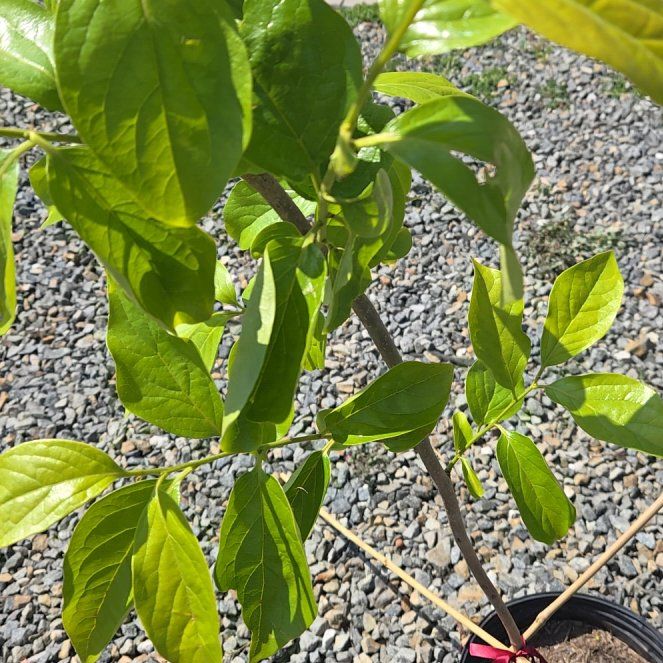
How to Grow a Fuyu Persimmon
Plant a Fuyu Persimmon in full sun, in deep well-drained soil, with at least 15 feet of clear space around the tree. The tree is self-fertile, so one alone produces fruit. Pick the fruit while firm and orange in fall and eat like an apple. First real harvest comes in year three or four.

Where to plant
Fuyu Persimmon is a deciduous fruit tree for USDA zones 7 through 10. A mature tree reaches 15 to 25 feet tall and almost as wide, lives for 50 years or more, and produces 50 to 100 pounds of fruit at full size. The spot needs to fit a permanent tree.
Sun
Full sun produces the heaviest crop and the sweetest fruit. Six to eight hours of direct sun is the minimum for reliable fruiting. Less than six hours produces fewer fruit and a less sweet flavor, even in a healthy tree.
Drainage
Persimmon roots rot quickly in wet feet. Dig a one-foot test hole and fill it with water. If it drains within a few hours, the spot is fine. If water sits overnight, build a raised mound 6 to 12 inches above grade and plant on top of it.
Soil
Deep loamy soil that holds moisture without staying soggy is the goal. Fuyu Persimmon tolerates a wide range of soils but produces best in soil with plenty of organic matter. Work a few inches of compost into the planting area before you set the tree in.
Space
Give the tree at least 15 to 20 feet of clear space in every direction. Crowded trees produce fewer fruit and get powdery mildew faster. Plant where ripe fruit dropping in fall will not stain a patio or driveway, since fallen fruit is messy.
How to plant
Plant a young bare-root or container tree in early spring while still dormant, before bud break. In zones 7 and 8, that means March or early April. In zones 9 and 10, late winter. Container-grown trees can go in any time during the growing season but establish more slowly in summer heat.
-
1Dig a wide hole Twice as wide as the root ball but only as deep. Persimmon has a long taproot, so the hole needs to be deep enough to fit the root straight, never coiled. A wide hole helps the side roots establish faster than a deep one.
-
2Handle the taproot carefully Fuyu Persimmon roots are brittle and slow to regrow when broken. Lift the tree by the root ball, not the trunk, and avoid bending or trimming the taproot. The first year after a damaged root is mostly recovery, not growth.
-
3Set the tree at the original soil line Look for a color change on the trunk that marks where the tree sat in the nursery soil or pot. Plant at the same depth, since burying the graft union above the soil line leads to rootstock suckering and trunk damage.
-
4Backfill with native soil and compost Mix a few handfuls of compost into the dug-out soil and use that to fill the hole. Avoid pure compost or potting mix in the planting hole, since roots get lazy in overly rich soil and never spread into the wider yard.
-
5Water deeply Soak the entire root zone until the top six inches feel uniformly damp. A young tree needs steady moisture through its first growing season to recover from transplant shock.
-
6Mulch two to three inches deep Use shredded bark or wood chips, kept a few inches back from the trunk. Mulch keeps the shallow root zone cool and holds moisture between deep waterings.
Watering and feeding
Watering
Water deeply once a week through the first two growing seasons to help the tree establish, soaking the root zone rather than splashing the leaves. Drip irrigation or a soaker hose at the base works best.
From year three onward, Fuyu Persimmon is fairly drought-tolerant and gets by on rainfall in most years. A deep weekly soak through extended summer dry spells, especially while fruit is sizing in late summer, helps the crop fill out and keeps the tree from dropping fruit early.
Feeding
Feed lightly. Heavy nitrogen pushes leafy growth at the expense of fruit and can cause fruit drop. Scatter a half pound of balanced slow-release fertilizer around the drip line in early spring as buds break, and water it in.
If the leaves stay pale or growth is sparse by midsummer, a second light feeding in early summer helps. Otherwise skip it. A few inches of compost spread around the drip line every couple of years is usually enough.
Pruning
Fuyu Persimmon needs only light pruning once the basic framework is set. The tree fruits on new shoots that grow from year-old wood, so heavy hacking removes the fruiting branches. Pruning shapes the tree in its first few years and then drops to maintenance cuts each winter.
Years 1 to 3: build the framework
Pick three to five well-spaced main branches coming off the trunk at wide angles, with the lowest at about 3 feet off the ground. Cut everything else off at the trunk. Head the chosen branches back by a third each dormant winter to encourage strong side branching.
Year 4 and beyond: maintenance pruning
Each dormant winter, remove any dead, broken, or crossing branches. Thin out crowded interior growth so light reaches the center of the canopy. Take off any vertical water sprouts that shoot straight up from the main branches.
Keep cuts modest. A tree pruned hard one year produces a flush of leafy regrowth and little fruit the next. Fuyu Persimmon does best with a gentle annual cleanup, never a heavy rejuvenation cut.
Thinning fruit
In a heavy fruit year, thin to one fruit per cluster in early summer when the fruits reach marble size. Thinned trees produce larger, sweeter persimmons and avoid the alternate-bearing pattern where a heavy year is followed by a year of almost no fruit.
Harvest
The reward for growing Fuyu Persimmon is the late fall harvest of bright orange fruit you eat while still firm. Unlike astringent persimmon varieties that have to soften to jelly before they are edible, Fuyu eats crisp like an apple as soon as the skin turns deep orange.
When it is ready
Pick when the skin turns deep orange and the fruit still feels firm. In most climates the harvest window runs from late October through November, often after the leaves have dropped from the tree. The bare branches hung with orange fruit are a classic fall image.
Fuyu fruit will continue to ripen off the tree, so picking firm and orange is fine. A fruit that feels rock-hard and is still pale orange needs another week on the tree. A fruit that already feels soft is overripe but still edible.
Picking and storing
Clip the fruit with pruners, leaving the calyx (the four-pointed cap) attached to the fruit. Tearing the fruit off by hand often pulls the skin and shortens shelf life. Handle gently, since persimmons bruise easily.
Firm Fuyu fruit holds at room temperature for one to two weeks and in the refrigerator for three to four weeks. The first frost does not hurt the fruit and often improves the flavor.
How to eat it
Wash the fruit, cut around the calyx, and eat the flesh straight, skin and all, like an apple. Slice into salads, dice into salsas, or dry slices in a dehydrator for snacks. The flavor is sweet and mild with notes of honey and cinnamon.
Common problems and pests
Fuyu Persimmon is a relatively trouble-free fruit tree, but a few specific issues come up often enough to learn to spot early.
Fruit dropping before ripe
Young trees commonly drop most of their fruit in the first couple of years as the tree decides how much it can support, which is normal. In an established tree, heavy fruit drop usually means uneven watering or overfeeding with nitrogen. Water deeply and consistently through summer and cut back on fertilizer.
Astringent or mouth-puckering fruit
Means the fruit was picked too early before the orange color fully developed. Let unripe picked fruit sit at room temperature for another week to soften slightly and lose the astringency. On the tree, wait until the color is uniformly deep orange before picking next time.
No fruit on a mature tree
Most often a young tree that has not yet reached fruiting age, which takes three to four years for Fuyu Persimmon. In an established tree, heavy nitrogen feeding, heavy pruning, or late spring frost killing the flowers is usually the cause. Cut back on feeding and avoid heavy pruning to fix it.
Black spots on leaves
Persimmon leaf spot, a fungal disease that shows up in humid summers. Rake up and discard fallen leaves to break the disease cycle, since the fungus overwinters on dropped leaves. Improve airflow by thinning the canopy lightly during dormant pruning. Severe outbreaks respond to a copper-based fungicide applied at bud break.
Sticky leaves and ants on the trunk
Mealybugs or scale insects feeding on the bark and excreting a sugary residue, which then grows black sooty mold and attracts ants. Wipe scales off with a cotton swab dipped in rubbing alcohol or spray with horticultural oil in late winter while the tree is dormant. The ants stop coming once the insects are gone.
Birds and squirrels stealing fruit
Fuyu Persimmon ripens late, when other fall food is running out, so birds and squirrels find it fast. Drape bird netting over small trees as fruit colors up. For large trees, plan on losing some fruit and pick a little early when the color first turns.
Cracked or split fruit
Usually caused by heavy rain after a dry spell, which causes the fruit to take up water and split the skin. Mulch the root zone two to three inches deep to even out soil moisture and water deeply during dry spells to prevent the swing. Cracked fruit is still edible but stores poorly, so eat first.
Yellow leaves in midsummer
Often nutrient deficiency on alkaline soil or in compacted clay. Apply a balanced fertilizer and improve drainage with compost worked into the surface around the drip line. Yellow leaves with green veins specifically indicate iron deficiency, which a chelated iron foliar spray corrects quickly.
Branches breaking under heavy fruit load
Persimmon wood is brittle and a heavy fruit year can snap limbs. Thin fruit to one per cluster in early summer to lighten the load. Prop heavy fruiting branches with forked stakes if the tree is too small to thin away enough.
About This Article
