How to Grow a Frankincense
Grow Frankincense in a small pot of gritty cactus mix, water only when the soil is bone dry, and place it in the brightest spot indoors. The tree drops its leaves in winter dormancy and resents wet roots more than any other condition. Most growers keep it as a container plant year-round.

Where to put it
Frankincense is a slow-growing desert tree from the dry hills of Oman and Yemen, hardy only in USDA zone 11 and warmer. Most growers keep it as a container plant indoors or on a sheltered patio, since the tree cannot tolerate freezing temperatures or sustained wet conditions.
Light
Frankincense needs the brightest light available indoors. A south-facing window with direct sun for at least six hours a day is the minimum. A west-facing window works in summer but is borderline in winter. Lower light produces a weak, leggy tree that drops leaves prematurely.
The hand-shadow test gives a quick read. Hold your hand a foot above the leaves at midday. A sharp dark shadow with crisp edges means the light is strong enough. A soft blurry shadow means the spot is too dim and the tree should move closer to the window or to grow lights.
Avoid drafts
Keep the tree away from cold drafts in winter and from air conditioning vents in summer. Cold air below 50 degrees Fahrenheit damages the foliage, and a hard freeze kills the tree outright. A bright spot away from exterior doors is safer than a colder window with more light.
Soil and potting
Pot in a small container with sharp drainage and a gritty mix. Frankincense roots cannot survive in soggy soil for more than a few days, so the pot and the mix do most of the work of keeping the tree alive.
-
1Choose a pot with strong drainage Pick a pot only 1 to 2 inches wider than the root ball. Unglazed terracotta is the standard choice since the clay walls wick moisture out and dry the soil between waterings. A drainage hole is mandatory.
-
2Use a gritty cactus mix Mix one part bagged cactus or succulent soil with one part coarse pumice or small lava rock. The added grit gives the kind of fast-draining mix the tree evolved in. Avoid moisture-retaining peat-heavy mixes — they hold water far longer than the tree can tolerate.
-
3Set the tree in the pot Place the root ball so the top sits about half an inch below the rim. Backfill gently with the gritty mix and tap the pot a few times to settle the soil around the roots. Do not press the mix down hard, since compaction reduces the drainage.
-
4Water lightly and let it settle Soak the pot once after planting and let the excess drain fully. Do not water again until the mix is completely dry through the entire pot, which can take two or three weeks indoors. Overwatering kills more new Frankincense trees than any other cause.
-
5Top with a layer of pebbles or gravel A half-inch surface layer of decorative gravel or pumice keeps the crown dry and reduces evaporation from the soil surface. The look is also closer to the rocky habitat the tree comes from.
Watering and feeding
Watering
Water only when the soil is bone dry through the entire pot. Lift the pot — a dry pot feels markedly lighter than a freshly watered one, and that weight difference is the most reliable signal. Most growers water every two to four weeks during active growth and every six to eight weeks during winter dormancy.
Soak thoroughly when watering, letting excess drain completely from the bottom. Never let the pot sit in a saucer of water for more than a few minutes. Standing water at the roots leads to root rot, the most common cause of death in this tree.
Feeding
Feed lightly once or twice during the active growing season from spring through summer, using a balanced cactus and succulent fertilizer at half the label rate. Heavy feeding pushes weak growth that flops and rots.
Skip feeding entirely during winter dormancy when the tree drops its leaves and rests.
Pruning and maintenance
Frankincense needs little pruning. The slow growth rate and naturally branching habit do most of the shaping work on their own. The maintenance focus is more about repotting on a long cycle and keeping the soil dry.
Light shaping
Remove any dead or damaged branches with clean sharp pruners. Take out crossing branches that rub each other. Do this in late winter or early spring before new growth pushes, so the tree directs its energy into the remaining structure.
Repotting
Repot every 3 to 5 years in spring, only when the roots clearly fill the current pot. Move up one size only — a pot 1 to 2 inches wider than the previous one. Bigger jumps hold extra wet soil around the small root mass and lead to rot.
Let the tree dry out for a week before repotting and wait another week after repotting before the first watering. The handling damages fine root hairs, and a dry recovery period lets the wounds heal before water touches them.
Resin tapping
Mature trees in the wild are tapped for the aromatic resin that gives the plant its name. Home-grown trees in pots rarely reach a size or age where tapping is worthwhile, and any tapping stresses a young tree. Most growers enjoy the aromatic sap that occasionally seeps from a pruning wound without ever tapping the trunk deliberately.
Blooming and color
Frankincense is grown more for the rare slow-growing presence of the tree itself than for any showy bloom. The aromatic resin that the bark produces is the cultural payoff, with small whitish flowers a secondary curiosity.
Tree form
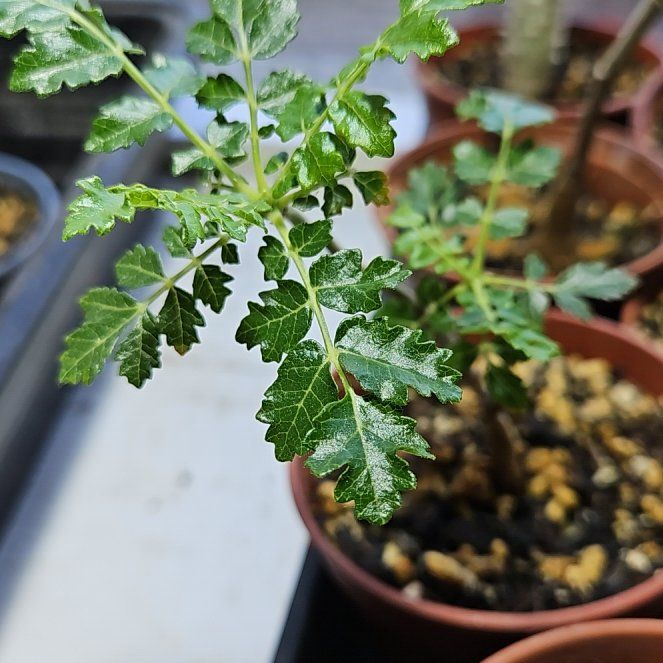
Indoor container trees grow slowly to 2 to 4 feet tall over many years. The pale papery bark, the compound feathery leaves, and the spreading low branches give the tree a sculptural look unlike most houseplants. The aromatic resin scents the air faintly even without active tapping.
Flowers
Small whitish flowers tinged with pink or red appear on mature trees, usually in winter or early spring on indoor plants. The flowers are not showy and add little visual impact, but they confirm the tree is healthy and old enough to bloom. Pollination indoors is unlikely without hand work, so do not expect seed.
Winter dormancy color shift
The tree drops all its leaves in late fall and stays bare through winter. The bare period lasts two or three months and is normal and healthy — fresh foliage flushes again in spring. Do not try to push growth during dormancy with extra water or warmth, since the rest period is essential to the tree's annual cycle.
Common problems and pests
Almost every Frankincense complaint traces back to too much water or too little light. Pest pressure is low indoors, and disease is rare in a dry well-drained pot.
Soft mushy trunk at the soil line
Root rot from chronically wet soil, the most common cause of death in this tree. Unpot immediately and inspect the roots. Cut away any black or mushy tissue with clean pruners. Let the tree dry out for several days, then repot in fresh dry gritty mix and water sparingly going forward. A tree caught early can recover. A trunk that has gone soft up the base usually cannot.
Leaves dropping outside of winter dormancy
Stress from overwatering, underwatering, or a sudden move to lower light. Check the soil first — if it is wet, dry the tree out and reduce watering. If it is bone dry and crispy, soak the pot once and wait for fresh growth. Sudden leaf drop after moving the tree is normal and usually resolves within a few weeks if the new spot has enough light.
Yellowing leaves
Usually a watering imbalance. Yellow leaves with the soil staying wet means overwatering. Yellow leaves with bone-dry soil suggests the tree went too long between drinks. Adjust the schedule based on pot weight rather than calendar.
Spindly stretched growth
Insufficient light. The branches grow longer and thinner reaching for the window, and the leaves space out along the stems. Move the tree to the brightest window available, or supplement with a grow light placed 6 to 12 inches above the canopy. The existing weak growth does not thicken, but new growth comes in stronger once light improves.
Spider mites
Fine stippling on leaves and faint webbing in the leaf joints, worst on indoor trees in dry heated air. Wipe the leaves with a damp cloth and rinse the foliage in the shower. Increase humidity around the tree with a pebble tray or by clustering it with other plants. Insecticidal soap clears heavier infestations.
Mealybugs in leaf joints
Small white cottony clusters in the leaf joints and on the undersides of leaves. Dab each one with a cotton swab dipped in rubbing alcohol. For heavier infestations, spray the tree with insecticidal soap every five to seven days for three weeks. Check the tree weekly for several months after, since mealybugs hide in cracks and return easily.
Scale insects on bark
Small bumpy growths on the stems and bark, often with a sticky residue and black sooty mold on lower branches. Scrape individual scales off with a fingernail or wipe them off with a swab dipped in alcohol. Heavier infestations respond to horticultural oil sprayed in late winter while the tree is dormant.
Bark cracking or peeling
Pale papery bark naturally peels in flakes as the tree matures, and the look is part of the plant's character. Cracking that exposes wet wood or attracts insects is a different issue and usually points to poor drainage or pest damage. Otherwise, leave the peeling bark alone.
No new growth for months
Slow growth is normal for this tree, and a season without visible new shoots is not a problem. Check that light is strong enough and that the tree is not sitting in wet soil. Most growth happens in late spring and summer, with little to nothing through winter dormancy.
About This Article
