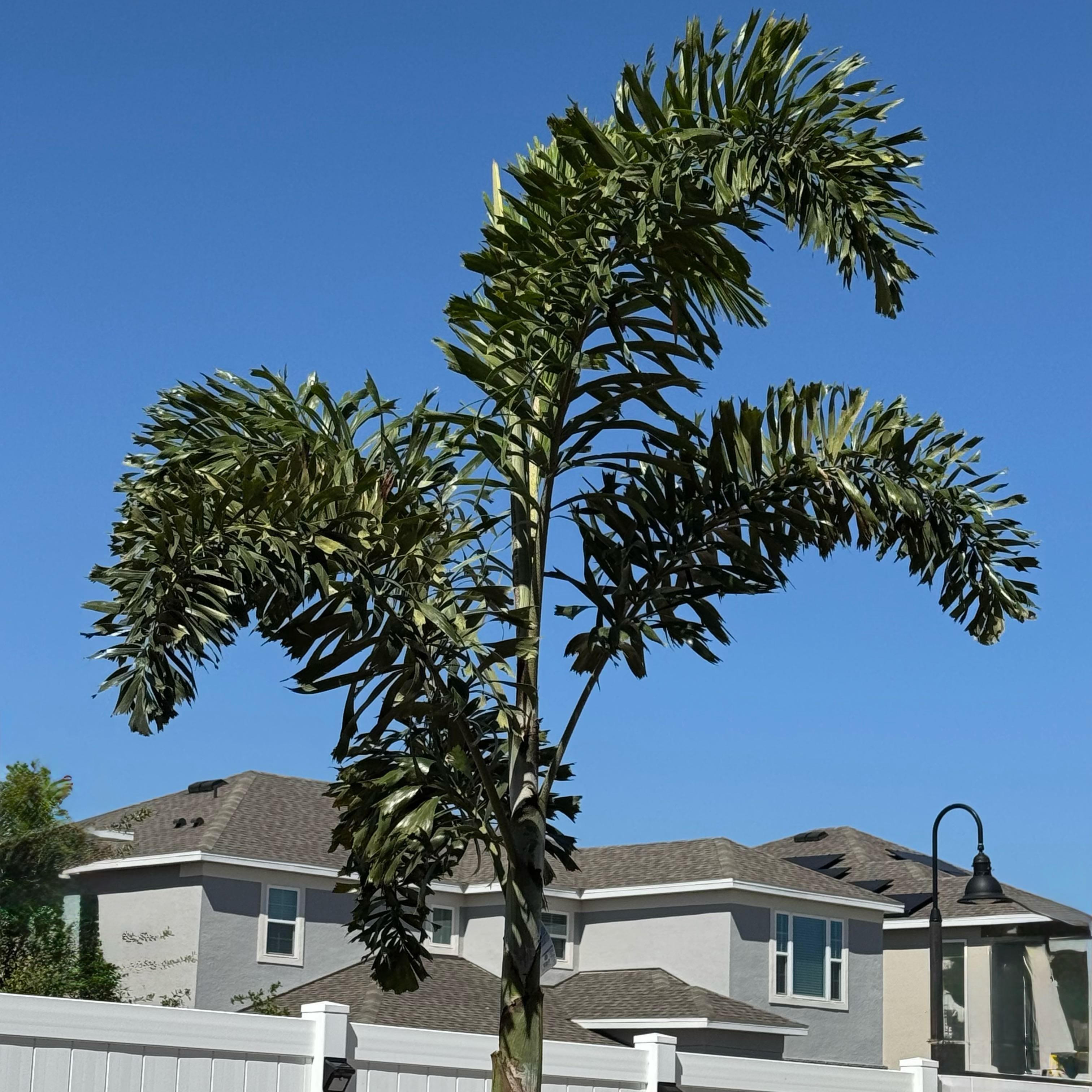
How to Grow a Foxtail Palm
Plant Foxtail Palm in full sun in well-drained sandy or loamy soil, in USDA zones 10 to 11 only since hard frost kills the trunk. Give the tree 15 to 20 feet of clear space at maturity, water weekly during the first two years, and feed three to four times a year with a palm-specific fertilizer.

Where to plant
Foxtail Palm is a fast-growing tropical landscape palm that reaches 30 feet tall in 8 to 12 years. The tree is hardy only in USDA zones 10 to 11, where winter lows stay above 30 degrees. A hard frost damages the fronds and a deep freeze kills the growing point at the top of the trunk.
Sun
Full sun for the best growth and fullest crown of fronds. Foxtail Palm tolerates a few hours of light shade but produces a thinner sparser canopy and slower trunk development in deeper shade. The fronds reach toward the strongest light source, so a tree planted next to a building grows lopsided.
Drainage
Sharp drainage is non-negotiable. The roots rot quickly in soggy soils. Dig a one-foot test hole and fill with water. If it drains within an hour or two, the spot works. If water sits longer, plant on a raised mound 12 to 18 inches above grade or move the tree to a better-draining spot. Foxtail Palm tolerates dry better than wet.
Soil
Sandy loam is ideal. The native habitat is rocky well-drained ground, and the tree grows well on Florida sand and on amended Texas caliche. Heavy clay needs significant amendment with coarse sand or builder's sand and compost to open up the structure. Mildly acidic to slightly alkaline soils are both fine.
Space
Give the tree 15 to 20 feet of clear space in every direction from the planting spot. The crown spreads 10 to 15 feet wide at maturity. Plant well back from house foundations, septic fields, and overhead power lines. Falling fronds and seeds can damage roofs and clog gutters, so avoid planting directly over walkways or driveways.
How to plant
Plant in late spring or early summer once nighttime lows are reliably above 60 degrees. Warm soil promotes rapid root establishment and the long warm season ahead gives the tree time to settle in before the first cool weather.
-
1Dig a hole twice as wide as the root ball Match the depth to the height of the root ball but no deeper. A wide shallow hole encourages roots to spread sideways into the surrounding soil, which is where most palm roots actually grow.
-
2Loosen the root ball gently If roots are circling the inside of the nursery pot, score the outside lightly with a sharp knife or tease apart the visible circling roots. Avoid heavy disturbance of the inner root ball, which palms tolerate poorly.
-
3Set the trunk at the original soil line The top of the root ball should sit level with the surrounding soil. Burying the trunk deeper than it grew in the nursery container traps moisture against the base and rots the lower trunk over time.
-
4Backfill with native soil and a little compost Mix a few handfuls of compost into the dug-out soil and use that to fill the hole, working it in around the roots without compacting it. Avoid pure compost or potting mix in the hole, which holds too much water near the roots.
-
5Water deeply Soak the entire root zone slowly until the water settles the soil. A first deep watering at planting is the most important watering of the tree's first year.
-
6Mulch 2 to 3 inches deep Apply shredded bark or wood chip mulch in a 3-foot circle around the trunk, kept several inches away from the trunk itself. Mulch keeps the root zone cool and moist and slows weed pressure during establishment.
Watering and feeding
Watering
Water deeply once a week through the first two growing seasons to establish the root system, soaking the root zone slowly rather than splashing the trunk. Drip irrigation or a soaker hose at the dripline works best.
Once established, Foxtail Palm is moderately drought-tolerant and gets by on natural rainfall in most south Florida and coastal southern California sites. Supplement with a deep weekly soak during extended summer dry spells, especially during the first 3 to 4 years. Yellow lower fronds during drought signal the tree needs more water.
Feeding
Feed three to four times a year (spring, early summer, late summer, early fall) with a palm-specific fertilizer labeled for the climate, typically an 8-2-12 with extra magnesium and micronutrients. Generic lawn fertilizer creates nutrient imbalances that show up as deformed new fronds.
Foxtail Palm is especially prone to potassium and magnesium deficiency on Florida sands. Frizzletop and yellow-spotted older fronds are the classic signs. Apply the fertilizer in a broad circle out to the dripline rather than piled near the trunk.
Pruning and maintenance
Foxtail Palm is self-cleaning, meaning old fronds drop on their own as new ones emerge. Pruning is light and mostly cosmetic, focused on removing the occasional brown frond or developing seed cluster.
Removing dead fronds
Cut fully brown fronds at the base of the frond stem with a sharp pruning saw or long-handled lopper. Avoid cutting any green frond, even a yellowing one. Yellowing fronds are still feeding the tree as they pull nutrients back into the trunk before falling.
Never crown-clean or hurricane-cut a Foxtail Palm by removing healthy green fronds. This stresses the tree, slows growth, and predisposes it to lethal trunk diseases. A healthy tree carries a full crown of fronds at all times.
Removing seed clusters
Mature trees produce large clusters of bright orange-red seeds that drop, sprout in beds, and stain pavement. Cut the entire seed stalk off near the trunk with a pruning saw once the fruit develops. Wear gloves since the fruit can irritate skin.
What not to do
Do not climb the trunk with spikes, since the wounds invite fungal infection. Disinfect pruning blades between trees with a quick wipe of rubbing alcohol to prevent spreading lethal yellowing, ganoderma, and other systemic palm diseases.
Blooming and color
Foxtail Palm is grown for the dramatic crown of bushy plumose fronds that radiate around the trunk and look very much like an enormous bottlebrush or a fox's tail. The seasonal show is steady year-round in tropical zones rather than tied to a bloom window.
The crown
A healthy tree carries 8 to 12 fronds at once, each 8 to 10 feet long, arranged in a perfect bottlebrush around the trunk. New fronds emerge from the top center and gradually shift outward and downward over their 18 to 24 month life. The contrast between fresh bright-green new fronds and slightly older deeper-green ones gives the crown its distinctive layered look.
Flowers and seeds
Trees usually start flowering around year 6 to 8. White flower clusters appear at the crownshaft and develop into bright orange-red seed bunches that hang below the green fronds. The seed clusters are a striking ornamental feature but seed drop creates a cleanup chore around the tree.
Volunteer seedlings sprout in nearby beds within a few weeks of seed drop. Pull or hoe them while still small. They transplant poorly once they are more than a few months old.
Year-round structure
Unlike landscape ornamentals tied to a single bloom season, the Foxtail Palm crown is the focal feature 12 months of the year. The smooth gray trunk with green crownshaft anchors a tropical garden through winter as well as summer.
Common problems and pests
Most Foxtail Palm problems trace to nutrient deficiencies on sandy soils or cold damage on the cold edge of its range. The tree is otherwise low-maintenance and pest-resistant when planted in the right spot.
Yellow or bronze older fronds
Potassium deficiency, the most common Foxtail Palm problem on Florida sands and other low-potassium soils. The lower (older) fronds develop yellow-orange flecks that progress to translucent and necrotic. Apply a palm-specific fertilizer with extra potassium and magnesium and continue every 3 months. Existing damaged fronds do not recover, but new growth comes in clean.
Frizzled, deformed new fronds
Manganese deficiency, sometimes called frizzletop. New fronds emerge weak, yellow, and stunted, sometimes failing to open fully. Apply a manganese sulfate soil drench and switch to a palm-specific fertilizer. Untreated frizzletop kills the tree.
Frond tips turning brown and crisp
Usually a sign of drought stress or chronically dry soil during the first few years after planting. Water deeply once a week during dry stretches and mulch the root zone two to three inches deep. Salt spray near the coast can also cause tip burn, so rinse the fronds with fresh water after storms.
Cold damage on fronds and crown
Brown or black streaks on fronds after a frost, or a collapsed brown growing point after a hard freeze. Light damage recovers as new growth pushes from the crown in spring. A collapsed growing point usually kills the tree, since palms cannot resprout from below a dead bud. Foxtail Palm is reliably hardy only above 30 degrees.
Ganoderma butt rot
A shelf-shaped reddish-brown fungal conk emerging from the lower trunk, accompanied by a wilting crown and sudden decline. The disease is fatal and untreatable. Remove the entire tree including the stump and as much of the root system as possible, and do not replant a palm of any species in the same spot for many years.
Pink rot of the crown
A pink slimy fungal growth around the base of the fronds, with a foul smell and frond collapse. Often follows mechanical injury, freeze damage, or nutrient stress. Improve nutrition with a palm fertilizer, prune off badly affected fronds, and treat the crown with a copper or thiophanate-methyl fungicide. Severely affected trees rarely recover.
Scale insects on fronds
Small flat brown or white bumps clinging to the underside of fronds and along the frond stem. Light infestations rarely affect a healthy tree. Heavier outbreaks respond to horticultural oil sprayed thoroughly across the fronds. Repeat every 2 weeks for 2 or 3 cycles.
Palmetto weevil
A large reddish-brown beetle that lays eggs in stressed or freshly transplanted palms. The larvae bore through the heart of the trunk, often killing the tree before symptoms appear. Reduce risk by planting only healthy trees with strong crowns, watering well after transplant, and avoiding wounds to the trunk. Infested trees usually cannot be saved and should be removed.
About This Article
