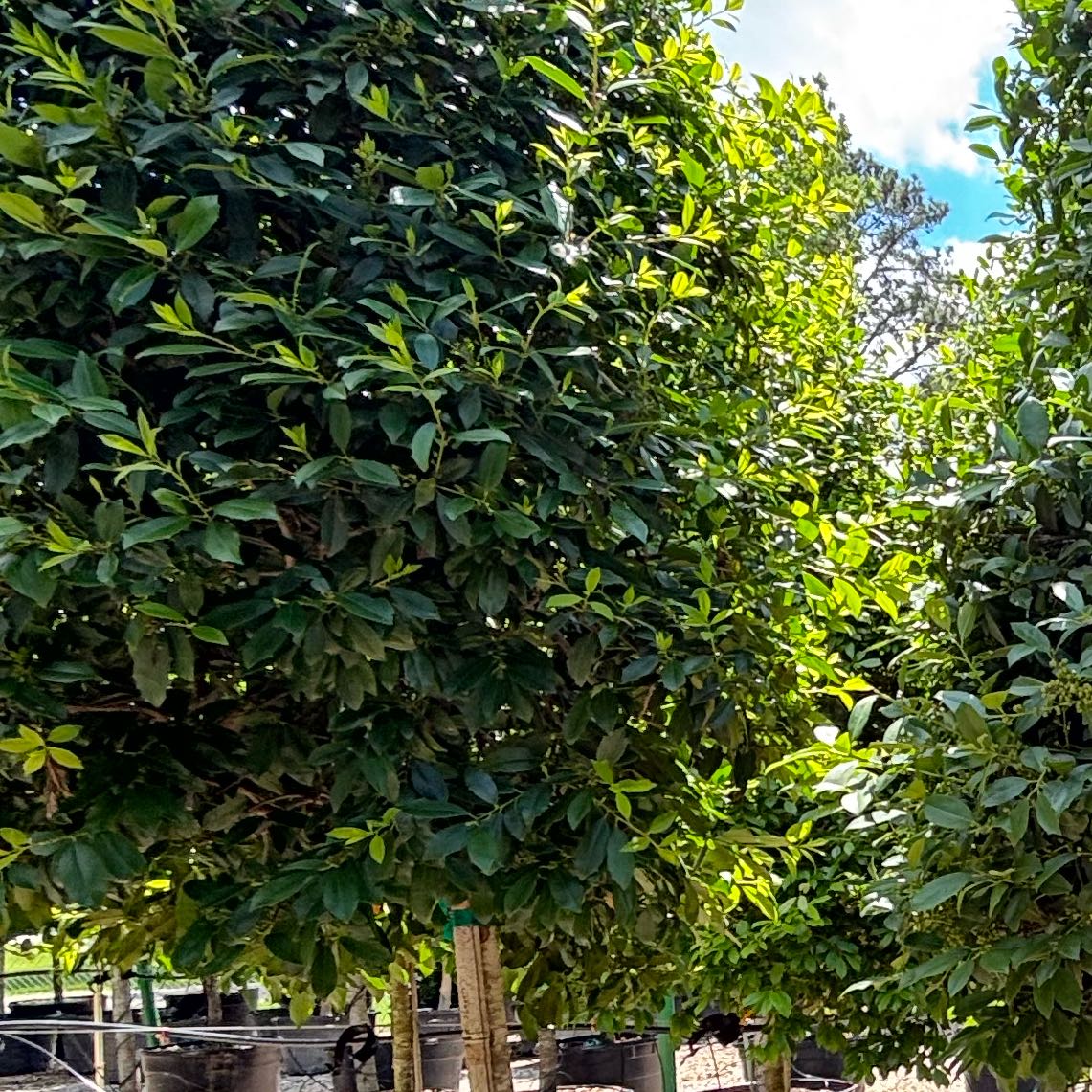
How to Grow an Eagleston Holly
Plant Eagleston Holly in full sun in well-drained slightly acidic soil, with 8 to 10 feet of clear space at maturity. Skip the male pollinator most hollies need, since Eagleston sets berries on its own. Prune lightly in late winter to keep the broad pyramidal shape.

Where to plant
Eagleston Holly is a broad pyramidal evergreen tree for USDA zones 6 through 9. It matures into a 15 to 25 foot tree with a 10 to 15 foot spread, so the spot you pick now needs to fit a full-sized tree in ten years.
Sun
Full sun, at least six hours a day, produces the heaviest berry crop. Eagleston Holly tolerates partial shade but the berry display drops sharply when the tree gets less than four hours of direct sun. A spot with morning sun and light afternoon shade is fine in zone 9.
Drainage
Eagleston Holly needs well-drained soil. The shallow roots suffocate in standing water, which leads to root rot. Dig a one-foot test hole and fill it with water. If it drains within a few hours, the spot is fine. If water sits overnight, build a raised mound 6 to 12 inches above grade and plant on top of it.
Soil
Eagleston Holly prefers slightly acidic garden soil rich in organic matter. Alkaline soil produces yellow leaves with green veins (iron chlorosis) within a couple of seasons. If your yard sits on chalky or limestone-derived soil, plan on ongoing acidification with elemental sulfur worked into the planting area and acidic pine bark mulch on top.
Space
Allow at least 8 to 10 feet of clear space in every direction from the trunk. Crowded hollies develop thin foliage on the shaded side and rarely look balanced. Eagleston Holly works well as a single focal tree, a row screen with 10 to 12 foot spacing, or a tall hedge planted closer at 6 to 8 feet.
How to plant
Plant in spring after the last frost or in early fall at least six weeks before the first hard frost. Avoid summer planting in zones 8 and 9, because the new roots cannot keep up with the heat and the tree struggles for months.
-
1Dig a wide shallow hole Twice as wide as the root ball but only as deep. Eagleston Holly roots spread sideways more than down, and a too-deep hole leads to slow establishment and a sunken crown.
-
2Loosen circling roots If the roots are circling tightly inside the nursery pot, gently tease them apart or score the outside with a knife. Circling roots stay circling unless you break the pattern, even after the tree is in the ground.
-
3Set the tree slightly high The top of the root ball should sit about an inch above the surrounding soil. The tree settles as the soil compacts, and a buried trunk flare rots faster than a high one.
-
4Backfill with native soil Mix a few handfuls of compost into the dug-out soil and use that to fill the hole. Avoid pure compost or potting mix in the planting hole, because the roots get lazy if the surrounding soil is too rich and never spread into the wider yard.
-
5Water deeply Soak the entire root zone until the top six inches feel uniformly damp. This is the most important watering of the tree's first year.
-
6Mulch two to three inches deep Use shredded bark or wood chips, kept a few inches back from the trunk. Mulch keeps the shallow root zone cool and helps maintain the slightly acidic conditions Eagleston Holly prefers.
Watering and feeding
Watering
Water deeply once a week through the entire first growing season, soaking the root zone rather than splashing the foliage. Drip irrigation or a slow trickle from a hose at the base works best.
After the first year, Eagleston Holly is fairly drought-tolerant in zones 6 and 7. In hotter zones, give it a deep weekly soak through summer dry spells, especially while berries are filling out from late summer into fall. Underwatered trees drop berries before they color up.
Feeding
Feed once in early spring as new growth starts, using a slow-release fertilizer labeled for acid-loving plants such as one marketed for hollies, azaleas, or rhododendrons. Standard lawn fertilizer pushes the soil toward alkaline and can trigger yellow leaves with green veins.
Sprinkle the fertilizer around the drip line, not against the trunk, and water it in. Stop feeding by midsummer so the tree can harden off new growth before winter.
Pruning
Eagleston Holly needs very little pruning. The tree has a naturally pleasing broad pyramidal shape and tight, dense growth. Most years a quick cleanup is all it asks for.
When to prune
Prune in late winter while the tree is still dormant, before new growth pushes in spring. Avoid pruning after midsummer, because cuts made late in the season may not heal before cold weather arrives.
What to cut
Remove any dead, damaged, or crossing branches at the trunk or back to a healthy side branch. Cut back any wayward shoots that disrupt the pyramidal outline.
If the tree is being used as a hedge, shear it lightly to shape in late winter and again in early summer after new growth hardens. Avoid hard shearing once berries form, because aggressive cuts remove the berry display.
Raising the canopy
As the tree matures, lower branches can be removed back to the trunk to expose the trunk and let in light beneath. Take out one tier of branches per year rather than all at once. Cuts heal best when made just outside the branch collar.
Blooming and color
Eagleston Holly is grown for the long winter berry show, but it has a quiet spring flowering moment first. The two phases together give the tree year-round interest.
Spring flowers
Small white flowers appear in May or early June, tucked among the new leaves. They are not showy, but they attract bees and other pollinators. The display lasts about two weeks.
Fall and winter berries
Berries form through summer as green clusters along the previous year's growth. They start coloring up to bright red in early fall and reach full color by mid to late fall. The berries persist through winter and into early spring, often outlasting cold snaps that would have stripped a deciduous tree.
Eagleston Holly sets a heavy berry crop on its own thanks to its self-fruitful nature. You do not need to plant a male holly nearby, which is the usual requirement for berry production in this group.
Cutting branches for arrangements
Cut berried branches in late fall for indoor arrangements and holiday displays. Use sharp pruners and cut back to a side branch or bud rather than leaving a stub. Berried cuttings hold their color for two to three weeks in a cool room with water in the vase.
Common problems and pests
Most Eagleston Holly issues are slow-developing and easy to catch if you check the tree a few times a season. Soil chemistry and pest pressure are the usual culprits.
Yellow leaves with green veins (iron chlorosis)
The classic sign that the soil has become too alkaline for the tree to take up iron. Apply elemental sulfur per the package directions to acidify the soil, and renew acidic mulch like pine bark or pine needles. A foliar iron spray treats the symptom while the soil amendment fixes the cause.
Sticky residue on leaves and black sooty mold
Scale insects are sucking sap from the branches and excreting a sugary residue, which then grows black sooty mold. Inspect twigs and the undersides of leaves for small bumps that scrape off with a fingernail. Horticultural oil sprayed in late winter smothers overwintering scale. Heavy infestations may need a systemic insecticide labeled for ornamentals.
Squiggly trails through the leaves
Leaf miners are larvae feeding inside the leaf tissue. Damage is mostly cosmetic and the tree tolerates it well. Pick off and discard heavily mined leaves to break the cycle. A spinosad spray timed to the early summer adult flight reduces the next generation.
Fine webbing under leaves
Spider mites build up in hot dry weather, especially in zones 8 and 9. Look for tiny moving dots on the undersides of leaves. Spray the foliage with a strong jet of water every few days to knock mites down. Heavy infestations respond to insecticidal soap or horticultural oil applied to thorough leaf coverage.
Few or no berries
Most often a sign of too much shade. Move to a sunnier spot if the tree is still young, or thin overhanging branches from nearby trees. A late spring frost can also kill the flower buds without killing the tree itself, in which case berries skip a year and return the next.
Browning leaves in late winter
Winter burn from cold wind and frozen soil that prevents the tree from replacing moisture lost through the leaves. Most common on the windward side of the tree at the cold edge of zone 6. Water deeply in late fall before the ground freezes, and use a burlap wind screen the first two winters on exposed sites.
Wilted leaves and dieback in heavy soil
Root rot from poor drainage. The roots cannot get enough oxygen and slowly die. If the tree is still small, dig it up in spring, build a raised planting mound with native soil and compost, and replant on the mound. Once the tree is large, the only fix is to improve surrounding drainage with French drains or accept reduced vigor.
Deer browsing
Deer eat young growth on Eagleston Holly less eagerly than they do on most landscape shrubs, but pressure varies by yard. Repellent sprays work in low-pressure areas if you reapply after every rain. Physical fencing protects young trees during the first two seasons, after which the spiny leaves usually deter casual browsing.
Whole branches dying back
Most often canker disease entering through a wound. Cut affected branches out back to a healthy point well below the dead section. Sterilize pruners between cuts with rubbing alcohol. Avoid pruning during wet weather, when fungal spores spread most readily.
About This Article
