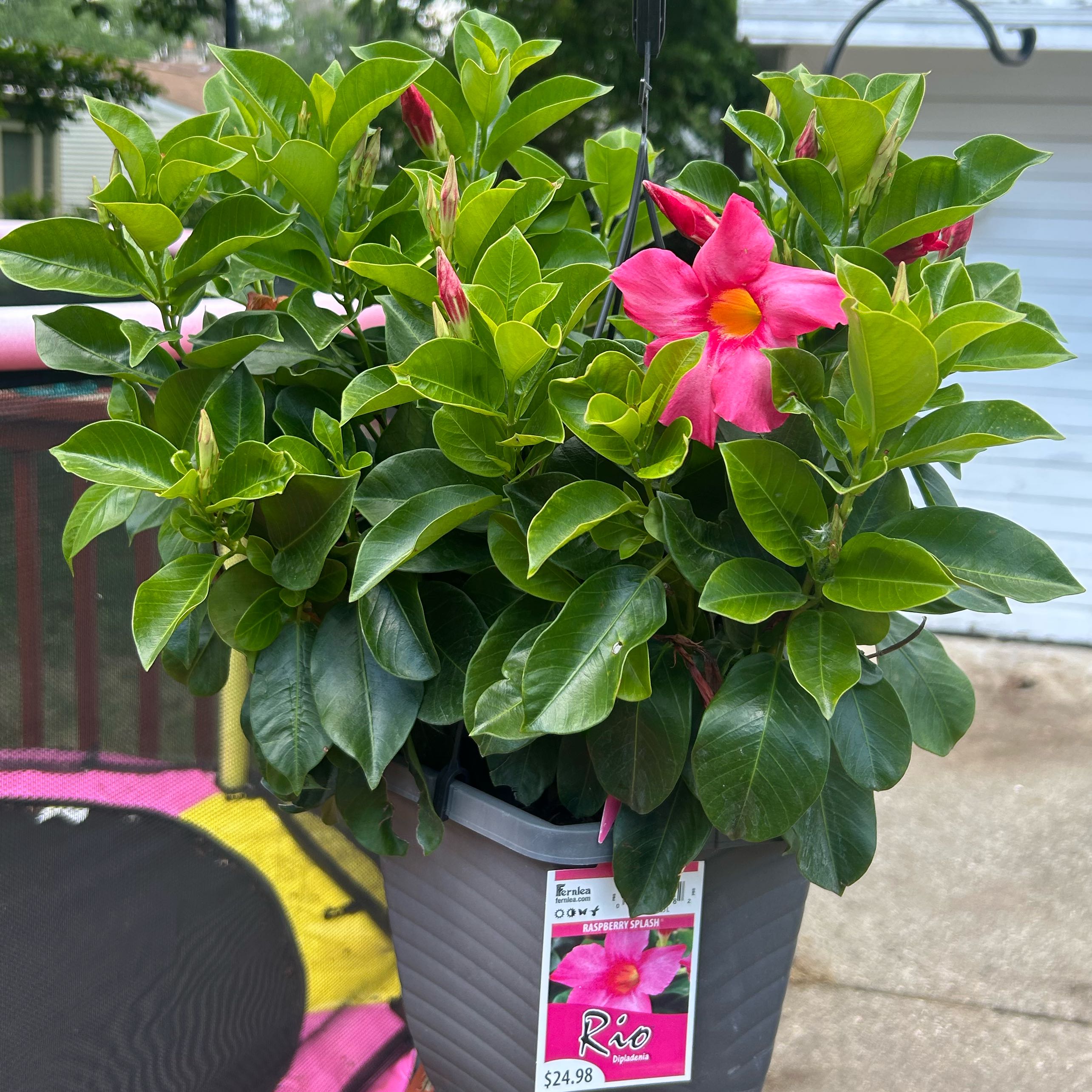
How to Grow a Dipladenia 'Rio'
Plant Dipladenia 'Rio' in full sun, in a pot with fast-draining potting mix, and feed lightly every two weeks through summer. The plant is tropical and dies below 40F, so grow in a container and bring inside before frost. Blooms run from late spring through fall.

Where to plant
Dipladenia 'Rio' is a tender tropical from South America, treated as a frost-sensitive container plant across most of the United States. The plant is hardy outdoors year-round only in zones 10 and 11. Everywhere else, grow in a pot that can move inside before the first frost.
Sun
Full sun produces the most blooms, with six or more hours of direct light each day as the target. Less than four hours of sun gives a leafy plant with few flowers.
In the hottest zones, light afternoon shade through summer prevents leaf bleaching on the most exposed leaves.
Drainage
Use a container with drainage holes and never let the pot sit in a saucer of standing water. Roots rot within days in soggy mix.
Tip the pot to drain after every deep watering. A self-watering planter is a poor fit for this plant.
Soil
Reach for a quality all-purpose potting mix with extra perlite stirred in. The goal is a mix that holds moisture briefly and then drains fast. Heavy garden soil or moisture-control mixes stay too wet for the roots.
Space
The mounded form reaches about 12 to 18 inches tall and wide in a pot. A 10 to 12 inch diameter container fits a single plant well and gives room for the season's growth without over-potting.
Soil and potting
Pot up after the last spring frost once nights stay above 50F. The plant goes outside only when warm weather is settled. A nursery 4 to 6 inch starter potted up into a 10 to 12 inch container is the most common shape.
-
1Choose a pot with drainage holes A 10 to 12 inch container in terracotta or plastic both work. Terracotta dries between waterings a little faster, which suits this plant well. Skip any pot without holes.
-
2Fill with fast-draining mix Use one part standard potting mix to one part perlite. The mix should feel airy in the hand. Heavy mixes hold too much water and starve the roots of oxygen.
-
3Set the plant at the same depth The top of the root ball should sit about an inch below the pot rim. Planting deeper buries the crown and invites rot. Planting too high lets the root ball dry out too fast.
-
4Water in thoroughly Soak the mix until water runs out the bottom, then tip the pot to drain fully. The first watering settles air pockets around the roots and starts the plant on a steady schedule.
-
5Place in a sunny outdoor spot A south or west-facing patio, deck, or balcony works well once daytime temperatures stay reliably above 65F. The plant sulks in cooler weather and only thrives when summer settles in.
Watering and feeding
Watering
Water when the top inch of mix feels dry to the touch, which typically lands every 2 to 4 days through hot summer weather. Soak until water runs from the drainage holes, then drain the saucer.
Cut back to once a week or less in cool weather and once the plant is brought indoors for winter. Overwatering yellows the leaves and rots the roots faster than any other mistake with this plant.
Feeding
Feed every two weeks through the growing season with a balanced liquid fertilizer at half strength, or use a slow-release granular labeled for flowering container plants. Phosphorus-rich blooming fertilizers also work well.
Stop feeding by early fall and skip feeding entirely while the plant is indoors for winter. Heavy feeding produces lush leaves and few blooms.
Pruning and support
Dipladenia 'Rio' is the bushy compact form of the Mandevilla group, not a long-vining cultivar, so pruning stays simple. Light shaping through the season and a hard cutback at the end of fall covers the bulk of the work.
Through the season
Pinch the growing tips back by an inch every few weeks during summer to keep the plant tidy and encourage branching. Remove spent flower clusters by snipping the stem back to a healthy leaf. Deadheading is optional since old blooms drop on their own, but the plant looks neater when tidied up.
End-of-season cutback
Before bringing the plant inside for winter, cut the stems back by about half to a third of their length. This reduces the mass the plant has to support in low indoor light and prompts fresh growth in spring.
Wear gloves when pruning since the cut stems leak a milky sap that irritates skin.
Support
The bushy form rarely needs staking. If a few stems sprawl, a short thin support poked into the pot keeps the shape upright. No trellis or moss pole is needed.
Blooming and color
Dipladenia 'Rio' is grown for the bright trumpet-shaped flowers in pink, red, or white that open continuously from late spring through fall. A well-grown plant carries dozens of blooms at once.
Bloom timing
The first blooms open about a month after the plant goes outside in late spring. Flowering picks up through summer and continues until cool fall weather slows growth. Each individual trumpet lasts 3 to 5 days and is replaced by fresh buds along the same stems.
Keeping the bloom going
Steady warmth, full sun, and regular feeding drive continuous flowering. A plant that stalls is usually overwatered, under-fed, or in too cool a spot. Move to a hotter sunnier location and skip a watering or two to reset.
Overwintering for next year
Bring the pot indoors before nighttime temperatures dip below 50F. Place near the brightest indoor window available, water sparingly through winter, and skip feeding entirely. The plant looks tired in low light, but resumes vigorous blooming once it goes back outside in late spring.
Common problems and pests
Most Dipladenia 'Rio' complaints trace to overwatering, cold exposure, or low light. The plant is otherwise a tough easy grower in warm sunny weather.
Yellow leaves
Most often a watering issue, with overwatering as the more common culprit than under-watering. Check the mix with a finger. If the top inch feels wet, hold off and let it dry. Yellowing leaves that drop after a cold night are simply chill damage and recover once warm weather returns.
No flowers
Usually too little sun or too much nitrogen. The plant needs six or more hours of direct sun for heavy bloom. Switch from a high-nitrogen feed to one labeled for flowering plants, and move the pot to a sunnier spot.
Wilting in the heat
The leaves may droop briefly on hot afternoons even in damp soil, which is the plant conserving water. If the foliage stays limp into evening, water deeply at the base. Persistent wilt in damp soil points to root rot from sitting water.
Brown crispy leaf edges
Usually low humidity once the plant is indoors for winter, or under-watering in summer heat. Indoors, set the pot on a humidity tray of pebbles and water. Outdoors, water more frequently through heat waves and keep mulch on the soil surface.
Sticky residue on leaves
Aphids, scale, or whiteflies feeding on sap and excreting honeydew. Inspect the underside of the leaves and stem joints. Knock aphids off with a strong water spray, wipe scale with rubbing alcohol on a cotton swab, and treat heavier infestations with insecticidal soap or horticultural oil.
Spider mites
Fine pale stippling on the leaves and webbing on the undersides, mostly a problem indoors over winter. Increase humidity by misting daily and rinse the leaves in the shower every few weeks. Heavy infestations respond to insecticidal soap or neem oil sprayed every 5 to 7 days.
Black spots on leaves
Fungal leaf spot, common in humid weather when foliage stays wet. Water at the base rather than overhead, and remove any badly spotted leaves. Improve airflow around the pot by spacing it from other plants.
Plant collapses after a cool night
The plant has no frost tolerance and cold damage shows up as drooping blackened stems within a day of exposure below 40F. Bring the pot inside before nighttime temperatures dip into the 40s. Once damaged, cut back the dead tissue and water sparingly to see whether the roots survived.
Leggy growth indoors over winter
Low light produces long thin stems with widely spaced leaves. This is normal winter behavior. In late winter, cut the plant back by half to two thirds before moving it back outside. Fresh compact growth follows once it returns to full sun.
About This Article
