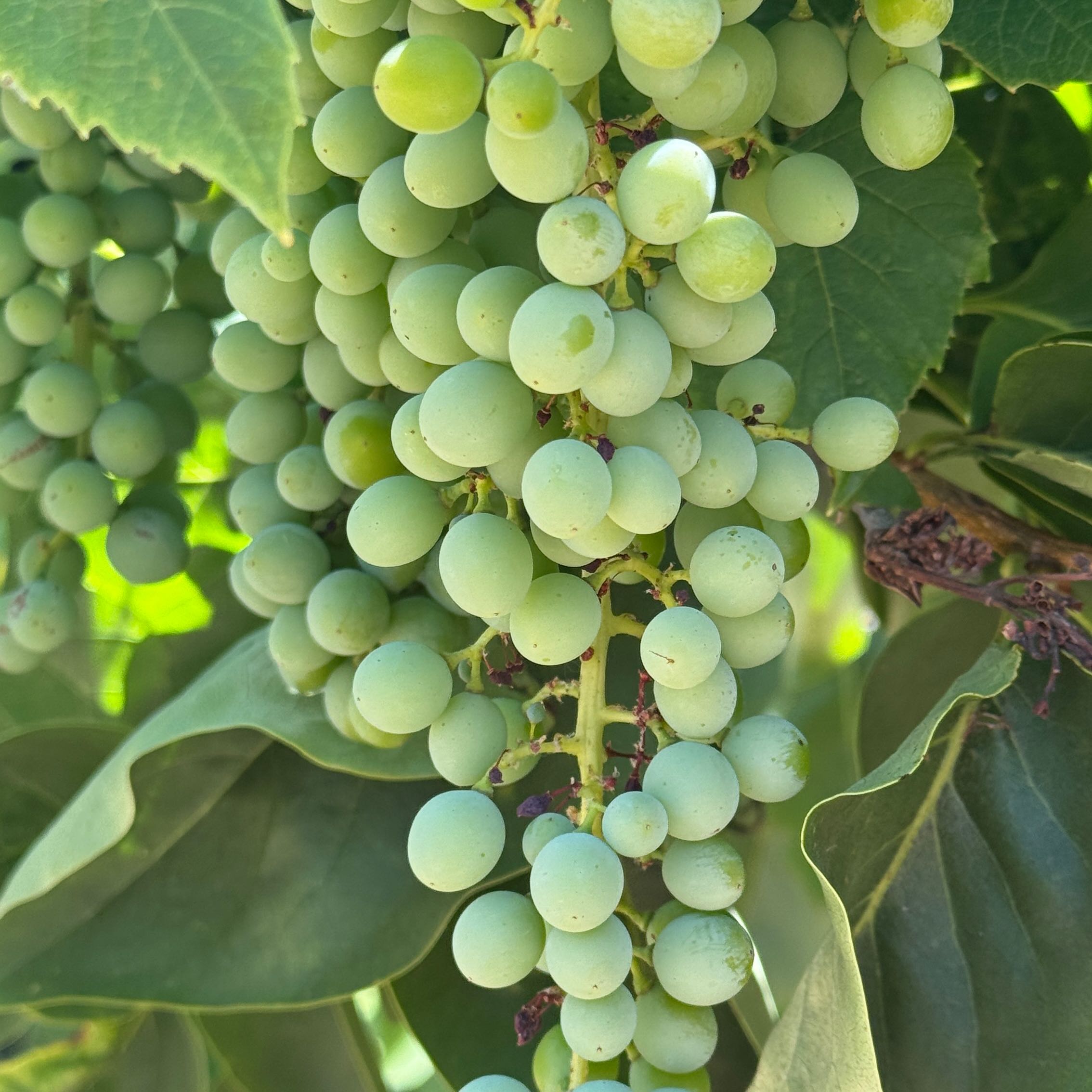
How to Grow a Concord Grape
Plant a bare-root Concord Grape in early spring in full sun, against a sturdy trellis that can carry the vine for decades. Cut the planted vine back to two or three buds, and prune hard every dormant winter, because the vine fruits only on wood that grew the previous year. Expect first real harvest in year three.

Where to plant
Concord Grape is a deciduous perennial vine for USDA zones 4 through 8. A single mature vine produces 15 to 25 pounds of fruit per year and can stay productive for 40 years or more, so the spot you pick now needs to fit a permanent structure.
Sun
Full sun is non-negotiable. Eight or more hours of direct sun produces the heaviest crop and the sweetest fruit. Anywhere with less than six hours of direct sun produces poor flavor and weak yields, even with perfect pruning and watering.
Drainage
Grape roots rot quickly in soggy ground. Pick a spot on a gentle slope or any high point in the yard. Dig a one-foot test hole and fill it with water. If it drains within a few hours, the spot is fine. If water sits overnight, build a raised mound 6 to 12 inches above grade and plant on top of it.
Soil
Concord Grape adapts to a wide range of soils as long as drainage is good. Average garden soil works well, and overly rich beds actually push the vine into excessive leafy growth at the expense of fruit. A few inches of compost worked into the planting area before planting is enough.
Space and the trellis
Each vine needs at least 8 feet of horizontal trellis run, so for two vines plan on 16 feet minimum. A sturdy two-wire trellis with posts every 8 feet works well: the lower wire about 3 feet off the ground and the upper wire about 5 feet. An arbor, fence top, or pergola also works as long as the structure can carry the vine's weight for decades.
Install the trellis or arbor at planting time, not later. Driving posts through the root zone in year two damages the roots and sets the vine back.
How to plant
Plant a bare-root one-year-old vine in early spring while still dormant, before bud break. In zones 4 through 6, that means April or early May. In zones 7 and 8, late March. Container-grown vines can go in any time during the growing season but establish more slowly.
-
1Soak the bare-root vine for a few hours Submerge the roots in a bucket of water for 2 to 6 hours before planting to rehydrate them. This is the most important step for bare-root establishment and easy to skip in the excitement of planting day.
-
2Dig a hole wider than it is deep About 12 inches deep and 18 inches wide. Grape roots spread sideways more than down, so a wide hole helps them establish faster than a deep one.
-
3Trim damaged roots Cut off any broken or dried-out root tips with sharp clean pruners. Leave the healthy roots full length and spread them outward in the hole.
-
4Set the vine at the original soil line Look for a color change on the stem that marks where the vine sat in the nursery soil. Plant at the same depth, since burying the graft union (if there is one) leads to rot and trunk damage.
-
5Backfill and water deeply Use the soil that came out of the hole, mixed with a few handfuls of compost. Soak the planting until the top six inches feel uniformly damp.
-
6Cut the vine back to two or three buds This is the step that surprises new growers. Cut the entire top of the vine off, leaving only a stub with two or three buds. The vine throws all its energy into building roots and a strong main shoot the first year. Skipping this cut produces a weak, struggling vine.
-
7Tie the strongest new shoot to the trellis As shoots emerge in spring, pick the strongest one to become the permanent trunk and tie it loosely to the trellis as it grows. Remove the others. This single shoot becomes the foundation of the vine for its entire life.
Watering and feeding
Watering
First-year vines need deep weekly watering through the entire growing season to establish a strong root system. Soak the root zone rather than splashing the foliage. Drip irrigation or a soaker hose at the base works best.
Established vines from year two onward are drought-tolerant and get by on rainfall in most regions. A deep weekly soak during extended summer dry spells, especially while fruit is filling out, keeps the crop on track. Stop deep watering 2 to 3 weeks before harvest to concentrate sugar in the berries.
Feeding
Concord Grape needs very little fertilizer. Heavy feeding produces lush vines with few grapes. Apply a light dose of balanced slow-release fertilizer in early spring as buds break, scattered around the drip line, and water it in.
If the vine produces small new leaves or pale foliage in midsummer, a second light feeding helps. Otherwise skip it. Compost worked into the area around the base every couple of years is usually enough.
Pruning
Pruning is the most important annual task on a Concord Grape. The vine fruits only on shoots that grow from year-old wood, so each winter you cut back hard to leave a small number of one-year canes that will carry the next year's crop. An unpruned vine becomes a tangled mass that produces fewer and worse grapes every year.
Year 1: build the trunk
Through the first growing season, train the strongest shoot straight up to become the permanent trunk. Pinch off side shoots below the trellis wires and let the main shoot grow tall. The goal is one strong vertical stem by the end of the first season.
Year 2: build the cordons
In the second dormant winter, cut the trunk off just above the upper trellis wire. The following spring, train one shoot left and one shoot right along the upper wire to become the permanent horizontal arms (the cordons). Do the same along the lower wire if you have one. Pinch off competing shoots.
By the end of the second growing season, the vine has a T-shape (or H-shape with two wires): vertical trunk plus horizontal cordons. This permanent structure stays in place for the life of the vine.
Year 3 and onward: annual cane renewal
Every dormant winter from year three on, cut all of last summer's shoots back hard. Keep four to six healthy canes growing from the cordons, each about 8 to 12 buds long. Cut everything else off at the cordon. These remaining canes are what will fruit in the coming season.
The cut looks brutal: you remove about 80 to 90 percent of the previous year's growth. This is correct. A vine that is not cut back this hard produces dozens of weak shoots and few good grapes.
Summer pinching
Through the growing season, pinch back any shoots that grow out of the trellis space or shade the developing fruit clusters. Open canopies produce healthier vines and better-ripened fruit.
Harvest
Concord Grapes ripen from August into September depending on the zone, with a single mature vine producing 15 to 25 pounds of fruit. Expect a few clusters in year two and a real harvest starting in year three.
When to pick
Color alone is misleading. Grapes turn deep blue-black weeks before they reach peak sweetness. Taste a few berries from different clusters to judge ripeness. Ripe Concord Grapes are sweet with the classic foxy aroma, while underripe grapes are sharp and tart even when fully purple.
Once one cluster on the vine tests ripe, the others usually follow within a week or two. Pick clusters as they ripen rather than waiting for the whole vine to finish.
How to pick
Cut clusters off with sharp pruners or scissors at the stem above the cluster. Twisting damages the cane that will fruit next year. Hold each cluster by the stem rather than the berries to avoid bruising or rubbing off the bloom (the natural waxy coating).
Storing
Refrigerate harvested clusters in shallow trays or paper-towel-lined containers. Fresh Concord Grapes keep about a week. Wash only right before eating, since moisture on stored berries promotes mold.
For longer storage, freeze whole berries on a tray then transfer to bags. Frozen Concord Grapes hold well for months and are excellent in jams, juices, and pies.
Protecting from birds
Birds find ripe grapes fast. Drape bird netting over the vine as soon as the clusters start coloring, anchoring the bottom edges to prevent birds from getting underneath. Reflective tape and scarecrows help briefly but stop working after a few days.
Common problems and pests
Most Concord Grape problems are fungal diseases or pest pressure that responds well to airflow and timing. The vine is otherwise unusually hardy.
Black, shriveled berries (black rot)
A fungal disease that turns developing berries hard, black, and shriveled. The infection enters through wet leaves in spring. Rake up and discard all mummified berries and infected leaves at the end of each season. Improve airflow with aggressive winter pruning. Heavy outbreaks respond to a preventive fungicide spray (copper or mancozeb) starting at bud break and continuing every two weeks through bloom.
White powdery film on leaves and clusters (powdery mildew)
A fungal disease that produces white powdery patches on leaves, shoots, and developing clusters. Improve airflow by removing crowded shoots and leaves around the fruit zone in midsummer. Avoid wetting the leaves when you water. Sulfur or potassium bicarbonate sprays applied at the first sign of mildew control the spread.
Yellow patches on leaves with white fuzz underneath (downy mildew)
A separate fungal disease from powdery mildew, with yellow lesions on leaf tops and white spore growth on the undersides in humid weather. Same airflow and pruning measures help. Copper fungicide applied at the first sign manages active outbreaks.
Skeletonized leaves (Japanese beetles)
Adult beetles chew the soft leaf tissue and leave a lacy skeleton behind. Hand-pick beetles in the cool of early morning when they move slowly and drop them into soapy water. Pheromone traps actually attract more beetles to the yard, so skip them. Heavy infestations respond to neem oil or pyrethrin sprays.
Few grapes despite lots of leaves
The vine is too vigorous, usually from rich soil, heavy fertilizer, or insufficient pruning. Cut back fertilizer entirely next season. Prune harder this winter, removing more of the previous year's wood. The vine fruits best when it works a little for resources.
No fruit set after flowering
A cool, wet, or windy bloom period can interrupt pollination even though Concord Grape is self-fertile. Most years this corrects itself the next season. If the vine fails to set fruit in normal weather, check that pruning is leaving enough one-year canes (four to six canes of 8 to 12 buds each).
Cracked or split berries near harvest
Heavy rain after a dry stretch causes berries to swell faster than the skin can stretch. Mulch the root zone to even out soil moisture. Drape a tarp over the vine during forecast heavy rain at harvest time.
Winter dieback in zone 4
Cold winters can damage canes at the cold edge of the range. Wait until late spring before pruning damaged wood, since growth often resumes from buds you cannot see. Mound a few inches of mulch over the base of the vine in late fall to protect the crown.
About This Article
