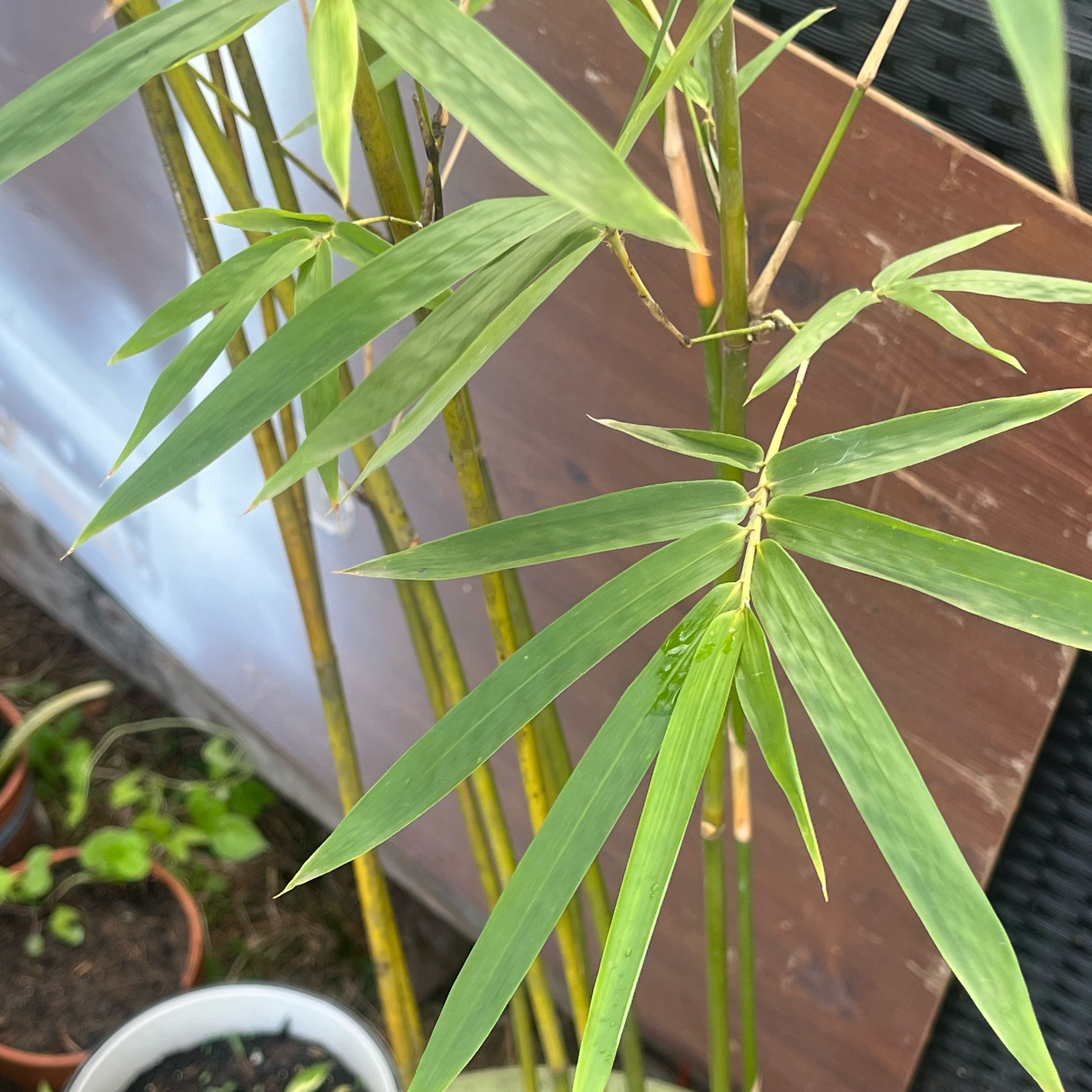
How to Grow a Clumping Bamboo
Plant Clumping Bamboo in full sun to part shade with rich moist well-drained soil, water deeply two to three times a week through the first year, and feed in spring and midsummer. The clump expands slowly outward by a few inches a year, ready as a privacy screen in two to three seasons.

Where to plant
Clumping Bamboo refers to the non-running Bambusa group, generally hardy in USDA zones 7 through 11 depending on the specific kind. Mature culms reach 15 to 40 feet tall and the clump expands outward by a few inches a year, never sending runners across the yard. The plant is a fast living screen.
Sun
Six or more hours of direct sun produces the densest screen and the tallest culms. Four to six hours works in part-shade spots and yields a thinner but still effective screen.
In zone 7 at the cool edge of hardiness, choose a south-facing or southwest-facing spot that warms early in spring. Cool shaded sites slow establishment.
Drainage
Well-drained soil is essential. The roots rot in standing water and a wet winter can kill the clump entirely. Dig a one-foot test hole and fill it with water. If water sits past a few hours, plant on a raised mound 8 to 12 inches above grade.
Soil
Rich loamy soil with plenty of organic matter suits the plant best. Heavy clay and pure sand both work after amending with several inches of compost worked into a wide planting area. The clump is a heavy feeder, so soil fertility carries through to canopy density.
Space
Give the clump 5 to 8 feet of clear space in every direction at maturity. For a continuous screen, set plants 5 feet apart so they merge into a wall in two to three years.
The clump expands outward by a predictable few inches a year, so the original footprint stays roughly intact. Unlike running bamboos, no root barrier is needed.
How to plant
Plant in spring after the last frost or in early fall at least eight weeks before the first hard frost. Container-grown clumps can go in any time during the growing season. Avoid summer-heat planting if reliable irrigation is not in place, since young clumps stress fast in dry heat.
-
1Dig a wide shallow hole Twice as wide as the root ball and just as deep. Bamboo roots spread sideways close to the surface, so a wide hole helps the clump establish faster than a deep one.
-
2Score the root mass if it is tightly circled If the nursery pot roots are circling, slice the outside vertically in three or four places with a sharp knife. The cuts encourage new roots to push out into the surrounding soil.
-
3Set the crown level with the soil The top of the root ball should sit even with or slightly above the surrounding soil. The clump settles as the soil compacts, and a buried crown invites rot from wet mulch.
-
4Backfill with native soil and compost Mix the dug soil with a few shovels of compost and use that to fill the hole. Avoid pure compost or potting mix in the hole, since rich pockets cause roots to stay inside the planting hole.
-
5Water in deeply Soak the root zone with two or three buckets of water until the top six inches feel uniformly damp. This first watering settles the soil around the roots and removes air pockets.
-
6Mulch three inches deep Bark mulch, leaf mold, or fallen bamboo leaves all work. Keep mulch a few inches off the new culms. A thick mulch layer is critical for moisture retention and root insulation through the first winter.
Watering and feeding
Watering
Water deeply two to three times a week through the first growing season, soaking the entire root zone rather than splashing the culms. Drip irrigation or a slow hose at the base works best for a clump this size.
After the first year, water deeply once a week through dry weather. Drooping curling leaves are the first sign of drought stress and a deep soak restores the look within hours. Sustained drought thins the canopy and stunts the next year's culms.
Feeding
Feed in early spring as new growth starts and again in midsummer with a high-nitrogen lawn-type fertilizer or composted manure. Bamboo is one of the heavier-feeding ornamentals in the yard and responds visibly to a generous schedule.
Stop feeding by late summer so new growth hardens off before winter. Yellow leaves in summer almost always trace back to too little nitrogen rather than disease.
Pruning
Clumping Bamboo needs only light pruning. Each culm grows for several years, then gradually thins and finally dies, so the work is mostly clearing out old culms and lifting the skirt for a tidy look. A young clump needs almost nothing in the first three years.
When to prune
Prune in late winter or early spring before new culms emerge. New shoots push up through the clump in spring and replace what the previous year produced, so pruning before that flush keeps the most fresh growth standing.
What to cut
Remove dead, broken, or weak culms by cutting them at ground level with loppers or a saw. The cut should be flush with the soil so no stub remains. Take out the oldest, palest culms first, since they have already passed their peak.
Thin the interior of a crowded clump to let light into the middle. Remove a few crossing or inward-growing culms each year to keep the cluster open. The remaining culms thicken and grow taller in response.
Lifting the skirt
Strip the lower branches off the outside of mature culms for a clean trunk look that emphasizes the vertical lines. Trim back to the first node above the height you want, usually 4 to 6 feet up. Stripped culms make a more striking screen than fully leafy ones from top to bottom.
Blooming and color
Clumping Bamboo is grown for the year-round evergreen screen and the visual movement of tall culms in a breeze. The reward is privacy by the second or third year and an architectural feature that improves with age. Bamboo rarely flowers, sometimes going decades between bloom events.
The privacy screen
A row of clumps planted 5 feet apart fills in as a continuous green wall in two to three growing seasons. The screen reaches its full mature height by year five or six depending on the kind chosen. Evergreen leaves block sight lines and soften street noise year-round.
Culm color and texture
The new culms emerge in spring and reach their full height within a few weeks, then harden off and turn from soft green to their mature color over the first year. The smooth nodes and clean vertical lines add a strong architectural element to the yard.
Older culms gradually yellow and thin, then die after five to seven years. Removing them on the schedule above keeps the clump looking fresh.
Rare flowering
Most kinds flower only every 40 to 80 years, sometimes longer. The whole clump can decline after flowering and may need replanting. This is a rare event and not something to plan around.
Common problems and pests
Most Clumping Bamboo troubles trace back to drought stress, insufficient feeding, or wet winter soil. Pest pressure is light.
Yellow leaves across the clump
Usually nitrogen deficiency on a clump that has not been fed in a year or more. Apply a high-nitrogen fertilizer in spring and again in midsummer. Yellowing in the lowest leaves alone is normal as the clump sheds older foliage.
Curling drooping leaves
First sign of drought stress. Water deeply and the leaves recover within hours. Repeated severe drought thins the canopy and stunts the next year's culm count. Mulch three inches deep at the base to even out soil moisture.
No new culms this year
A young clump in its first one to two years often produces no new culms while the roots establish. By year three, fresh culms should rise each spring. Lack of new growth in an established clump points to drought, poor feeding, or compacted soil. Address each in turn.
Tips browning in winter
Cold damage in a borderline-hardy zone. Mulch the root zone six inches deep before winter and the clump usually recovers by spring. In zones colder than recommended, the plant grows as a die-back perennial that returns from the roots each year, never reaching full mature height.
Aphids on new shoots
Small green or black insects cluster on new spring growth. Knock them off with a strong water spray. The clump tolerates moderate aphid pressure and ladybugs typically arrive within a week. Heavy infestations respond to insecticidal soap.
Sticky leaves and black sooty mold
Scale insects or mealybugs are excreting sugary honeydew, which a black fungus grows on. Wipe individual scales off with a cotton swab dipped in rubbing alcohol. Heavy infestations respond to horticultural oil sprayed in late winter. The sooty mold washes off once the underlying insects are controlled.
Sudden death of an old culm
Normal life cycle. Each culm grows for five to seven years before declining and dying. Cut the dead culm at ground level and the clump replaces it with fresh growth from the base over the following one to two seasons.
Mushrooms or fungal growth at the base
Decomposition of fallen leaves and old root debris. This is normal and beneficial in a healthy clump. Concern is only warranted when paired with sudden whole-clump decline, which points to root rot from waterlogged soil. Check drainage in that case.
Whole clump flowering and dying
Bamboo flowering events happen rarely, sometimes decades apart, and many clumps decline or die afterward. Cut the flowering culms at the base and water and feed steadily. Some clumps recover and others do not. Hold off on replacing for two full growing seasons before deciding the clump is done.
About This Article
