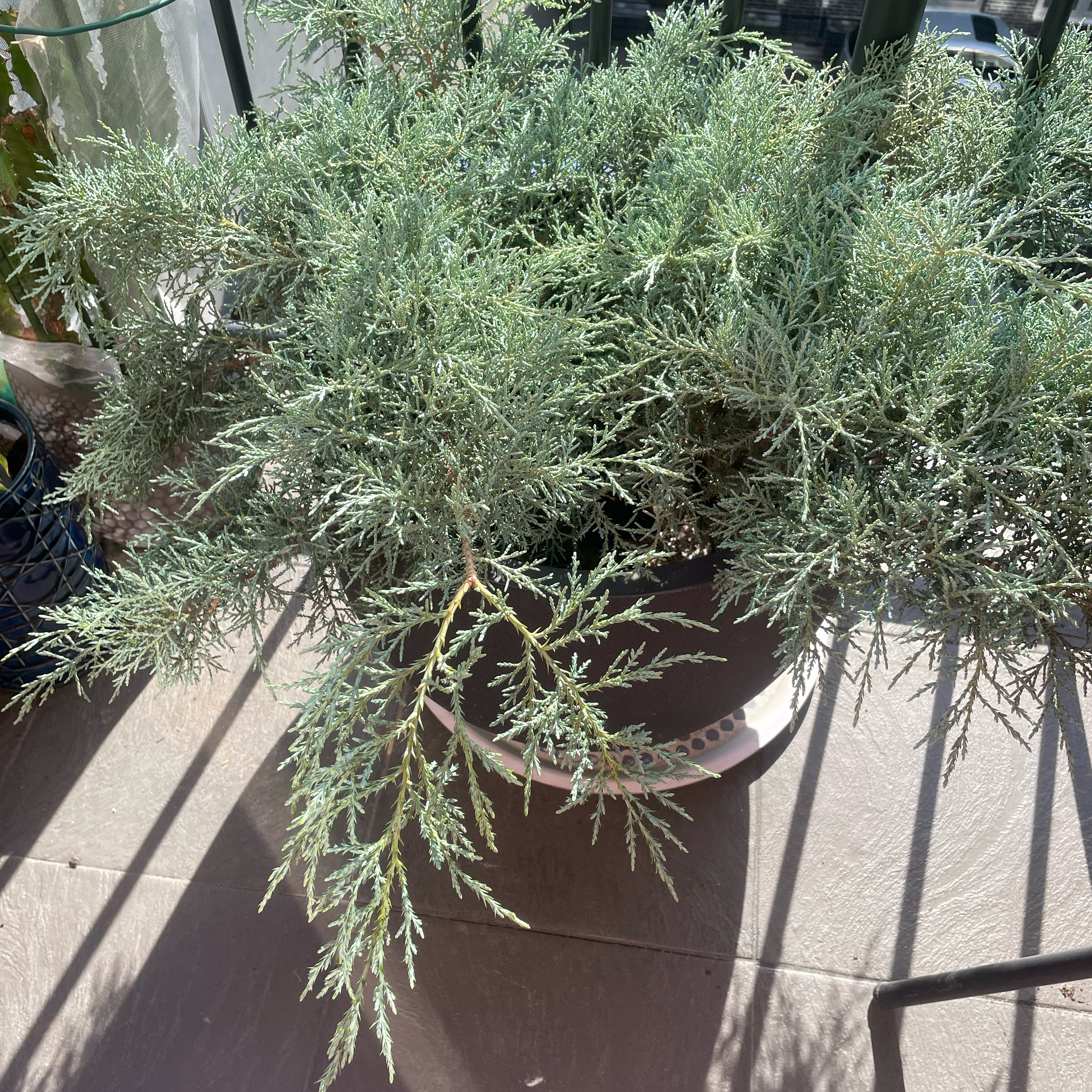
How to Grow a Blue Rug Juniper
Plant Blue Rug Juniper in full sun, in well-drained soil, and space plants 5 to 6 feet apart so the trailing branches knit into a dense mat. Water deeply once a week through the first year, then let nature handle it. Prune only to remove dead branches.

Where to plant
Blue Rug Juniper is a flat-spreading evergreen groundcover for USDA zones 3 through 9. It grows only 4 to 6 inches tall and spreads 6 to 8 feet wide, so the spot needs lateral room more than vertical.
Sun
Full sun is required. At least six hours of direct sun a day produces the densest mat and the strongest silvery-blue color. Less than four hours of sun gives a thin patchy cover that loses its blue tone and lets weeds push through.
Drainage
Well-drained soil is essential. The roots rot quickly in heavy clay that stays wet, and the plant browns out in patches that never recover. Dig a one-foot test hole and fill it with water. If it drains within a few hours, the spot is fine. If water sits overnight, build a raised mound or planting berm before setting the plant in.
Soil
Average to poor soil works fine. The plant tolerates sandy, rocky, and dry conditions where many landscape plants struggle. Avoid rich heavily amended soil that holds extra moisture. The plant is at its best when the soil is lean.
Space
Space plants 5 to 6 feet apart for a closed cover within three to four years. Closer spacing fills in faster but uses more plants and crowds the foliage in a way that traps moisture. Plant near retaining walls, slopes, and bed edges where the trailing branches can cascade over a hard edge.
How to plant
Plant in spring after the last frost or in early fall at least six weeks before the first hard frost. Container-grown plants can go in any time during the growing season as long as watering keeps up.
-
1Dig a wide shallow hole Twice as wide as the root ball but only as deep. Juniper roots spread sideways more than down, and a wide loose hole helps them establish faster than a deep narrow one.
-
2Loosen the root ball If the roots are circling tightly inside the nursery pot, gently tease them apart or score the outside with a clean knife. Roots that circle in the pot keep circling in the ground, which slowly girdles the plant from below.
-
3Set the plant slightly high The top of the root ball should sit about an inch above the surrounding soil. The plant settles as the soil compacts, and a buried crown rots faster than a high one in heavier soils.
-
4Backfill with native soil Use the soil you dug out, mixed with a small amount of compost only if the native soil is dead lifeless dirt. Avoid heavy amendments or pure potting mix in the planting hole, since the roots get lazy in rich soil and never reach into the surrounding yard.
-
5Water deeply Soak the entire root zone until the top six inches feel uniformly damp. This is the most important watering of the plant's first year and settles the soil around the new roots.
-
6Mulch two to three inches deep Use a coarse mulch like shredded bark, kept well back from the crown of the plant. Mulch holds moisture during establishment and slows weed competition. Avoid piling mulch over the trailing branches themselves — buried branches die back from the buried section out.
Watering and feeding
Watering
Water deeply once a week through the first growing season to help the plant establish, soaking the root zone rather than sprinkling the foliage. A drip line or hose at the base works best. Overhead sprinklers wet the foliage and increase needle blight risk.
After the first year, Blue Rug Juniper is highly drought-tolerant and rarely needs supplemental water in most climates. A deep soak during long summer dry spells in zones 7 and warmer keeps the color strong, but routine watering pushes the plant toward root rot.
Feeding
Feed once in early spring with a slow-release balanced fertilizer at half the label rate. Junipers in average to poor soil rarely need feeding at all, and overfeeding produces soft fast growth that flops and breaks easily.
Skip feeding entirely from late summer onward so new growth has time to harden off before winter cold.
Pruning and maintenance
Blue Rug Juniper needs almost no pruning. The naturally low spreading habit shapes itself, and the maintenance work is mostly about removing dead branches and keeping mulch and other plants from smothering the trailing stems.
Removing dead branches
Cut out any dead or broken branches in early spring before new growth pushes. Make the cut back to a live side branch or to the main stem, never leaving a long brown stub. Junipers do not resprout from old wood, so any cut into bare brown wood stays bare permanently.
Shaping
Light shaping is fine on the soft new growth in spring and early summer, trimming wandering tips that have overgrown the bed edge. Avoid hard shearing back into the woody center of the plant — junipers do not resprout from old wood and leave a dead crater behind.
Long-term maintenance
Lift and rake any leaves or mulch that build up under the spreading branches in fall, since trapped moisture under the canopy causes branch dieback. Pull any weeds that push through the cover before they go to seed. A clean lifted canopy keeps airflow strong and reduces disease pressure.
Blooming and color
Blue Rug Juniper is grown for the silvery-blue evergreen foliage and the way it spreads as a flat carpet across slopes, retaining walls, and bed edges. The foliage itself is the payoff — the plant's tiny flowers are easy to miss and the small berries are a minor accent.
Foliage color
Mature plants display a soft silvery-blue tone through spring and summer, then take on a faint purple cast in cold weather. The color is at its strongest in full sun. Less light gives a duller green-blue and a flatter look.
Berries
Small blue-gray berry-like cones develop on mature plants from late summer through winter. They are not showy and add only a subtle accent. Birds occasionally eat them, but the berries are mostly decorative.
Year-round use
The plant holds color and form through every season, which is the main reason it shows up in landscapes that need low-maintenance year-round cover. Pairs well with stone, gravel paths, and dwarf conifers in a low-water garden style.
Common problems and pests
Most Blue Rug Juniper complaints come from too much water, too little sun, or a fungal disease creeping into a crowded planting. The plant is otherwise tough and low-maintenance once established in a well-drained sunny spot.
Brown patches in the middle of the plant
Usually a fungal needle blight, common in plants with poor airflow or trapped moisture under the canopy. Cut out dead branches well back into live wood and discard the debris. Lift the canopy by raking out fallen leaves and old mulch underneath. A copper fungicide in early spring slows the spread on susceptible plants.
Whole branches turning brown and dying back
Often phomopsis or kabatina tip blight, more common on plants that get overhead irrigation or sit in poorly drained spots. Prune affected branches at least 6 inches back into healthy wood, sterilizing pruners between cuts with rubbing alcohol. Improve drainage and switch to drip irrigation if overhead sprinklers were the culprit.
Yellow or off-color foliage in spring
Often spider mite damage that built up over the previous summer. Check the underside of the foliage with a magnifier — fine specks moving across the surface confirm mites. Spray the plant with a strong jet of water every few days, and use horticultural oil or insecticidal soap on heavy infestations. Healthy plants in full sun get less mite damage than stressed ones in part shade.
Cottony white masses on stems
Juniper scale, a sap-feeding insect that weakens the plant over time. Spray with horticultural oil in late winter while the plant is dormant to smother the overwintering scales. A second oil application in early summer catches the new crawlers. Heavy infestations may take two seasons to clear.
Bagworm sacks hanging from branches
Spindle-shaped sacks an inch or two long, made of twigs and needles, hanging from the foliage. Each sack holds a caterpillar that strips foliage as it feeds. Hand-pick and destroy the sacks in late winter before the eggs hatch in late spring. A Bt spray timed to the early summer hatch controls heavier populations.
Orange jelly-like growths on stems
Cedar-apple rust galls, a fungal disease that uses junipers as one host and apples or hawthorns as the other. The orange jelly forms after spring rains and releases spores that infect nearby apples. Pick off and destroy the galls when you see them in spring. The disease rarely kills the juniper but reduces vigor and looks ugly.
Thin patchy cover in shade
Less than four hours of direct sun a day produces a thin patchy plant with weak blue color and gaps that weeds fill. Limb up overhanging trees to admit more light if possible, or replace the planting with a true shade groundcover in spots that cannot brighten.
Dead crater in the center after shearing
Junipers do not resprout from old wood. A hard shearing cut back into bare brown wood leaves a permanent gap. The fix is to plant a small annual or perennial in the gap to cover it, since no amount of waiting will bring foliage back from the bare zone.
Weeds pushing through the cover
Most common during the establishment years before the cover closes. Pull weeds by hand or spot-treat with a herbicide labeled safe for conifers. Maintain a coarse mulch layer around the plants. Once the cover knits together in year three or four, weed pressure drops sharply on its own.
About This Article
