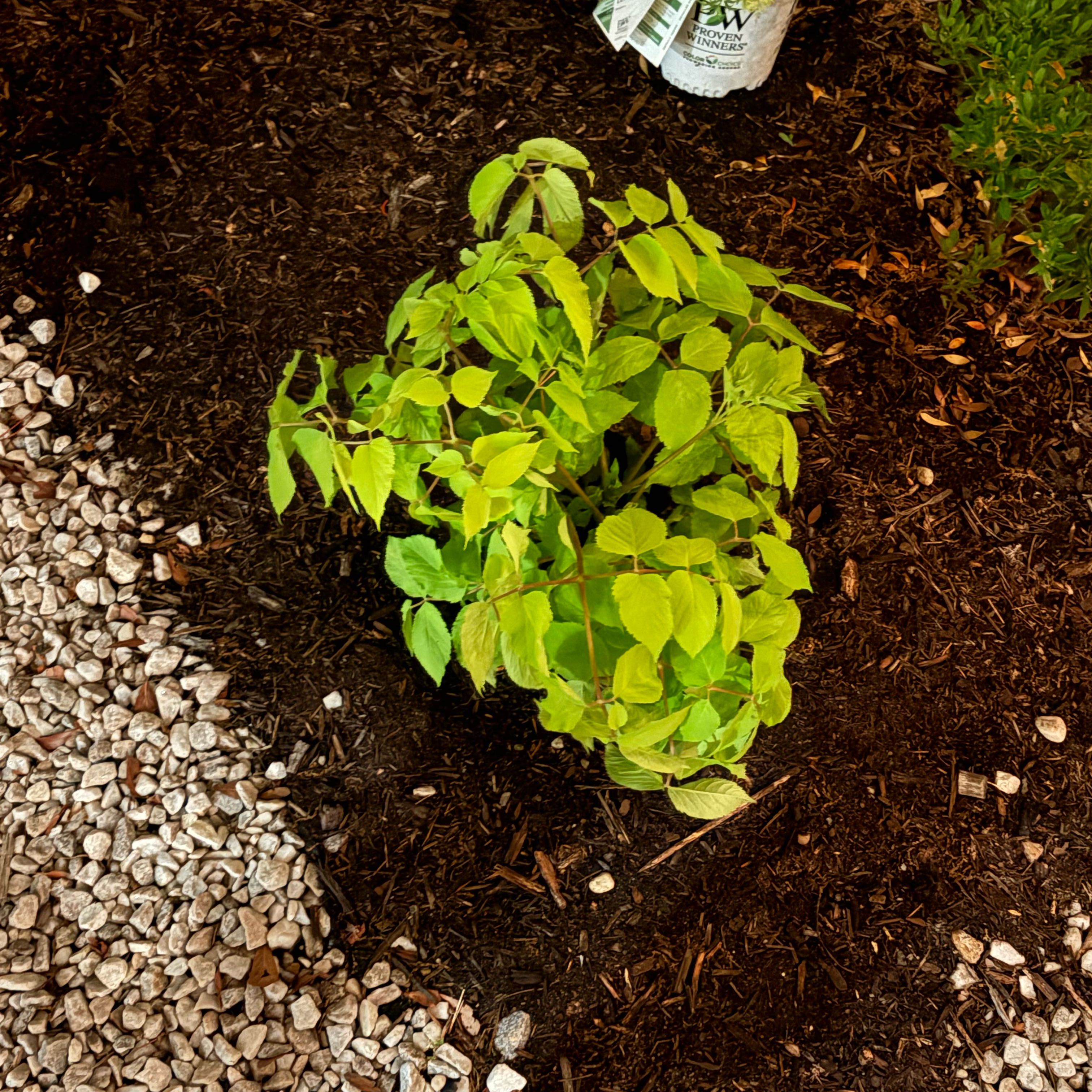
How to Grow a Sun King Aralia
Plant Sun King Aralia in part shade in rich moist soil, giving the clump 3 to 6 feet of clear space at maturity. The foliage glows bright chartreuse-gold in dappled light, and the whole plant dies back to the ground each winter, then returns in spring. Cut spent stems to the ground in late fall.

Where to plant
Sun King Aralia is a deciduous perennial for USDA zones 4 through 9. The plant matures into a 3 to 6 foot rounded clump in three to five years and dies back to the ground each winter, returning fresh each spring.
Sun
Part shade is the sweet spot for this plant. Two to four hours of morning sun followed by afternoon shade produces the brightest chartreuse-gold foliage. In deep shade the leaves turn green and lose the showy gold color, and in full afternoon sun the leaves scorch and fade in summer heat.
In zones 7 and warmer, lean toward more shade. In zones 4 and 5, lean toward more morning sun to keep the foliage color bright.
Drainage
Sun King Aralia likes moist but well-drained soil. The plant tolerates damper sites than most perennials but still rots in standing water. Dig a one-foot test hole and fill it with water. If it drains within a few hours, the spot is fine. If water sits overnight, pick a different spot or build a raised mound 6 inches above grade.
Soil
Rich loamy soil with plenty of organic matter is the goal. Work a few inches of compost into the planting area before you set the plant in. The soil should hold moisture between waterings without staying soggy. Average to poor soil produces a smaller, less showy plant.
Space
Give the clump at least 4 feet of clear space in every direction. A mature Sun King Aralia is wider than most people expect, and crowded plantings flop and shade each other out. The bright foliage looks best with a darker green backdrop, like an evergreen shrub or a shaded woodland edge.
How to plant
Plant in spring after the last frost or in early fall at least six weeks before the first hard frost. Container-grown plants can go in any time during the growing season but new roots establish fastest in cool moist weather.
-
1Dig a wide shallow hole Twice as wide as the root ball but only as deep. The roots spread sideways more than down, so a wide hole helps them establish faster than a deep one.
-
2Loosen the root ball If the roots are circling tightly inside the nursery pot, gently tease them apart or score the outside with a knife. Circling roots stay circling unless you break the pattern, even after the plant is in the ground.
-
3Set the plant at the original soil line The top of the root ball should sit even with the surrounding soil. A buried crown rots faster than one set right at grade, and a crown set too high dries out and produces weak shoots.
-
4Backfill with native soil and compost Mix a few handfuls of compost into the dug-out soil and use that to fill the hole. Press the soil down gently to remove air pockets but do not pack hard, since compacted soil keeps water from reaching the roots.
-
5Water deeply Soak the entire root zone until the top six inches feel uniformly damp. The first watering settles the soil around the roots and is the most important one of the first growing season.
-
6Mulch two to three inches deep Use shredded bark or composted leaves, kept a few inches back from the crown. Mulch keeps the shallow root zone cool, holds moisture between waterings, and reduces winter heaving in cold zones.
Watering and feeding
Watering
Water deeply once or twice a week through the first growing season to help the clump establish, soaking the root zone rather than splashing the leaves. Drip irrigation or a soaker hose at the base works best.
After the first year, Sun King Aralia still appreciates steady moisture. A deep weekly soak through summer dry spells keeps the foliage looking fresh and prevents the edges from crisping. The plant wilts a little on hot afternoons even in moist soil, and the leaves perk back up as the sun moves off the bed.
Feeding
Feed once in early spring as new growth pushes from the crown, using a balanced slow-release fertilizer. Heavy nitrogen produces lush floppy growth that needs staking, so use a gentle hand.
A two-inch layer of compost spread around the plant in early spring is often enough on its own. Skip feeding after midsummer so the plant can wind down naturally before winter dormancy.
Pruning
Sun King Aralia is a herbaceous perennial that dies back to the ground each winter, so there is no woody framework to prune. The main task is a once-a-year cleanup, plus occasional division when the clump gets too big for the spot.
Cutting back in late fall
After the first hard frost blackens the foliage, cut all the stems down to about two inches above the ground. Compost the cut foliage and renew the mulch over the crown to protect it through winter. Fresh shoots push up from the ground in late spring.
Dividing crowded clumps
Every four to six years, the clump may push outward and lose vigor in the center. In early spring as new shoots emerge, dig around the clump with a sharp spade and lift the whole crown. Split into two or three sections, each with healthy shoots and roots, and replant. Water in well and the divisions resume growth within weeks.
Light midseason cleanup
Through the growing season, snip off any individual stems that flop or break in a storm. Remove yellowing lower leaves as they appear. The plant does not need pinching or shaping otherwise, since the natural mound is the look.
Blooming and color
Sun King Aralia is grown for the bright chartreuse-gold foliage that lights up a shady spot from spring through fall. Tiny white flowers appear on tall stalks in midsummer, followed by small dark purple berries the birds enjoy.
Foliage through the seasons
New shoots push up from the crown in late spring with a deep gold flush, then mature to a bright chartreuse-yellow as the leaves expand. The color stays strong through summer and into early fall, then fades to a soft yellow as the plant prepares for dormancy.
The color is most intense in part shade. In too much sun the leaves bleach or scorch, and in too much shade they turn green. A spot with two to four hours of morning sun is usually the sweet spot.
Flowers and berries
Small clusters of creamy white flowers open on tall stalks above the foliage in midsummer, lasting about two to three weeks. The flowers attract pollinators including bees and small butterflies. Dark purple-black berries follow in late summer, which the birds enjoy.
Many growers cut the flower stalks off as buds appear, since the foliage is the main draw and removing the bloom keeps energy in the leaves.
Fall and winter
After the first frost, the foliage softens to muted yellow and then collapses. The whole plant disappears for winter once cut back, leaving an empty spot in the bed. Mark the spot with a label or a small stake so a fall planting nearby does not damage the crown during winter clean-up.
Common problems and pests
Sun King Aralia is a healthy reliable perennial when given moist soil and the right light, but a few issues come up often enough to learn to spot early.
Scorched or bleached leaves in summer
Too much direct afternoon sun, especially in zones 7 and warmer. Move the plant in fall to a spot with more afternoon shade, or plant a taller deciduous tree to shade the bed during the hottest hours. Once leaves are scorched they do not recover, so wait for next spring's flush of fresh leaves.
Green leaves instead of gold
Too much shade. The chartreuse-gold color needs a few hours of gentle morning sun to develop. Thin overhead branches to let more dappled light reach the bed, or move the clump in early spring to a brighter spot.
Yellow leaves in midsummer
Usually drought stress when summer dry spells hit. Mulch the root zone two to three inches deep and water deeply once a week during dry weather. Yellow lower leaves with healthy upper foliage often resolve on their own once watering catches up.
Floppy stems
Often a sign of too much shade or too much nitrogen, both of which produce weak stretched growth. Move to a spot with more morning sun and skip nitrogen-heavy fertilizer. Stake the floppy stems for the rest of the year and adjust the conditions for next season.
Holes or notches in leaves
Most often slugs or snails working at night, leaving silvery trails. Pick them off after dark by flashlight or set out shallow saucers of beer near the plant to trap them. A ring of crushed eggshells or diatomaceous earth around the crown also helps.
Chewed leaves with no slug trails
Likely caterpillars or earwigs. Inspect the plant at dusk to spot the culprit. Hand-pick the offenders into soapy water. Bt (Bacillus thuringiensis) spray controls caterpillars without harming bees, and a rolled newspaper trap at the base catches earwigs overnight.
White powdery film on leaves
Powdery mildew, common in humid weather with poor airflow. Improve airflow by thinning crowded stems and giving the clump enough space. Avoid splashing the leaves when watering, soaking the soil directly instead. Heavy outbreaks respond to a horticultural oil or potassium bicarbonate spray.
Wilting even when soil is wet
Root rot from a soggy site or chronic overwatering. Dig down a few inches to check whether the soil is truly draining. If it stays wet, the plant needs a better-drained spot or a raised bed. The plant rarely recovers from advanced rot, so move surviving healthy divisions to a new spot in spring.
Plant does not return in spring
Late spring frost damage on emerging shoots, crown rot from a wet winter, or vole damage to the roots under mulch. Wait until at least late spring before giving up, since this plant emerges later than most perennials. If nothing pushes by early summer, the crown is gone.
About This Article
