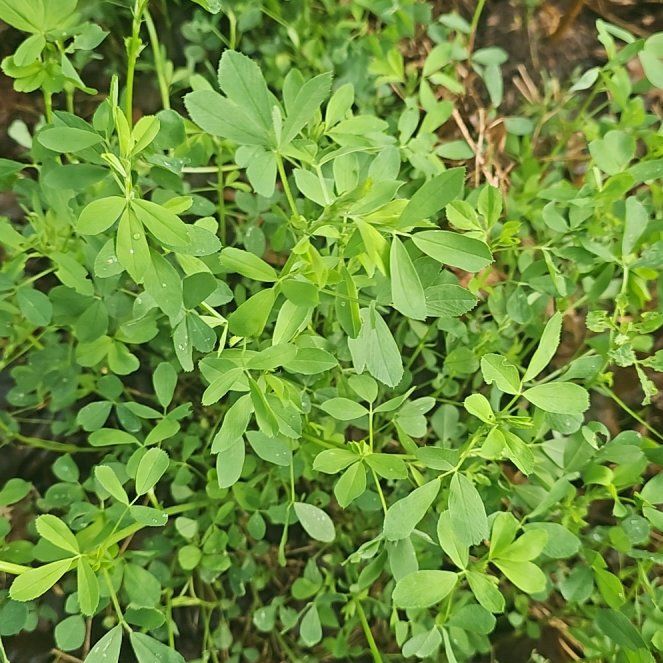
How to Grow Alfalfa
Sow Alfalfa in full sun in well-drained slightly alkaline soil, in spring or late summer. Cut three to four times a year for forage or green manure, taking the first cut at bud stage rather than full bloom. A healthy stand lasts four to six years before replanting.

Where to plant
Alfalfa is a deep-rooted perennial legume for USDA zones 3 through 11. The taproot can reach 15 feet or deeper, which is why the plant survives drought that kills shallower forages. Stands typically last four to six years before yield declines enough to warrant replanting.
Sun
Full sun is required. Eight or more hours of direct sun produces the heaviest tonnage per acre. Six hours is the minimum, and shaded ground simply does not grow productive Alfalfa.
Avoid spots with afternoon shade from windbreaks or buildings. Pick the most open spot on the property for an alfalfa field.
Drainage
Sharp drainage is non-negotiable. Alfalfa roots rot in standing water, even briefly. Walk the field after a heavy rain and mark any spots where water pools for more than a few hours. Those spots will fail and need to be tiled or skipped.
Heavy clay that stays wet is the most common reason an Alfalfa stand thins out within two years.
Soil
Alfalfa prefers neutral to slightly alkaline soil, with the best yields between pH 6.5 and 7.5. Acidic soils need amending with agricultural lime at the rate the soil test recommends, typically applied six to twelve months before planting so it can react with the soil. Without lime correction, an acidic field produces a thin weak stand.
Phosphorus and potassium levels matter more than nitrogen, since the plant fixes its own nitrogen through root nodules. A soil test before seeding is the single best investment in stand establishment.
Space and rotation
For forage and hay, sow at 15 to 20 pounds of seed per acre in rows six to eight inches apart, or broadcast and pack the seed in well. For a small garden cover crop, scatter seed at the same rate per square foot equivalent.
Avoid replanting Alfalfa in the same field for at least two years after the previous stand. The roots release compounds that suppress new alfalfa seedlings, a phenomenon called autotoxicity. Rotate through a cereal crop or row crop before returning Alfalfa to a field.
How to plant
Sow Alfalfa in early spring once the soil can be worked, or in late summer six to eight weeks before the first hard frost. Spring sowings produce a half-yield first year and full yield from year two on. Late summer sowings establish before winter and produce a full yield the following year.
-
1Test and amend the soil first A soil test six to twelve months before planting tells you whether lime is needed, and lime applied that far ahead has time to react with the soil. Adding lime at planting time does almost nothing for the first crop. Skip this step and the stand will be thin no matter what else you do.
-
2Prepare a fine firm seedbed Alfalfa seed is tiny and needs good seed-to-soil contact. The seedbed should be firm enough that your boot leaves only a slight imprint, and the surface should be raked or rolled smooth. Cloddy or fluffy seedbeds produce uneven stands.
-
3Inoculate the seed Treat the seed with rhizobium inoculant labeled specifically for Alfalfa before sowing. Most commercial seed comes pre-inoculated, but check the bag. Without the right rhizobium strain, the plant cannot fix nitrogen and grows poorly in low-nitrogen soils.
-
4Sow shallow Plant seed a quarter inch to half an inch deep, no deeper. Deep planting is the most common reason Alfalfa fails to germinate. In sandy soils sow on the deeper side, in heavier soils sow shallower.
-
5Pack the seed in After sowing, roll the field with a cultipacker or pack the seedbed firmly. The seed must be in tight contact with moist soil to germinate evenly. Loose seedbeds dry out faster than the seedlings can establish.
-
6Use a companion crop in spring sowings A light oats nurse crop sown with the alfalfa shields young seedlings from sun and wind and suppresses weeds. The oats are cut early as silage or hay before they out-compete the alfalfa, around 60 days after planting.
Watering and feeding
Watering
In rain-fed systems, established Alfalfa is famously drought-tolerant once the taproot reaches deep moisture, which takes one full growing season. The first six weeks after sowing are the most critical, when the seedlings have shallow roots and need consistent surface moisture.
In irrigated systems, deep infrequent watering on a weekly or twice-weekly schedule is much better than light daily watering. Pre-irrigate before sowing if topsoil is dry to ensure even germination.
Feeding
Alfalfa fixes its own nitrogen, so nitrogen fertilizer is not needed and actually shuts down the root nodule activity. Phosphorus and potassium feeding does matter, with rates determined by the annual soil test.
A topdressing of phosphorus and potassium after each cutting maintains stand vigor and tonnage. Boron is the trace element most often deficient on Alfalfa and is worth checking on the soil test, since boron deficiency reduces yield without obvious symptoms.
Cutting and maintenance
Alfalfa is cut multiple times per year for forage or green manure, and the timing of each cut affects both the current yield and the long-term stand vigor. The single most important rule is to cut at bud stage rather than full bloom, which gives the best balance of yield, protein, and root reserves.
When to cut
The first cut of the season happens at bud stage, when about 10 percent of the stems show flower buds but few or no flowers have opened. Cuts later in the season can go a little later, into early bloom, since the plant rebuilds root reserves between cuts.
Three to four cuts per year is typical depending on the climate. In hot dry zones, three cuts is the norm. In long-season irrigated systems, four to five cuts is achievable.
Cutting height
Cut three to four inches above the soil surface. Cutting closer than two inches damages the crown buds that produce regrowth, and the stand thins out faster.
The exception is the final cut of the season, which should be a full six weeks before the first hard frost. This last cut needs to leave enough top growth that the plant rebuilds root reserves before winter, so either skip the last cut entirely or take it earlier.
Stand renovation
After four to six years, stands typically thin out from disease pressure and traffic compaction. Rather than reseed Alfalfa into the same field, rotate to a cereal or row crop for two years before returning. The autotoxicity from old Alfalfa roots suppresses new seedlings sown into the same ground.
Harvest
Alfalfa is grown for forage, cover-crop benefit, or both. The crop produces three to six tons per acre per year of high-protein hay or 60 to 100 tons per acre of equivalent green biomass for soil building.
Cutting for hay
Cut at bud stage, when about 10 percent of the stems show buds but flowers have not yet opened. Hay cut at this stage carries the highest protein and the best palatability. Cuts taken at full bloom yield more tonnage but lower-quality forage with woody stems.
Let the cut crop dry in the field for two to four days depending on weather, turning the windrows once to speed drying. Bale at 18 to 20 percent moisture for small square bales or higher moisture for haylage in a sealed bag.
Cutting for cover crop
For green manure, mow the crop at flowering and either till the residue into the soil or leave it on the surface as a mulch. A summer Alfalfa cover crop tilled in at flowering adds significant nitrogen and organic matter for the next crop.
Allow at least two weeks between tilling in Alfalfa residue and planting the next crop, since fresh green tissue can tie up nitrogen briefly while it decomposes.
Seed saving
Alfalfa flowers must be tripped by bees to set seed, so seed production requires healthy pollinator populations. Most home growers do not produce seed and instead source it from a reputable supplier each replanting cycle. For seed production, leave a stand uncut through the entire summer and harvest when the pods turn brown and dry on the stems.
Common problems and pests
Most Alfalfa problems trace back to wet feet, acidic soil, or pest pressure during establishment. Once a healthy stand is set, the crop is famously productive and trouble-free for four to six years.
Thin stand the first year
Usually caused by acidic soil, poor seedbed firmness, or deep planting. Test the soil before next planting and apply lime well in advance. Prepare a firm seedbed and sow no deeper than half an inch. Overseed thin spots in early fall to fill in the stand.
Yellow stunted plants
Most often nitrogen deficiency caused by failed nodulation, often from skipping inoculant or sowing into very dry soil. Apply a small dose of nitrogen fertilizer to the current crop to recover yield, and inoculate the seed properly next planting.
Plants wilting in hot weather
Verticillium wilt or bacterial wilt kills affected plants and gradually thins the stand. There is no cure once established. Plant verticillium-resistant cultivars in future seedings. Avoid replanting Alfalfa in the same field for at least three years after the disease shows up.
Yellow leaves with brown V-shaped patches
Potato leafhopper feeding damage produces a characteristic yellow V on the leaf tip that gradually spreads. Insecticide treatment is justified only when populations exceed economic thresholds, since leafhopper-resistant cultivars handle most pressure. Cutting on schedule also removes leafhopper populations before they cause major damage.
Holes chewed in leaves
Alfalfa weevil larvae chew the upper leaves in spring, often heavy enough to skeletonize whole plants. Scout fields weekly in spring and treat when populations exceed thresholds. Cutting the first crop on time often controls the weevil without insecticide.
Cottony rot at the crown
Sclerotinia crown rot in wet cool weather kills plants from the crown outward, with characteristic white cottony growth at the base. Improve drainage and avoid overwatering. Resistant cultivars are the best long-term solution for fields with a history of the disease.
Stand thinning after three years
Normal age-related thinning combined with root and crown disease pressure. Plan for replanting after four to six years rather than trying to keep an older stand productive. Rotate through two years of another crop before reseeding Alfalfa in the same field.
Heavy weed pressure
Common in spring sowings without a nurse crop and in stands that have been overgrazed or scalped. A light oats nurse crop suppresses weeds during establishment. Mow at three or four inches rather than scalping the crowns. Established healthy stands shade out most weeds on their own.
Stunted plants with leaf yellowing
Phytophthora root rot in poorly drained fields. There is no rescue once symptoms appear, and the affected areas thin out within a season. Improve drainage with tile or skip the wet spots in future plantings. Plant Phytophthora-resistant cultivars.
About This Article
