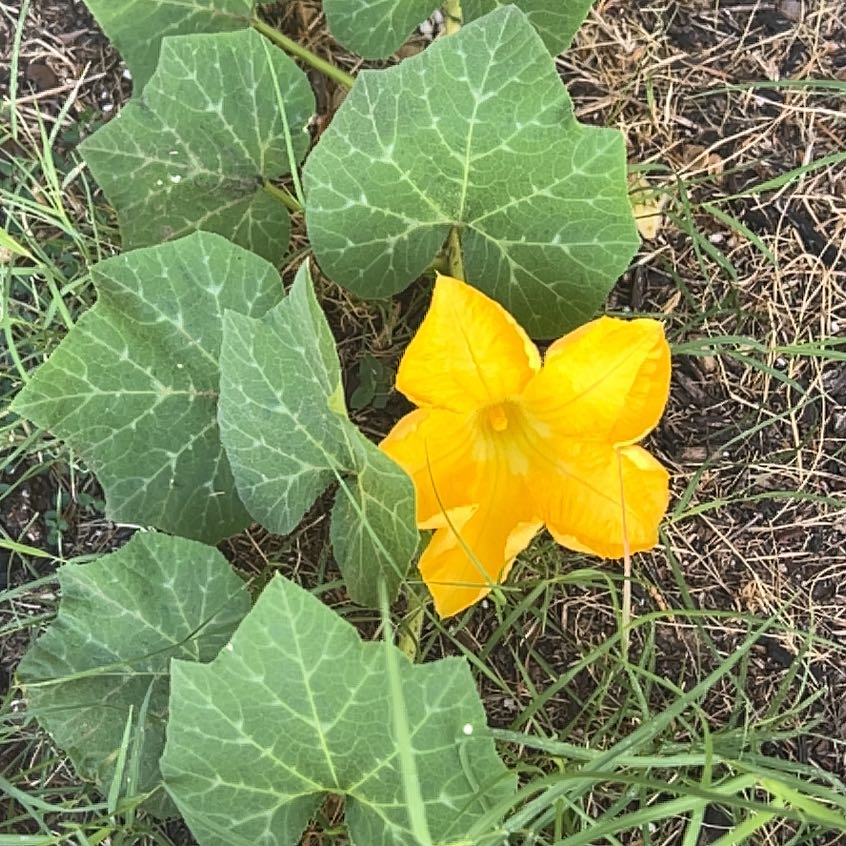
How to Water Summer Squash
Cucurbita pepo
Reviewed by Kiersten Rankel M.S.
Quick Answer
Water your summer squash every 2–4 days during peak summer growth, when the top inch of soil is dry. Containers in full sun may need water daily.
Goal is 1 to 2 inches of water per week as deep soakings. Squash drinks hard but powdery mildew is the bigger risk if you wet the leaves.

Stay on top of plant care
Get seasonal reminders for watering and fertilizing — personalized for your plants.
How Often and How Much to Water
Adjust the sliders below for your pot size, light, and setting. The numbers assume rich well-draining soil with compost and a setup with drainage.
Setting
Every
9days
Use
1cup
Average across the active season. See the phase chart below for how this shifts at flowering, harvest, and other stages.
Your Watering Rhythm Across the Season
Summer Squash is an annual, so its water needs shift dramatically across a single growing season rather than across the year. Match your cadence to the growth phase the plant is in.
Just planted
Keep evenly moist for the first 7 to 10 days while seedlings establish
Growing leaves
Every — days
Flowering and fruiting
Every — days
End of harvest
Every — days
Last few weeks
Reduce watering as the plant naturally winds down
How to Water Your Summer Squash
Soak deeply at the soil, never on the leaves. Squash drink hard but the wide leaves and the vine crown are fungus magnets if water sits on them.
1
Pour at the soil line around the base of the plants. Keep water off the leaves and stems to prevent powdery mildew and stem rot.
2
Soak slowly until water runs out the bottom of the pot or pools briefly on the soil. That tells you the rootball is fully wet.
3
Water in the morning so any splashed leaves dry by midday. Wet leaves overnight is the fastest way to invite mildew and bacterial wilt.
4
Use drip irrigation or a soaker hose if you have a row of plants. Overhead sprinklers water the leaves more than the roots.
Should You Water Your Summer Squash Today?
Always check the soil before you pour. Squash wilt dramatically in afternoon sun even when the soil is fine, so the soil moisture matters more than the leaf droop.
Hold off
Top inch of soil still feels damp
Leaves firm in the morning and evening
Stems hold up easily when not in peak heat
Flowers and fruit looking firm
Recent deep watering or rain in the last 2 days
Ready for water
Top inch of soil dry to the touch
Whole plant flopping in morning before sun heat
Leaves looking dull and not perking back up by evening
Soil crumbly to 2 inches down
Pot feels light when lifted
If Something Looks Off
Underwater and overwater both leave squash droopy and tired. The big confusion is afternoon midday wilt, which is a normal heat response even when the soil is just right.
Underwatered
Soil
Bone-dry through the rootball or pulled away from container sides
Leaves
Whole plant flops by morning and stays flopped through evening
Pace
Quick decline that bounces back within hours of a deep soak
Next steps
Soak slowly at the soil line until water runs deep into the rootball
If container soil has gone hydrophobic, set the pot in a basin of water for 15 minutes
Expect leaves to lift back up within 2 to 4 hours
Existing scorched leaves stay damaged but new growth pushes fast once the rootball rehydrates
Overwatered
Soil
Stays dark and soggy for days with a sour smell
Stem
Vine crown soft and browning at the soil line
Leaves
Lower leaves yellow all over and white powdery patches form on the upper leaves
Pace
Sudden collapse that worsens even after you stop watering
Next steps
Stop watering immediately and pull mulch back from the crown if you have it
Make sure the spot drains; if container, check the drainage holes are clear
Wait until the top 2 inches of soil are dry before the next watering
Remove any leaves with severe powdery mildew and any stems that have rotted at the base
Move forward watering only at the soil line in the morning
Got More Questions?
Why are my squash leaves yellowing?
Older lower leaves yellow naturally as the plant ages, especially after the first wave of fruit set. Across-the-board yellowing usually means soggy roots, nitrogen deficiency, or both.
Check the soil moisture first. If it has been damp for over a week, ease back on water and improve drainage. If the soil dries normally, side-dress with a balanced organic fertilizer and the new growth comes in greener.
Why are my squash flowers dropping without making fruit?
Most early flowers are male and have no fruit behind them, so they drop after blooming once. That is normal. After about 2 weeks you should see female flowers with a small swelling at the base.
If female flowers drop, the cause is usually too few pollinators or hot dry stress. Hand-pollinate with a small brush in the morning, keep the soil consistently moist, and the fruit should set within a week.
Should I water squash from below to prevent mildew?
Drip irrigation or a soaker hose at the soil line is the gold standard. A standard watering can poured at the base also works well. Avoid overhead sprinklers and never spray the leaves to clean them.
Morning watering plus good airflow between plants is the best mildew prevention. Spacing 2 to 3 feet between plants matters more than people think.
Is tap water OK for squash?
Yes. Squash are not sensitive to chlorine or fluoride at typical municipal levels. Cold water from the hose is fine for outdoor plants in summer.
How long can my squash go without water if I'm on vacation?
Container squash in full summer sun rarely make it past 3 days without help. Move pots to dappled shade, deep-soak everything, and ask a neighbor to check daily for any trip over 3 days.
In-ground squash with 2 to 3 inches of mulch handle 5 to 7 days in mild summer weather.
Why is white powder appearing on my squash leaves?
Powdery mildew. It almost always means the plant has been watered overhead or grown in still air, and it is more common in cool damp weather or when nights are humid.
Water only at the soil line going forward, thin out the most affected leaves to improve airflow, and consider a milk spray (1 part milk to 9 parts water) once a week. Heavy mildew late in the season is normal but can cut harvest short.
Stay on top of plant care
Get seasonal reminders for watering and fertilizing — personalized for your plants.
About This Article

Kiersten Rankel M.S.
Botanical Data Lead at Greg · Plant Scientist
Editorial Process
Watering guidance verified against Cucurbita pepo growth data from Greg's botanical database, cross-referenced with USDA hardiness zone data and published horticultural research.
3,020+ Greg users growing this plant
USDA hardiness zones 3a–12b