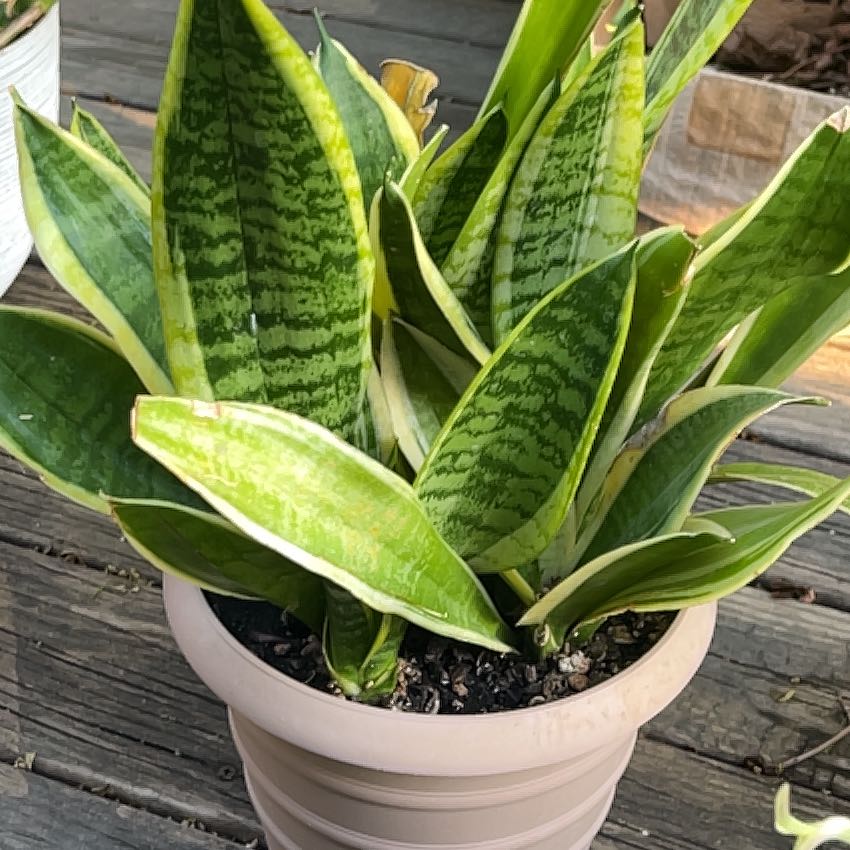
How to Water Snake Plant
Dracaena trifasciata
Reviewed by Kiersten Rankel M.S.
Quick Answer
Water your snake plant when the soil is bone-dry through the pot, typically every 14 to 21 days in spring and summer. Stretch to once a month or longer from late November through February.
Snake plants store water in fat underground stems. The biggest mistake is watering on the calendar instead of checking the soil.

Stay on top of plant care
Get seasonal reminders for watering and fertilizing — personalized for your plants.
How Often and How Much to Water
Adjust the sliders below for your pot size, light, and setting. The numbers assume a free-draining cactus or succulent mix and a pot with drainage.
Setting
Every
9days
Use
1cup
Your Watering Rhythm Across the Year
Soil dries faster in the growing season, which varies by region. Slow down watering in the off-season to avoid overwatering.
Pacific
Mountain
Midwest
Northeast
Southeast
JFMAMJJASOND
Growing season
Growing season
9days
Resting season
3–4weeks
How to Water Your Snake Plant
Soak the soil deeply, then let it dry all the way through before the next watering. Snake plants rot at the base when water sits, but they sail through long droughts.
1
Pour water at the soil line, away from the leaf bases. Water pooling between leaves at the crown can rot the whole plant.
2
Pour slowly until water runs out the drainage holes so the deep underground stems are soaked.
3
Empty the saucer after 10 minutes. Standing water is the number one snake plant killer.
4
Stick a finger 2 inches into the soil before the next round. If you feel any moisture, wait.
Should You Water Your Snake Plant Today?
Always check before you water. Snake plants tolerate weeks of dry, but a single overwatering with a tight cadence rots the underground stems and topples the leaves.
Hold off
Leaves stand firm and upright
Leaves smooth with no lengthwise wrinkles
Finger 2 inches into the soil feels any moisture
Soil sits tight against the pot wall
Pot feels heavy when lifted
Ready for water
Leaves wrinkled lengthwise along the blade
Leaves leaning or splaying outward
Soil bone-dry through the drainage hole
Visible gap between soil and pot wall
Pot feels almost empty
If Something Looks Off
Underwater and overwater look completely different on a snake plant. Underwater shows up as wrinkles in the leaves and overwater shows up at the leaf base.
Underwatered
Soil
Bone-dry through the pot and pulled away from the wall
Leaves
Lengthwise wrinkles running down the blade and leaves splaying outward
Pace
Slow decline over weeks that fully reverses within days of a soak
Next steps
Set the pot in a basin of room-temperature water for 30 minutes
Drain fully and return to its usual bright spot. Snake plants love sun and do not need protection while recovering
Expect wrinkles to plump back out within 3 to 7 days
Wait for new growth from the soil before fertilizing
Overwatered
Soil
Stays dark and damp for over 2 weeks with a sour smell
Leaves
Soft yellowing or browning at the base where leaves meet the soil
Pace
Sudden topple at the soil line that worsens even after you stop watering
Next steps
Stop watering and move to a bright airy spot
Slide the plant out of the pot and trim mushy roots and any rotted underground stem back to firm tan tissue
Repot in fresh free-draining cactus or succulent mix in a clean pot
Wait at least 2 weeks before the first watering, then water lightly
Remove leaves that have toppled at the base or yellowed completely
Got More Questions?
Should I water my snake plant less if it is in low light?
Yes, much less. A snake plant in a dim corner uses water at a fraction of the rate of one in a bright window and the soil takes much longer to dry.
Low-light snake plants often need water only every 4 to 6 weeks, even in summer. Always check the soil rather than reaching for a fixed calendar.
Why is my snake plant leaning over to one side?
A snake plant leaning at the base usually has rot in the underground stem from too much water. A snake plant leaning higher up the leaf usually got too dry and the leaf bent under its own weight.
Check the leaf base first. If it is soft or browning, you are looking at rot and need to depot. If the base is firm, a deep watering and steady cadence usually fix it.
How long can my snake plant go without water?
Easily 6 to 8 weeks, often longer. Snake plants store huge amounts of water in their underground stems and barely register a missed watering or two.
For any trip under 2 months, no watering plan is needed. Just give a deep soak when you return.
Can I use a self-watering pot for my snake plant?
No. Self-watering pots keep the lower roots and underground stems wet, which is exactly the condition snake plants rot in.
A regular pot with drainage holes and a gritty mix is the only safe combination. Bottom-water occasionally with a 30 minute soak in a basin if you want, but never with a wicking reservoir.
Do little flies in the soil mean I am overwatering?
Yes. Fungus gnats need damp topsoil to breed and a snake plant should never have damp topsoil for more than a few days.
If you see them, you are watering too often. Let the soil dry all the way through, top with a thin layer of horticultural sand, and the gnats clear out within two weeks.
Why are the tips of my snake plant brown and dry?
Brown crispy tips on a snake plant usually mean an extended dry stretch beyond what even this drought-tolerant species tolerates. Cold drafts and chemical burn from softened tap water cause the same look.
Tighten the cadence slightly and switch to filtered or rainwater if you have softened water. The brown tips will not heal but new leaves come in clean.
Stay on top of plant care
Get seasonal reminders for watering and fertilizing — personalized for your plants.
About This Article

Kiersten Rankel M.S.
Botanical Data Lead at Greg · Plant Scientist
Editorial Process
Watering guidance verified against Dracaena trifasciata growth data from Greg's botanical database, cross-referenced with USDA hardiness zone data and published horticultural research.
127,830+ Greg users growing this plant
USDA hardiness zones 9a–11b