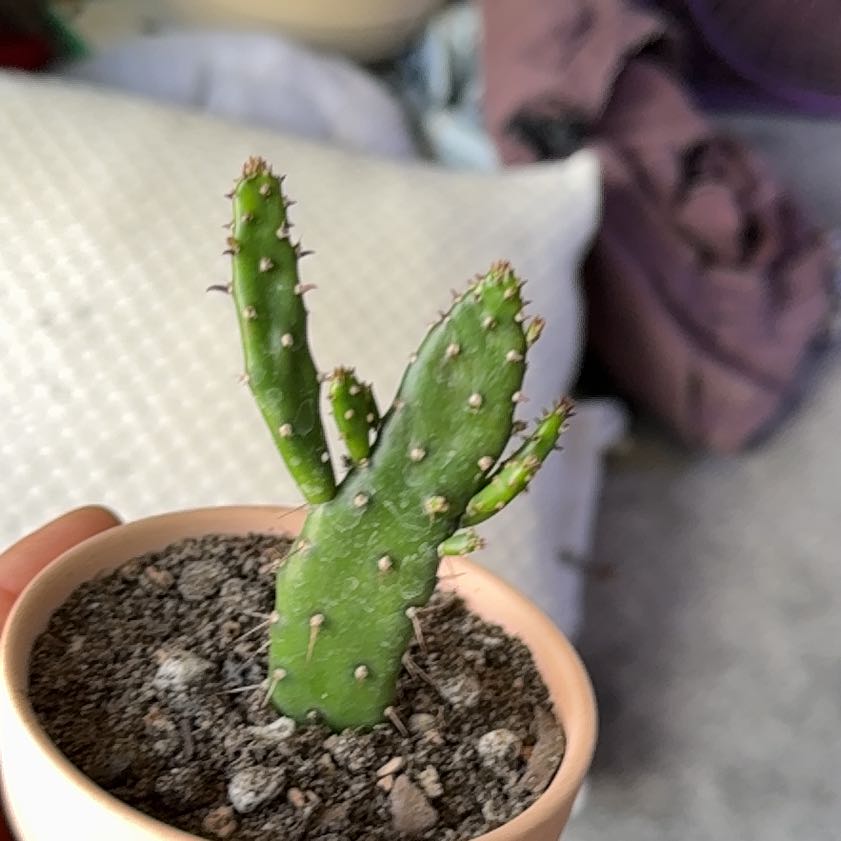
How to Water Drooping Prickly Pear
Opuntia monacantha
Reviewed by Kiersten Rankel M.S.
Quick Answer
Water your Drooping Prickly Pear when the soil is bone-dry through the pot, typically every 14 to 21 days in spring and summer. Stretch to once a month or longer in winter.
Prickly pears store water in their thick pads and tolerate long droughts. Watering on the calendar is the biggest mistake.

Stay on top of plant care
Get seasonal reminders for watering and fertilizing — personalized for your plants.
How Often and How Much to Water
Adjust the sliders below for your pot size, light, and setting. The numbers assume a gritty cactus mix with at least 50% mineral content and a pot with drainage.
Setting
Every
9days
Use
1cup
Your Watering Rhythm Across the Year
Soil dries faster in the growing season, which varies by region. Slow down watering in the off-season to avoid overwatering.
Pacific
Mountain
Midwest
Northeast
Southeast
JFMAMJJASOND
Growing season
Growing season
9days
Resting season
3–4weeks
How to Water Your Drooping Prickly Pear
Soak deeply, then let the soil dry all the way through before the next round. Prickly pears rot at the base when water sits, but they sail through long droughts and bloom hard with the right rhythm.
1
Pour water at the soil line, away from the pads. Water pooling between pads can rot the joints in humid conditions.
2
Pour slowly until water runs out the drainage holes so the deep roots are soaked.
3
Empty the saucer immediately. Standing water at the base rots the roots and the lower pads fast.
4
Wait for the soil to be bone-dry through the pot before the next watering. A long thin stake or chopstick pulled from the soil should come out clean and dry.
Should You Water Your Drooping Prickly Pear Today?
Always check before you water. Prickly pears tolerate weeks of dry, but a single overwatering with a tight cadence rots the roots and causes the pads to soften from the bottom up.
Hold off
Pads feel firm and look full
Pads sitting tight on their joints
Soil bone-dry on top
Soil sits tight against the pot wall
Pot feels heavy when lifted
Ready for water
Pads looking thin and slightly wrinkled
Older pads soft to the touch
Soil bone-dry through the drainage hole
Visible gap between soil and pot wall
Pot feels almost empty
If Something Looks Off
Underwater and overwater look completely different on a prickly pear. Underwater shows up as wrinkled thinning pads and overwater shows up at the joints and soil line.
Underwatered
Soil
Bone-dry through the pot and pulled away from the wall
Leaves
Pads thinning, wrinkling, and softening from the older lower pads
Pace
Slow decline over weeks that fully reverses within days of a soak
Next steps
Soak deeply at the soil line, watering until it streams out the drainage holes
Return to its bright sunny spot. Prickly pears love direct sun and do not need protection while recovering
Expect pads to plump back out within 5 to 10 days
Wait for new growth before fertilizing
Overwatered
Soil
Stays damp for over a week with a sour smell
Stem
Pad joints turning yellow or soft at the soil line
Leaves
Pads yellowing and becoming squishy with no warning
Pace
Sudden collapse that worsens even after you stop watering
Next steps
Stop watering and move to the brightest sunniest spot you have
Slide the plant out of the pot using thick gloves or rolled newspaper for the spines. Trim mushy roots back to firm white tissue
Cut off any squishy yellow pads at a firm joint and let the wound seal over for a few days
Repot in fresh gritty cactus mix in a clean pot
Wait at least 2 weeks before the first watering, then water lightly
Got More Questions?
Should I water my Drooping Prickly Pear less in winter?
Yes, much less. Prickly pears slow down or go dormant in winter and the soil takes weeks to dry out indoors.
Water once a month or even less in cool months, and only when the soil is fully dry through the pot. Overwatering in winter is the single most common way these plants are killed.
How long can my Drooping Prickly Pear go without water?
Easily 6 to 8 weeks in summer and 2 to 3 months in winter. Prickly pears store huge amounts of water in their pads and barely register a missed watering or two.
For any normal vacation no watering plan is needed. Just give a deep soak when you return if the soil has gone fully dry.
Why are my prickly pear pads turning yellow?
Yellow soft pads with mushy joints almost always mean overwatering. Yellow firm pads with thinning shape usually mean the plant has gone too long dry.
Check the soil first. If it has stayed damp, ease the cadence. If it is bone-dry, soak deeply. The two failure modes look different in the touch test.
Can I use a self-watering pot for my Drooping Prickly Pear?
No. Self-watering pots keep the lower roots wet, which is exactly the condition prickly pears rot in.
A regular terra-cotta pot with drainage holes and a gritty mix is the best combination. The terra-cotta wicks moisture out and helps the soil dry faster between waterings.
Why are pads dropping off my prickly pear?
Pad drop is usually one of two things. Either the joints are rotting from too much water or the pads are propagating themselves the way prickly pears do in the wild.
Check the joint of the dropped pad. If it is mushy and brown, you have a watering problem. If it is firm and tan, it just self-rooted. Set it on dry soil and a new plant grows from it.
Do little flies in the soil mean I am overwatering?
Yes. Fungus gnats need damp topsoil to breed and prickly pear soil should never stay damp for more than a couple of days.
If you see them, you are watering too often. Let the soil dry all the way through, top with a thin layer of horticultural grit, and the gnats clear out within two weeks.
Stay on top of plant care
Get seasonal reminders for watering and fertilizing — personalized for your plants.
About This Article

Kiersten Rankel M.S.
Botanical Data Lead at Greg · Plant Scientist
Editorial Process
Watering guidance verified against Opuntia monacantha growth data from Greg's botanical database, cross-referenced with USDA hardiness zone data and published horticultural research.
5,976+ Greg users growing this plant
USDA hardiness zones 9a–11b