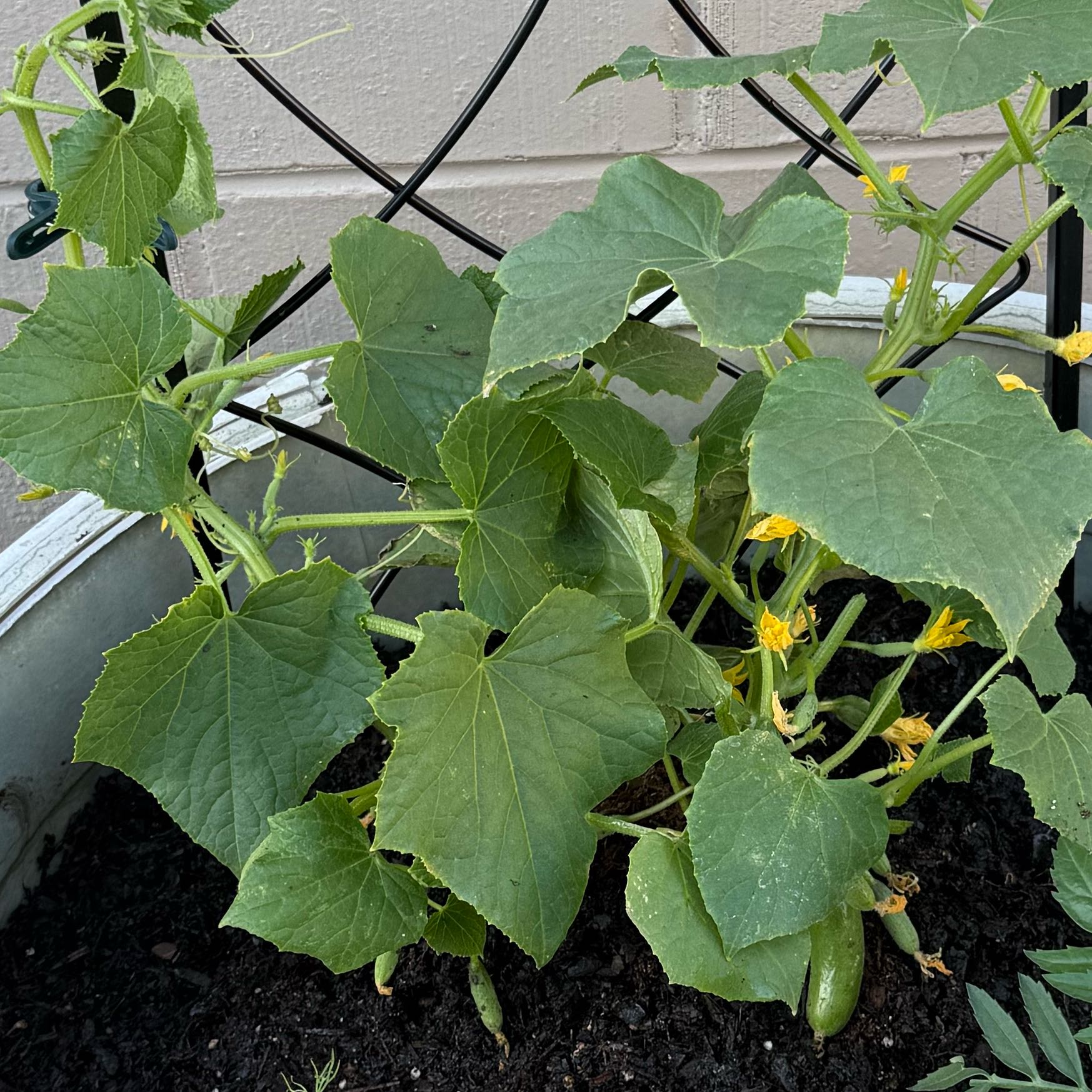
How to Water Cucumber
Cucumis sativus
Reviewed by Kiersten Rankel M.S.
Quick Answer
Water cucumber plants deeply every 1 to 2 days during summer fruiting and every 3 to 4 days in cooler spring or fall weather. Cucumbers turn bitter, hollow, and misshapen when the soil swings between bone-dry and soaked, especially once fruits start forming.
Pour at the base of the plants in the morning, not on the leaves. Wet leaves in warm weather invite mildew that can take down a vine in a week.

Stay on top of plant care
Get seasonal reminders for watering and fertilizing — personalized for your plants.
How Often and How Much to Water
Adjust the sliders below for your pot size, light, and setting. The numbers assume rich well-draining soil with compost and a setup with drainage.
Setting
Every
9days
Use
1cup
Average across the active season. See the phase chart below for how this shifts at flowering, harvest, and other stages.
Your Watering Rhythm Across the Season
Cucumber is an annual, so its water needs shift dramatically across a single growing season rather than across the year. Match your cadence to the growth phase the plant is in.
Just sprouted
Every — days
Vining and growing leaves
Every — days
Flowering and fruiting
Every — days
End of season
Every — days
How to Water Your Cucumber
Soak the root zone, keep the leaves dry. The steps below pair a deep drink with the airflow cucumbers need to stay clear of mildew.
1
Water at the base of the plant in the early morning so the roots load up before the day heats up.
2
Pour slowly until the soil is moist a few inches down — a quick spray runs off and never reaches the roots.
3
Keep the leaves dry. Wet leaves in warm weather invite mildew.
Should You Water Your Cucumber Today?
Cucumbers wilt fast when they are thirsty and rot fast when they are not. A 30-second soil check in the morning saves you guesswork all day.
Hold off
Soil 2 inches down is cool and damp
Leaves are flat and full of water in the morning
Fruits filling out and uniform in shape
Vine tips reach upward
Container or grow bag feels heavy
Ready for water
Top 2 inches of soil are dry
Big leaves flag by midday in mild heat
New flowers drop before setting fruit
Fruits taper or curl at the blossom end
Container or grow bag feels light
If Something Looks Off
Cucumbers under stress do not look subtle. The trick is reading whether the soil is the problem or the leaves are picking up disease from getting wet.
Underwatered
Soil
Dry to finger depth and pulled from the pot or bed edge
Stem
Growing tip droops by afternoon
Leaves
Flag down sharply midday and perk back up after a soak
Pace
Reverses within hours of watering
Next steps
Soak the root zone slowly until water runs out the bottom of the bed or pot
Add 2 to 3 inches of fresh mulch around the plants
Move container plants out of the hottest afternoon sun until the vine recovers
Overwatered
Soil
Stays dark and squishy for days, sometimes with a sour smell
Stem
Soft or browning at the soil line, sometimes with mushy lower leaves
Leaves
Yellow from the bottom up, often with a powdery white film if humidity is high
Pace
Decline keeps going even after you stop watering and worsens after rainy stretches
Next steps
Stop watering until the top 2 inches of soil are dry
Pull mulch back from the stem to expose the base and improve airflow
If the stem at the soil line is soft, the plant is unlikely to recover — pull it and replant in fresh soil
Got More Questions?
How long should I wait to water after transplanting cucumber seedlings?
Water deeply right after planting so the roots settle in good contact with the soil.
For the next week, keep the top 2 inches just barely moist. Once you see new growth, switch to the deep soak rhythm above.
Why are my cucumbers bitter?
Bitterness traces back to inconsistent water during fruit development. The fruit pulls out a bitter compound from the leaves when the plant is stressed.
The fix is steady moisture from flowering through harvest, not a cure once a fruit has set. Keep the soil consistently moist and harvest fruits young — the youngest fruits are sweetest.
Should I water cucumbers from below or with a sprinkler?
From below at the soil line, every time. Wet leaves are the leading cause of powdery and downy mildew on a cucumber vine.
Soaker hose or drip irrigation is ideal. A watering can poured at the base works fine if you take care to keep the leaves dry.
How much water do cucumbers need in a heat wave?
On a 95-degree day, a fruiting vine can use the equivalent of an inch of water in 24 hours.
Water early in the morning before the heat builds. If leaves are still flagging by sunset, give a second short soak at the base. Keep that mulch deep.
Why are my cucumber leaves turning white?
White powdery patches on the leaves are powdery mildew, a fungus problem made worse by wet leaves and crowded plants.
Water at the soil line, not on the leaves. Improve airflow by pruning the inner canopy. Once mildew shows up it spreads fast — remove the worst leaves promptly to slow it down.
Can I save a cucumber plant that wilted overnight without warning?
Sudden complete wilt with no recovery from watering is a signal of bacterial wilt or stem rot, not thirst.
Check the stem near the soil. A clean firm stem means the plant ran out of water and will recover. A soft, hollow, or stringy stem means the vine is gone. Pull it before it spreads to neighbors.
Stay on top of plant care
Get seasonal reminders for watering and fertilizing — personalized for your plants.
About This Article

Kiersten Rankel M.S.
Botanical Data Lead at Greg · Plant Scientist
Editorial Process
Watering guidance verified against Cucumis sativus growth data from Greg's botanical database, cross-referenced with USDA hardiness zone data and published horticultural research.
4,062+ Greg users growing this plant
USDA hardiness zones 4a–12b