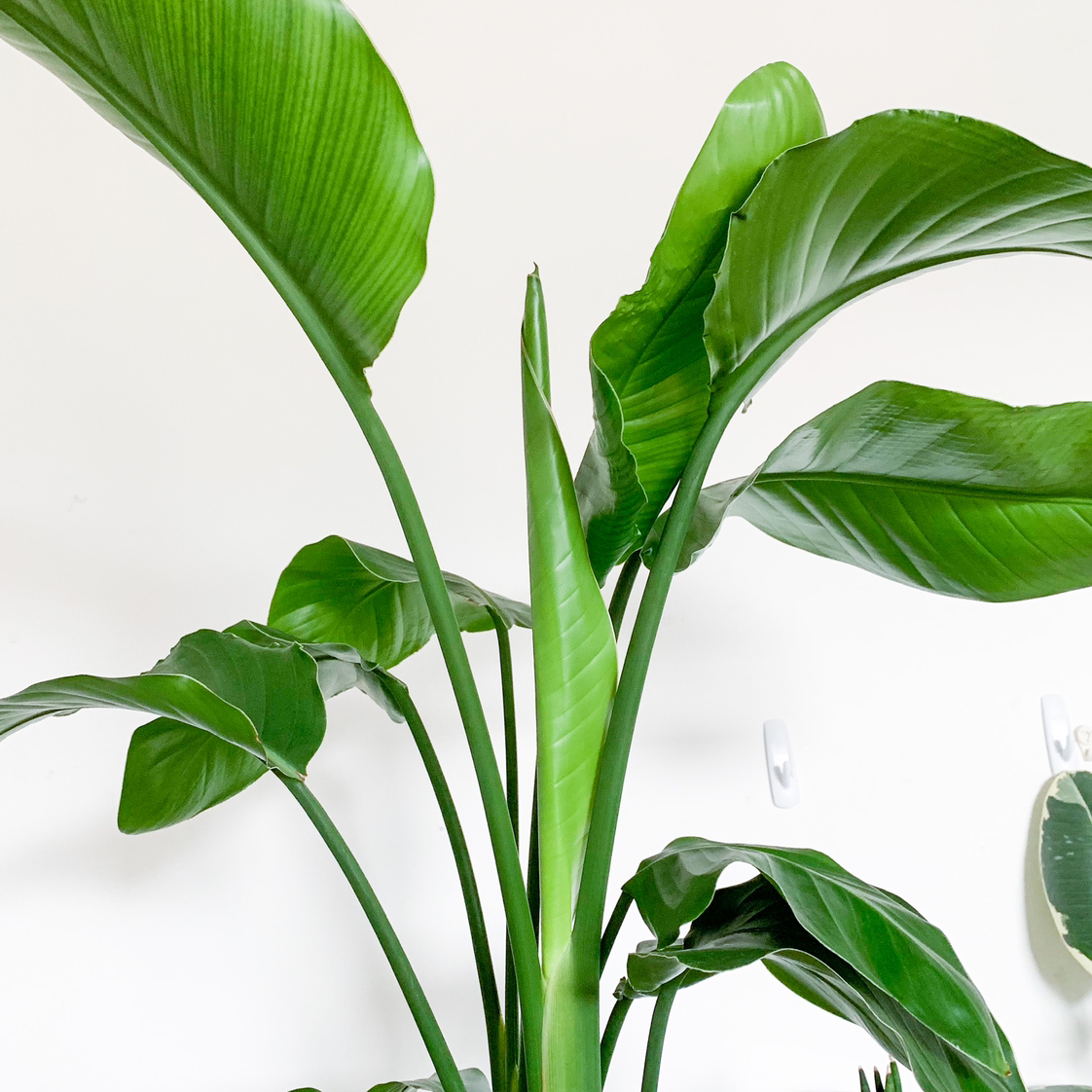
How to Water Bird of Paradise
Strelitzia reginae
Reviewed by Kiersten Rankel M.S.
Quick Answer
Water your Bird of Paradise every 7–10 days from May through September, when the top 2 inches of soil are dry. Stretch to every 14–18 days from late November through February.
Bird of Paradise has thick underground stems that hold water. Soak deeply, then let the top dry well between drinks.

Stay on top of plant care
Get seasonal reminders for watering and fertilizing — personalized for your plants.
How Often and How Much to Water
Adjust the sliders below for your pot size, light, and setting. The numbers assume a well-draining mix with perlite and a pot or site with drainage.
Setting
Every
9days
Use
1cup
Your Watering Rhythm Across the Year
Soil dries faster in the growing season, which varies by region. Slow down watering in the off-season to avoid overwatering.
Pacific
Mountain
Midwest
Northeast
Southeast
JFMAMJJASOND
Growing season
Growing season
9days
Resting season
3–4weeks
How to Water Your Bird of Paradise
Soak deeply, drain fully. Bird of Paradise has a wide thirsty root system but rots if the rootball stays soggy.
1
Use room-temperature water at the soil line. Cold winter tap water can slow recovery, but anything close to room temp is fine.
2
Pour slowly until water runs out the drainage holes. That tells you the rootball is fully soaked.
3
Empty the saucer after 10 minutes so the roots aren't sitting in standing water.
4
Lift the pot before and after watering. The weight difference is the most reliable check between waterings on a large plant.
Should You Water Your Bird of Paradise Today?
Bird of Paradise tolerates a missed watering far better than soggy roots. Crispy edges on old leaves are mostly cosmetic, while root rot can collapse the whole plant in a week.
Hold off
Leaves firm and held upright
Leaf paddles unfurled and stiff
Top inch of soil still feels damp
Soil sits tight against the pot wall
Pot feels heavy when lifted
Ready for water
Leaves curling along the long edge
Newer leaves drooping at the tip
Top 2 inches of soil dry and crumbly
Visible gap between soil and pot wall
Pot feels noticeably light
If Something Looks Off
Bird of Paradise shows drought and rot with similar leaf yellowing and curling. The soil and the speed of decline distinguish them.
Underwatered
Soil
Bone-dry and pulled away from the pot edge
Leaves
Long edges curling inward with crispy tips on the oldest leaves
Pace
Slow decline that perks up within a day of a deep soak
Next steps
Set the pot in a basin of room-temperature water for 30 minutes so the rootball rehydrates from below
Drain fully and move out of direct afternoon sun while it recovers
Expect leaf curl to relax within 12 to 24 hours
Existing crispy edges won't recover, but the leaf still photosynthesizes from the green parts. Wait for new leaf growth before fertilizing
Overwatered
Soil
Stays dark and damp for over a week with a sour smell
Stem
Soft or blackened where the leaf bases meet the soil
Leaves
Bottom leaves yellow all over with stunted new growth
Pace
Sudden collapse that worsens even after you stop watering
Next steps
Stop watering and move to a bright airy spot
Slip out of the pot and trim any black mushy roots back to firm white tissue
Repot in fresh well-draining mix in a clean pot with drainage holes
Wait until the top 2 inches of soil are dry before the next watering
Watch for fungus gnats above the soil, a near-universal sign the mix has stayed too wet too long
Got More Questions?
Why won't my Bird of Paradise bloom?
Most often light, age, and pot size, not watering. Plants need 4 to 6 hours of direct sun daily and at least 4 to 5 years of mature growth before they bloom. Indoor plants near a window often never bloom.
If light and age check out, slightly cramped roots in a snug pot encourages blooming. Repot only when the rhizome is pushing the sides of the pot.
Why are the long edges of my Bird of Paradise leaves splitting?
Splitting is normal and not water-related. The species evolved with paddle-shaped leaves that split along natural lines as they age, which lets wind pass through without uprooting the plant.
Damaged leaves do split more often, so reduce wind exposure and avoid bumping the plant in heavy traffic areas. The leaves still photosynthesize fully even when split.
Can I use tap water on my Bird of Paradise?
Yes. Bird of Paradise is not particularly sensitive to chlorine or fluoride.
If your tap water is heavily softened, salt buildup over time can cause leaf-tip browning. Flush with plain water until it runs out the drainage holes 2 or 3 times every few months.
How long can my Bird of Paradise go without water?
About 2 to 3 weeks for a mature plant in a 12 inch or larger pot, longer in a cool room.
Deep-water before any extended trip and move out of direct sun to slow water loss. Bird of Paradise is more drought-tolerant than its dramatic leaves suggest.
Should I water differently for an outdoor Bird of Paradise?
Yes, more often in summer heat. Plants in zones 10 and 11 in the ground need water every 3 to 5 days during summer above 85F.
In cooler months they tolerate weeks of dry weather. In zones below 10 the plant won't survive winter outdoors and lives in a container that comes inside before frost.
Why are the bottom leaves of my Bird of Paradise yellowing?
If only old leaves yellow and drop one at a time, that's natural turnover. The plant continually retires older leaves as new ones emerge from the center.
If 3 or more leaves yellow at once, check soil moisture. Soggy soil for over a week is the most common cause. Dry soil with brown leaf edges points the other way.
Stay on top of plant care
Get seasonal reminders for watering and fertilizing — personalized for your plants.
About This Article

Kiersten Rankel M.S.
Botanical Data Lead at Greg · Plant Scientist
Editorial Process
Watering guidance verified against Strelitzia reginae growth data from Greg's botanical database, cross-referenced with USDA hardiness zone data and published horticultural research.
4,098+ Greg users growing this plant
USDA hardiness zones 10a–11b