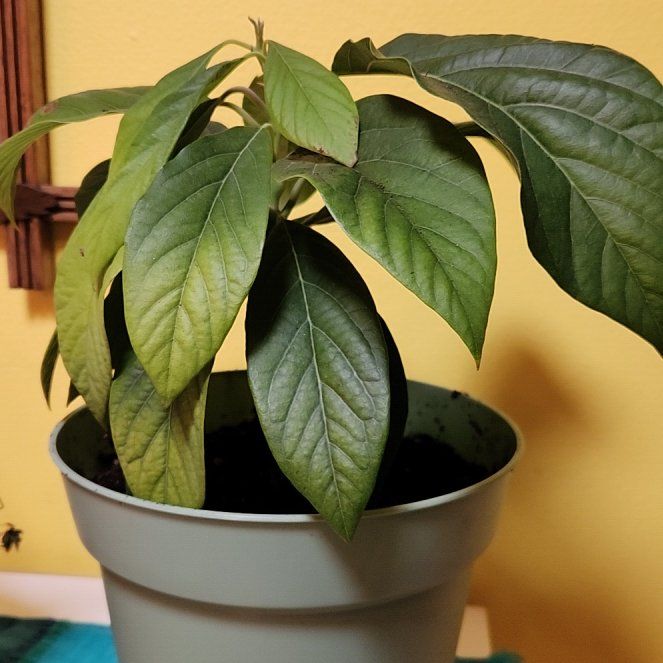
How to Water an Avocado Tree
Persea americana
Reviewed by Kiersten Rankel M.S.
Quick Answer
Water your avocado tree deeply every 5 to 10 days when the top inch of soil is dry. Stretch to every 2 to 3 weeks in winter when growth slows. Avocado roots are shallow and oxygen-hungry, so they hate both standing water and bone-dry soil.
Use room-temperature water and let tap water sit out overnight if it is heavily chlorinated. Avocados are notorious for crispy leaf edges from chlorine and salt buildup in tap water.

Stay on top of plant care
Get seasonal reminders for watering and fertilizing — personalized for your plants.
How Often and How Much to Water
Adjust the sliders below for your pot size, light, and setting. The numbers assume a chunky well-draining mix with perlite or pumice and a pot with drainage.
Setting
Every
9days
Use
1cup
Your Watering Rhythm Across the Year
Soil dries faster in the growing season, which varies by region. Slow down watering in the off-season to avoid overwatering.
Pacific
Mountain
Midwest
Northeast
Southeast
JFMAMJJASOND
Growing season
Growing season
9days
Resting season
3–4weeks
How to Water Your Avocado
Soak deeply, drain fully, watch the leaves. The steps below give the rootball a real drink while preventing the salt buildup that crisps avocado leaves.
1
Use room-temperature water — cold water from the tap can shock the roots.
2
Pour slowly until water runs out the drainage holes, then keep going for another 5 to 10 seconds to flush salt buildup.
3
Empty the saucer within 15 minutes — standing water at the roots is the fastest way to lose an avocado.
Should You Water Your Avocado Today?
Avocados drop hints before they drop leaves. A daily glance at the new growth and a finger check at the soil line tell you what to do.
Hold off
Top inch of soil is dark and cool
Leaves are full of water and the new tips upright
Pot feels heavy
Soil sits tight against the pot wall
Leaf edges smooth and uniformly green
Ready for water
Top inch of soil is dry
Leaves feel soft and hang from the leaf stem
New growth tips wilt in afternoon sun
Visible gap between soil and pot wall
Pot feels light
If Something Looks Off
Avocados are dramatic when something is off. The challenge is sorting overwatering from chlorine burn, since both cause brown leaf tips. Check the soil and the water source before fixing anything.
Underwatered
Soil
Dry through the rootball and pulled from the pot edge
Stem
New growth tips wilt by mid-afternoon
Leaves
Soft, hang limp, then crisp at the tips
Pace
Bounces back within hours of a good soak
Next steps
Bottom-soak the pot in a basin of room-temperature water for 20 minutes
Drain fully and move out of direct afternoon sun for a few days
Resume the deep soak rhythm and add a layer of mulch on top of the soil to slow evaporation
Overwatered
Soil
Stays dark and damp for a week or more, sometimes with a sour smell
Stem
Browning or soft at the soil line, sometimes with mushy lower bark
Leaves
Yellow from the bottom up with brown edges, often dropping suddenly
Pace
Sudden collapse that worsens even after you stop watering
Next steps
Stop watering and move to the brightest spot you have with good airflow
Slip the tree out of the pot. Healthy roots are pale and firm; rotting roots are dark and mushy
Trim rotted roots back to firm tissue and repot in fresh chunky mix with extra perlite. Use a slightly smaller pot if you removed a lot of root mass
Wait until the top 2 inches of fresh soil are dry before the first watering
Got More Questions?
Why do my avocado leaves have brown crispy edges?
Brown leaf edges on avocados almost always trace back to chlorine, salt, or fluoride buildup in tap water — not how often you water.
Switch to filtered water or rainwater, or leave tap water out overnight in an open container before using. Once a month, water with extra plain water until you see it running clean out the bottom of the pot to rinse out salt buildup. Existing crispy edges will not heal but new growth will come in clean.
How long should I wait to water after repotting an avocado?
Water deeply right after repotting to settle the soil around the roots.
Then hold off until the top inch of soil is dry, often a week or more. Avocados push roots into slightly drier soil after a repot.
Can I grow an avocado from a pit, and how do I water it?
Yes. The classic toothpick-and-water method works fine for sprouting. Once you transplant the seedling to soil, follow the deep-soak rhythm above.
Pit-grown avocados rarely fruit indoors but make beautiful houseplants. Treat watering the same as any potted avocado tree.
My avocado leaves drooped overnight. Is it underwatered?
Maybe. Lift the pot and check the soil first. A light pot with dry soil means the tree is thirsty.
A heavy pot with soft drooping leaves and yellowing at the base usually means overwatering and the start of root rot. The remedy is the opposite, so always check before you act.
Do I need to humidify the air around my avocado tree?
Avocados appreciate moderate humidity but rarely need a humidifier. Most leaf-edge browning is water quality, not humidity.
If indoor air drops below 30 percent in winter, group plants together or run a small humidifier. That helps with general comfort but will not fix salt buildup from tap water.
When does an avocado tree need less water?
Avocados slow down in winter, especially when temperatures drop below 60F at night. Water roughly half as often during this rest period.
They also need less water in cool gloomy weather. Always check the soil before watering rather than relying on a fixed schedule.
Stay on top of plant care
Get seasonal reminders for watering and fertilizing — personalized for your plants.
About This Article

Kiersten Rankel M.S.
Botanical Data Lead at Greg · Plant Scientist
Editorial Process
Watering guidance verified against Persea americana growth data from Greg's botanical database, cross-referenced with USDA hardiness zone data and published horticultural research.
9,498+ Greg users growing this plant
USDA hardiness zones 9a–11b