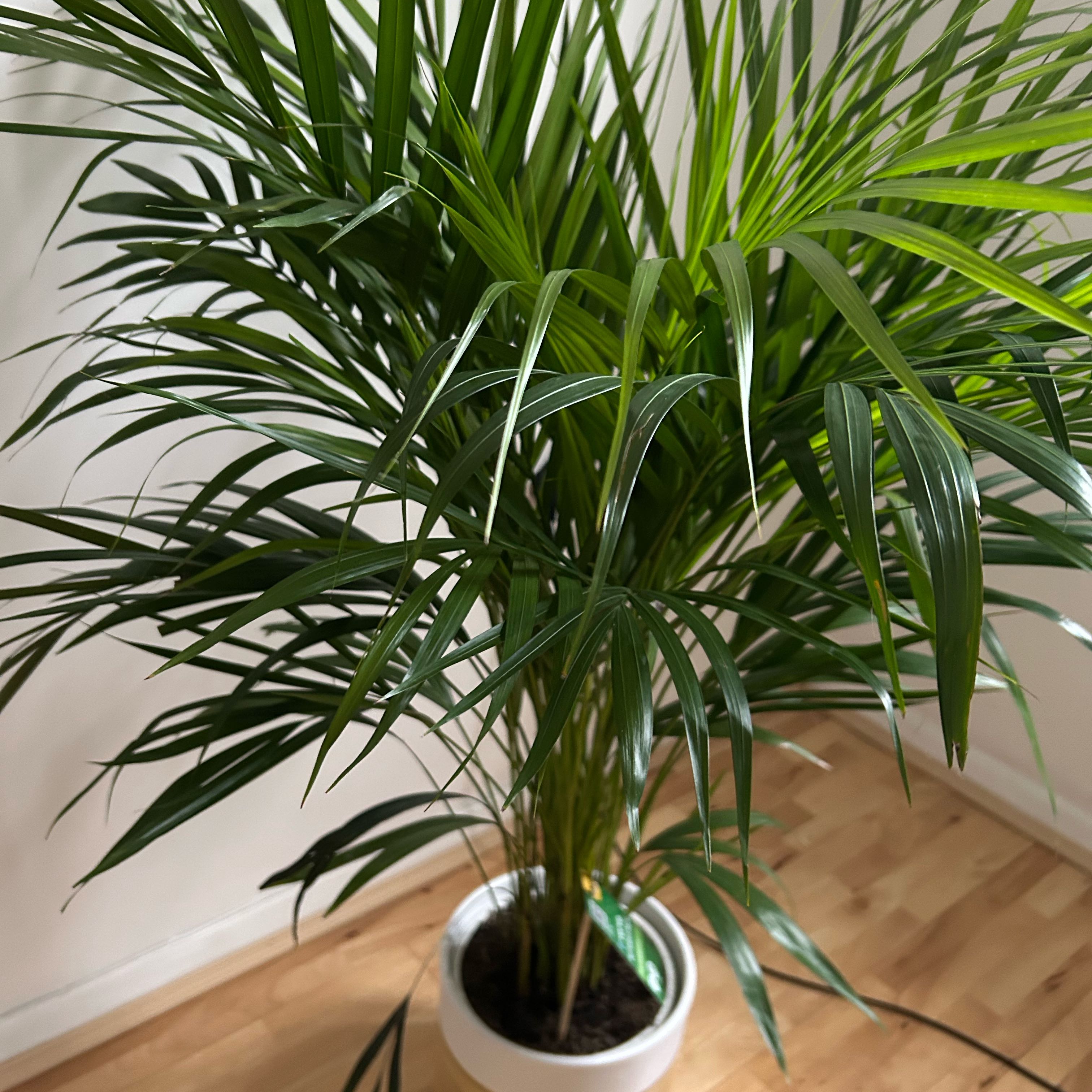
How to Water Areca Palm
Dypsis lutescens
Reviewed by Kiersten Rankel M.S.
Quick Answer
Water your Areca palm every 7–10 days from spring through early fall when the top inch of soil feels dry. Stretch to every 12–18 days in winter.
Arecas are sensitive to fluoride and salt buildup, which shows up as brown frond tips. If your tap is heavy, switch to filtered or rainwater for cleaner new fronds.

Stay on top of plant care
Get seasonal reminders for watering and fertilizing — personalized for your plants.
How Often and How Much to Water
Adjust the sliders below for your pot size, light, and setting. The numbers assume a rich moisture-retaining mix and a pot with drainage.
Setting
Every
9days
Use
1cup
Your Watering Rhythm Across the Year
Soil dries faster in the growing season, which varies by region. Slow down watering in the off-season to avoid overwatering.
Pacific
Mountain
Midwest
Northeast
Southeast
JFMAMJJASOND
Growing season
Growing season
9days
Resting season
3–4weeks
How to Water Your Areca Palm
Soak deeply and drain fully. Areca palms want even moisture but absolutely rot if water sits at the base of the canes.
1
Pour room-temperature water at the soil line, around the clump rather than into the center. Water pooling between the canes can rot the crown.
2
Keep pouring slowly until water runs from the drainage holes. That tells you the rootball is fully soaked.
3
Empty the saucer or cache pot after 15 minutes. Areca roots near the bottom of the pot are the first to rot in standing water.
4
Run a humidifier nearby if your home runs dry, especially in winter.
Should You Water Your Areca Palm Today?
Always check before you pour. The clumping habit hides moisture in the center, so dig your finger an inch in to read the soil rather than judging by the surface.
Hold off
Fronds feel firm and arch outward
Frond tips green with no crispy edges
Top inch of soil still feels damp
Soil sits tight against the pot wall
Pot feels heavy when lifted
Ready for water
Top inch of soil dry to the touch
Frond tips beginning to brown and crisp
Outer fronds drooping by afternoon
Visible gap between soil and pot wall
Pot feels noticeably light
If Something Looks Off
Crispy frond tips on an Areca usually mean underwater, low humidity, or fluoride from tap. Yellowing fronds with soggy soil mean overwater. Read soil and tips together.
Underwatered
Soil
Bone-dry and pulled away from the pot wall
Leaves
Frond tips brown and crispy with paper-like edges
Pace
Slow decline that steadies after a deep soak
Next steps
Set the pot in a basin of room-temperature water for 30 minutes so the rootball rehydrates fully
Drain completely and return the palm to its bright indirect spot
If tip burn keeps appearing, switch to filtered or rainwater for a month
Existing brown tips won’t reverse but the fronds still photosynthesize from the green parts. Wait for new fronds before resuming fertilizer
Overwatered
Soil
Stays dark and damp for a week with a sour smell
Stem
Cane base soft mushy or blackening at the soil line
Leaves
Whole fronds yellowing in waves with green ones still attached
Pace
Sudden collapse that worsens even after you stop watering
Next steps
Stop watering and move to a bright airy spot
If you see fungus gnats hovering around the soil, the mix has stayed too wet
Slide the clump out of the pot and trim any dark mushy roots back to firm white tissue
Repot in fresh moisture-retaining mix in a clean pot with drainage holes
Wait until the top inch of soil is dry before the next watering
Got More Questions?
Why are the tips of my Areca palm always brown?
Brown tips on an Areca are almost always fluoride and salt buildup from tap water or low humidity. Arecas are notoriously sensitive to fluoride, more than most palms.
Switch to filtered, rainwater, or distilled water and run a humidifier nearby. New fronds will come in clean within 4 to 6 weeks if the underlying issue was water quality.
Can I use tap water on an Areca palm?
Soft tap water is fine. Hard, heavily chlorinated, or fluoridated tap water causes tip burn that builds up over months.
If you’re seeing chronic tip burn, swap to filtered or rainwater and watch the next batch of fronds for improvement.
How long can I leave an Areca palm while I’m on vacation?
About 10 days for a normal-sized pot. Arecas drink fast in summer and slow in winter, so vacation tolerance shifts with the season.
Deep-water the morning you leave, move out of any direct sun to slow evaporation, and ask someone to check it once at the 10-day mark for longer trips.
Why does my Areca have yellow lower fronds?
An occasional yellow frond at the base is normal aging. Several yellowing at once usually means stress at the root level, either from a dry stretch followed by a flood or from soggy soil with no oxygen.
Finger-test the soil and adjust your cadence. Pull off fully-yellow fronds at the cane once they’ve dried.
Are self-watering pots a good idea for Areca palms?
Mixed bag. Arecas like consistent moisture but the bottom of the rootball is sensitive to standing water. A self-watering pot can work if you let the reservoir run dry between fills.
A chunky moisture-retaining mix and a clear empty period gives the lower roots the oxygen they need.
Should I mist my Areca to raise humidity?
No. Misting doesn’t raise ambient humidity for any meaningful length of time and droplets on the fronds invite fungal spotting.
A humidifier in the same room is the only reliable way to keep humidity above 50%, which Arecas prefer.
Stay on top of plant care
Get seasonal reminders for watering and fertilizing — personalized for your plants.
About This Article

Kiersten Rankel M.S.
Botanical Data Lead at Greg · Plant Scientist
Editorial Process
Watering guidance verified against Dypsis lutescens growth data from Greg's botanical database, cross-referenced with USDA hardiness zone data and published horticultural research.
3,968+ Greg users growing this plant
USDA hardiness zones 10a–11b