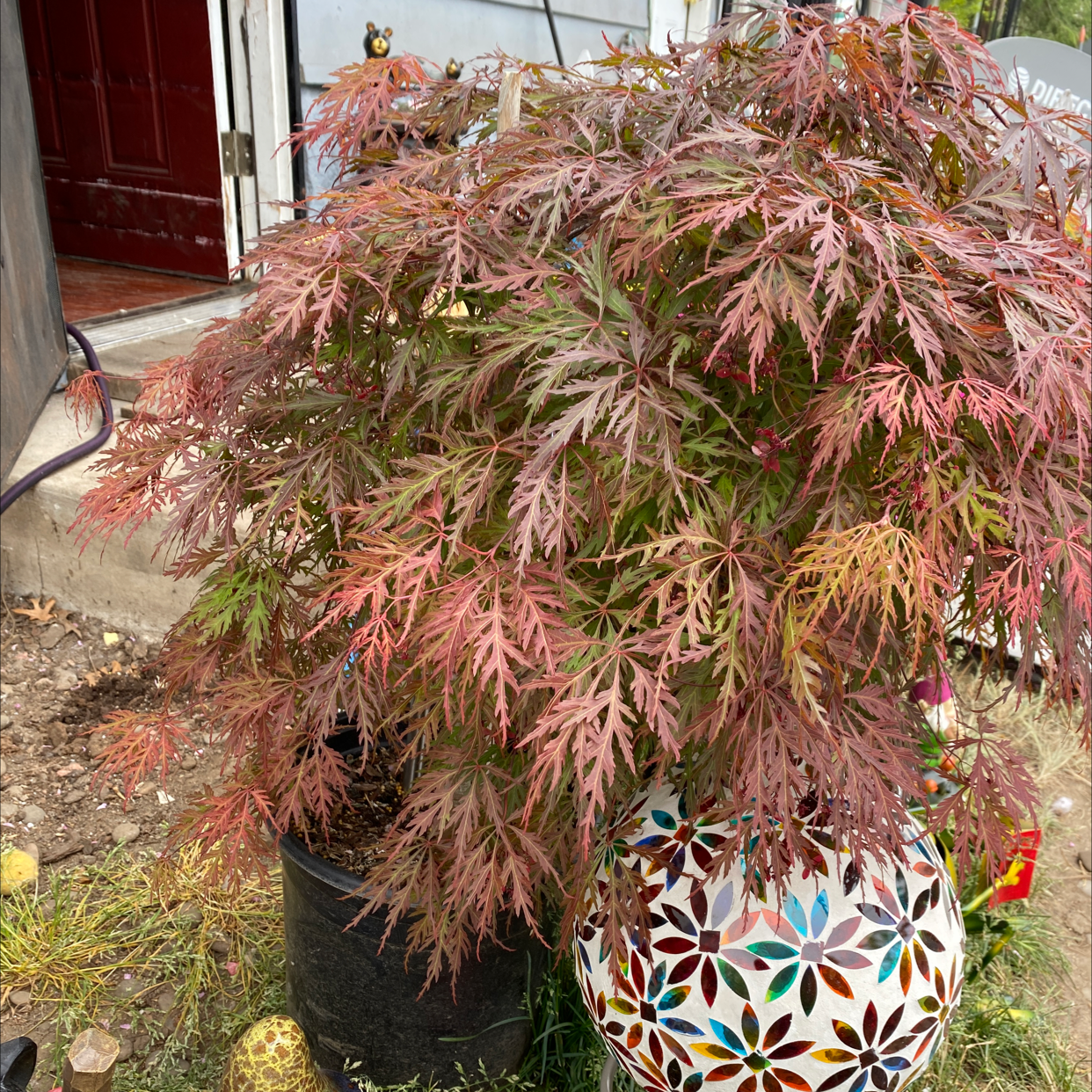
How to Water a Japanese Maple
Acer palmatum
Reviewed by Kiersten Rankel M.S.
Quick Answer
Water your Japanese maple deeply every 5 to 10 days during the growing season when the top 2 inches of soil are dry. Skip watering once the leaves drop in fall — the tree only needs a deep drink every few weeks through dormancy.
Soak the entire root zone slowly. Japanese maples have shallow fibrous roots that scorch easily when watered shallowly during summer heat.

Stay on top of plant care
Get seasonal reminders for watering and fertilizing — personalized for your plants.
How Often and How Much to Water
Adjust the sliders below for your pot size, light, and setting. The numbers assume a well-draining mix with organic matter and a pot or site with drainage.
Setting
Every
9days
Use
1cup
Your Watering Rhythm Across the Year
Soil dries faster in the growing season, which varies by region. Slow down watering in the off-season to avoid overwatering.
Pacific
Mountain
Midwest
Northeast
Southeast
JFMAMJJASOND
Growing season
Growing season
9days
Resting season
3–4weeks
How to Water Your Japanese Maple
Slow deep soak, generous mulch. The steps below keep the shallow roots cool and evenly moist through summer heat.
1
Water at the base of the trunk in the early morning so the rootball loads up before the day heats up. Use water that has stood for a bit so it is not ice-cold from the tap.
2
Pour slowly until the soil is moist 6 to 8 inches deep — a long slow soak protects shallow roots.
3
Mulch the root zone with 2 to 3 inches of shredded bark or leaf mold, kept a few inches off the trunk.
Should You Water Your Japanese Maple Today?
Japanese maples wear stress on their leaves before anywhere else. A glance at leaf color and a finger check at the soil line tell you exactly where you stand.
Hold off
Top 2 inches of soil are cool and damp
Leaves full color, no scorched edges
Pot feels heavy
Mulch under the canopy is dark and intact
Branch tips flexible
Ready for water
Top 2 inches of soil are dry
Leaf edges scorch on the sun side
Whole branches wilt in afternoon heat
Pot feels light
Mulch has dried and started to break down
If Something Looks Off
Japanese maples are dramatic when something is off. Crispy leaf edges can come from too little water, too much sun, or dry wind — sometimes all three at once. Read the soil first.
Underwatered
Soil
Dry through the rootball, pulled from the pot wall
Stem
Young branches feel brittle
Leaves
Edges scorch brown and crispy on the sun-exposed side first
Pace
Fast decline in heat that bounces back partially with watering
Next steps
Bottom-soak the pot in a basin of water for 30 minutes
Move out of direct afternoon sun for a few weeks until it recovers
Add 2 to 3 inches of fresh mulch under the canopy
Overwatered
Soil
Stays wet for a week or more, sometimes with mossy growth on top
Stem
Soft or darkening at the soil line
Leaves
Yellow and drop in clusters, often with brown spotting on the lower leaves
Pace
Steady decline with branch dieback that worsens after a wet stretch
Next steps
Stop watering until the top 3 inches of soil are dry, even if that takes 2 to 3 weeks
Move potted trees to the brightest spot with airflow
Slip the tree out. Pale firm roots are healthy; dark mushy roots are rotting
Trim rotted roots back to firm tissue and repot in fresh well-draining mix
Got More Questions?
How long should I wait to water after repotting a Japanese maple?
Water deeply right after repotting to settle the new soil around the roots.
Then wait until the top 2 inches of soil are dry, often a week or more. Repotting is best done in early spring before bud break, when the tree is just waking up.
Why are my Japanese maple leaves crispy at the edges?
Crispy leaf edges almost always trace back to leaf scorch — a combination of dry wind, hot sun, and an underwatered rootball.
Water more deeply during heat waves, add mulch, and move potted trees out of harsh afternoon sun. Existing scorched leaves will not green back up but new growth comes in clean.
Should I water my Japanese maple in winter?
Yes, but rarely. A potted Japanese maple in cool winter weather needs only enough water to keep the rootball from drying through, often once every 2 to 4 weeks.
In-ground trees usually need no winter watering unless you go through a long dry stretch with frozen ground.
How much sun should my potted Japanese maple get?
Most Japanese maples prefer morning sun and afternoon shade, especially in hot climates. Direct afternoon sun is the leading cause of leaf scorch.
If you cannot move the pot, double down on watering during heat waves and add a deep layer of mulch. A west-facing balcony in summer can scorch even a well-watered tree.
My Japanese maple leaves dropped early. Is that water?
Early leaf drop in midsummer is usually drought stress. The tree drops leaves to reduce its surface area when the rootball cannot keep up with the heat.
Deep mulching, deeper watering, and afternoon shade in heat waves prevent it. The tree will leaf out normally next spring.
Can I underwater a Japanese maple to slow its growth?
No. Drought stress on a Japanese maple causes leaf scorch, branch dieback, and a weaker tree the next year — not a tidier one.
If you want a smaller tree, prune in late winter while it is dormant. Steady deep watering through the growing season produces the best fall color.
Stay on top of plant care
Get seasonal reminders for watering and fertilizing — personalized for your plants.
About This Article

Kiersten Rankel M.S.
Botanical Data Lead at Greg · Plant Scientist
Editorial Process
Watering guidance verified against Acer palmatum growth data from Greg's botanical database, cross-referenced with USDA hardiness zone data and published horticultural research.
2,413+ Greg users growing this plant
USDA hardiness zones 5a–8b