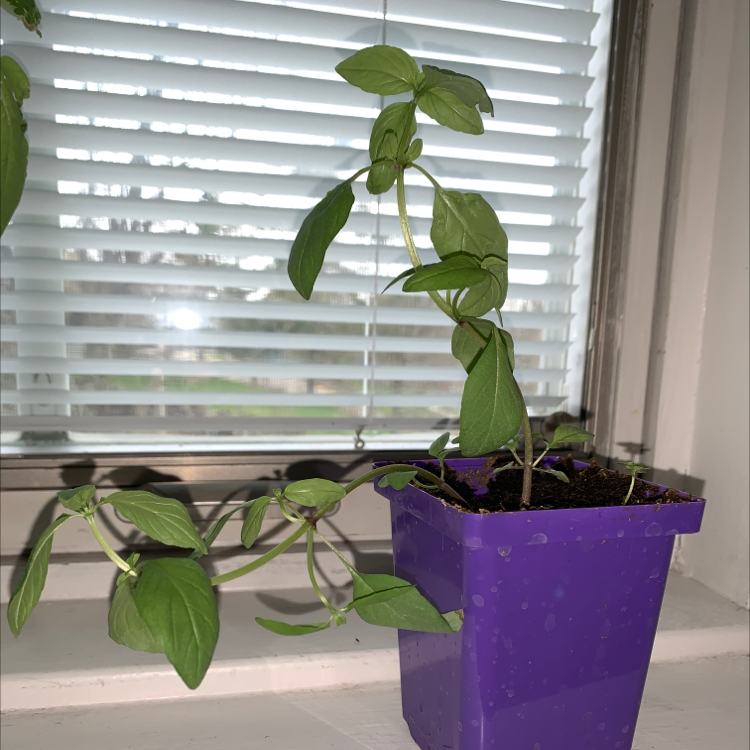
Holy Basil (Tulsi)

How to Fertilize Holy Basil (Tulsi)

Ocimum tenuiflorum
Reviewed by Kiersten Rankel M.S.
Quick Answer
Use a balanced liquid fertilizer (like 10-10-10) diluted to half strength. Feed every 2-3 weeks during the growing season. Stop fertilizing about a month before your first expected frost if growing outdoors.

When Should I Start Feeding My Holy Basil?

Start feeding Holy Basil 2-3 weeks after transplanting or once seedlings have their second set of true leaves, adjusting timing to your region's last frost date.

US feeding regions map
Pacific Mar–Oct
Mountain Jun–Sep
Midwest May–Sep
Northeast May–Sep
Southeast Apr–Oct
Stay on top of plant care
Get seasonal reminders for watering and fertilizing — personalized for your plants.
Try Greg Free

How Often Should I Fertilize My Holy Basil?

Feed every 2-3 weeks during the active growing season (spring through late summer). If you're growing Tulsi indoors year-round, you can continue feeding monthly through winter, but cut to quarter strength.

Watch for signs of overfeeding: dark, overly lush leaves with weak stems and reduced fragrance. If the leaves lose their characteristic clove-like scent, you're probably giving too much.

Underfed Holy Basil shows pale yellow lower leaves and slow, leggy growth. A light feeding usually perks it up within a week or two.

Feeding Calendar
Spring & Summer
Half-strength balanced liquid every 2-3 weeks
Early Fall
Taper to monthly, quarter strength
Late Fall & Winter
No feeding (outdoor plants done for season)

What Is the Best Fertilizer for Holy Basil?

A balanced liquid fertilizer with equal parts nitrogen, phosphorus, and potassium (10-10-10 or similar) works well for Holy Basil. Unlike leafy herbs that want heavy nitrogen, Tulsi benefits from balanced nutrition because it also flowers freely.

Dilute to half the label rate. Holy Basil is a light feeder, and too much fertilizer actually makes the leaves less aromatic.

Organic options like compost tea or fish emulsion work great too. They release nutrients slowly, which suits this herb's steady but modest appetite.

Synthetic
Affordable liquid concentrate. 7 drops per quart of water, then dilute further to half strength for Tulsi.
Widely available powder formula. Use at quarter strength (1/4 teaspoon per gallon) since it's concentrated.
Organic
Gentle organic blend perfect for herbs. Mix 1 tablespoon per gallon. The seaweed adds trace minerals that boost essential oil production.
Granular organic option. Scratch a tablespoon into the top inch of soil monthly. Good for container-grown Tulsi.
The gentlest option. Top-dress with a thin layer every 4-6 weeks. Impossible to over-apply.

How Do I Fertilize My Holy Basil?

1
Water your plant first
Give your Holy Basil a good drink an hour or two before feeding. Wet roots absorb fertilizer more evenly and resist chemical burn.
2
Dilute to half strength
Mix your liquid fertilizer at half the rate shown on the label. For a 10-10-10 concentrate, that's usually about 1/4 teaspoon per gallon of water.
3
Pour at the base
Apply the diluted fertilizer directly to the soil around the stem. Avoid splashing the leaves, especially if you plan to harvest them for tea or cooking.
4
Feed in the morning
Morning feeding gives your Tulsi the full day to absorb nutrients while it's actively growing. Avoid feeding in the heat of midday.
5
Rinse leaves if splashed
If any fertilizer solution lands on the leaves, rinse them gently with plain water. Residue on the foliage can cause spotting.

Got More Questions?

Can I use coffee grounds on my Holy Basil?
In small amounts, yes. Sprinkle used grounds lightly on the soil surface every few weeks. Fresh grounds are too acidic, but used grounds are close to neutral and add a bit of nitrogen as they break down. Don't overdo it, as a thick layer can get moldy.
What happens if I over-fertilize my Holy Basil?
The leaves may look lush and green but lose their signature fragrance and flavor. Over-fertilized Tulsi grows fast but produces fewer essential oils. If you see white salt crust on the soil surface, flush the pot with plain water several times.
Should I fertilize Holy Basil differently if I'm harvesting it for tea?
If you're using the leaves for tea or cooking, lean toward organic fertilizers and stop feeding at least a week before a big harvest. This gives the plant time to concentrate its essential oils rather than pushing new growth.
Does Holy Basil need fertilizer if I used good potting mix?
Quality potting mix usually has enough nutrients for the first 4-6 weeks. After that, container-grown Tulsi will need regular feeding since watering gradually flushes out the original nutrients.
Can I use banana peels as fertilizer for my Holy Basil?
Banana peels decompose very slowly in pots and don't release meaningful nutrients. You're better off with a balanced liquid feed or compost. If you want to use kitchen scraps, compost them first.
Stay on top of plant care
Get seasonal reminders for watering and fertilizing — personalized for your plants.
Try Greg Free

About This Article

Kiersten Rankel M.S.
Botanical Data Lead at Greg · Plant Scientist
About the Author
Kiersten Rankel holds an M.S. in Ecology & Evolutionary Biology from Tulane University. A certified Louisiana Master Naturalist, she has over a decade of experience in science communication, with research spanning corals, cypress trees, marsh grasses, and more. At Greg, she curates species data and verifies care recommendations against botanical research.
See Kiersten Rankel's full background on LinkedIn.
Editorial Process
Fertilizer recommendations verified against Ocimum tenuiflorum growth data from Greg's botanical database, cross-referenced with USDA hardiness zone data and published horticultural research.
1,046+ Greg users growing this plant
USDA hardiness zones 10a–11b
Citations:
NC State Extension